
Did you know that in a recent top-flight season, officials made a controversial arm-related call, on average, every three matches? That’s a lot of blown whistles and confused faces.
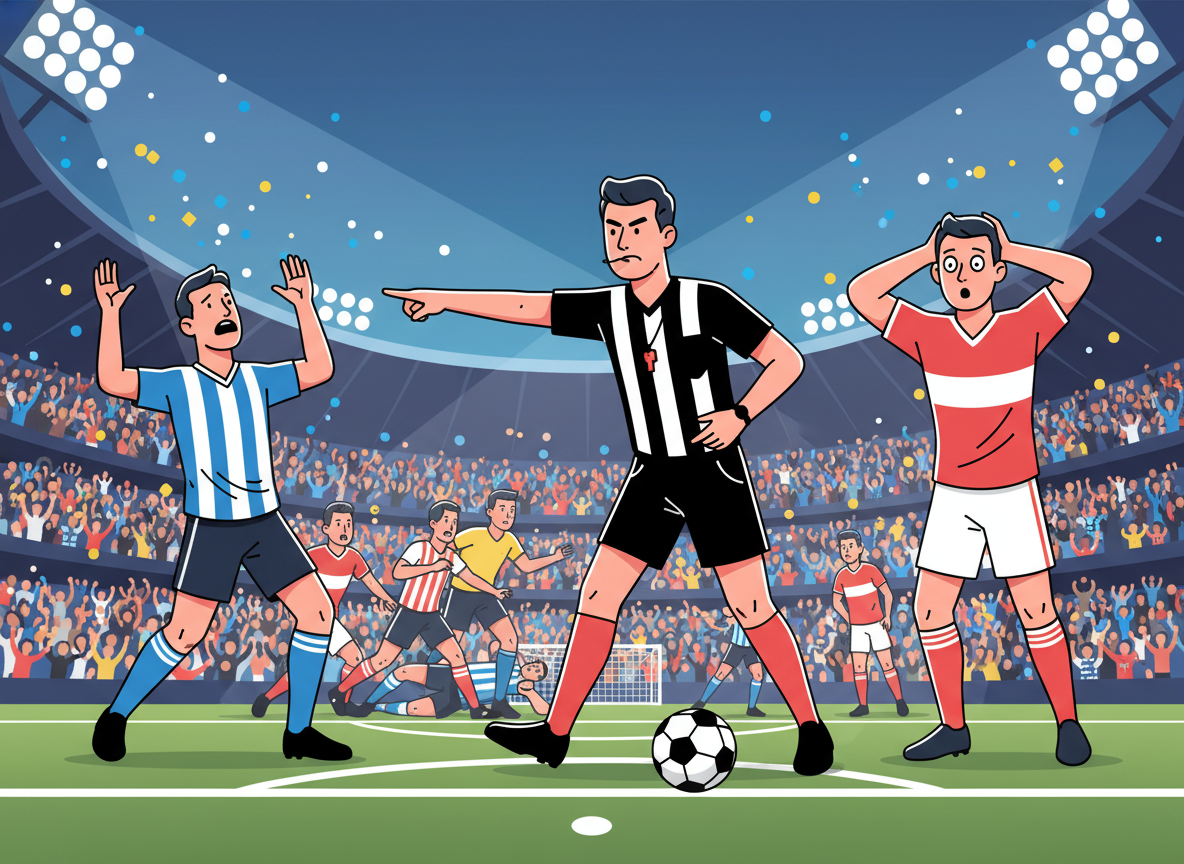
I still remember the confusion on the field. One moment you’re battling for possession; the next, the referee points to the spot. Everyone is left wondering what exactly constitutes an infraction these days.
The global guardian of these regulations is the International Football Association Board (IFAB). They are the sole body charged with setting and altering the Laws of the Game we all play by.
Navigating this complexity isn’t just about knowing the letter of the law. It’s about the psychological weight of those split-second decisions. The frustration of a call that feels unfair can unravel your focus.
Let’s explore how these shifts impact your mindset. Understanding the nuance helps you maintain composure when the pressure peaks, turning confusion into clarity.
Key Takeaways
- The International Football Association Board (IFAB) is the global authority that defines and updates the game’s official laws.
- Modern officiating decisions around arm contact are frequent sources of confusion for players and fans alike.
- The mental and emotional reaction to a call is often as important as the call itself.
- Adapting your mindset is crucial for staying resilient when the game’s standards feel inconsistent.
- True understanding moves beyond the rulebook to the psychological game happening within every player.
- Maintaining composure under the pressure of a controversial decision is a key skill for any serious competitor.
Exploring the History and Evolution of the Handball Rule
The journey of how we judge arm contact in football has been a winding road, filled with pivotal moments. I’ve watched the standards shift over the years, often leaving players and fans scratching their heads. The International Football Association Board (IFAB) has steered this evolution, aiming for clarity that sometimes sparks more debate.
Their adjustments reflect the sport’s living nature. It’s a constant push to balance fairness with the game’s natural flow.
Milestones in Rule Changes
Significant modifications mark the timeline. The 2019 introduction of the “sleeve rule” is a prime example. It allowed contact with the top of the arm, changing how officials viewed player posture.
| Era | Key Adjustment | Primary Intent |
|---|---|---|
| Early 2000s | Emphasis on deliberate intent | To distinguish accidental from purposeful arm contact |
| 2019 | Sleeve rule adoption | To clarify legal contact with the upper arm area |
| Recent Years | Refined unnatural position guidance | To reduce subjective interpretation by referees |
Lessons from Past Controversies
Studying old debates has taught me a lot. Each heated discussion highlights why authorities feel compelled to tweak the regulations.
It reminds me that the game isn’t static; it breathes and grows. By understanding this history, we can mentally prepare for the next shift. It turns frustration into a deeper appreciation for the sport’s complexity.
The Modern Application: Defining What Counts as a Handball
Modern officiating hinges on a single, deceptively simple question: was the player’s arm in a natural position? Let’s look at what that really means on the pitch. It’s a subjective call, deeply tied to the specific movement of that athlete in that exact moment.
Understanding Natural Versus Unnatural Arm Positions
A natural arm placement is a direct consequence of the body‘s motion. Think of Trevoh Chalobah in the 2025 Club World Cup. His posture was deemed justified. Similarly, Jorge Sanchez extending his hand arm to break a fall in the Gold Cup final was seen as a natural reaction.
The opposite is an unnatural position. This happens when the hand or arm is placed without a clear link to the player‘s action. Even a slide can be tricky. Referee Pacifique Ndabihawenimana reviewed Yasser Ibrahim’s sliding block in AFCON, where the arm supported the body. He ultimately ruled it a natural movement.
This judgment is where frustration builds. I’ve learned that maintaining a calm mindset means accepting the official’s call on whether the body position was justifiable. Your focus must stay on the next play, not the last whistle.
handball rule changes soccer – Key Updates Explained
I’ve learned that staying current with the official guidelines is less about memorization and more about mental preparation. The most significant adjustments we play under today were set before the 2022/23 campaign. They reshaped how officials interpret contact in the box.
The Latest IFAB Guidelines
The laws are designed to be universal. Yet, their application can feel different depending on the league or even the officiating crew. I remind myself that this variation is part of the game’s fabric.
Staying updated is a mental exercise. It grounds you when standards seem to shift mid-season. Every new campaign brings fresh expectations.
Understanding this framework is vital for keeping your focus during high-stakes moments. By tracking how these guidelines are applied, you can better manage your reaction to inevitable calls. It turns potential frustration into a strategic advantage.
VAR and Technology: Shaping Handball Decisions
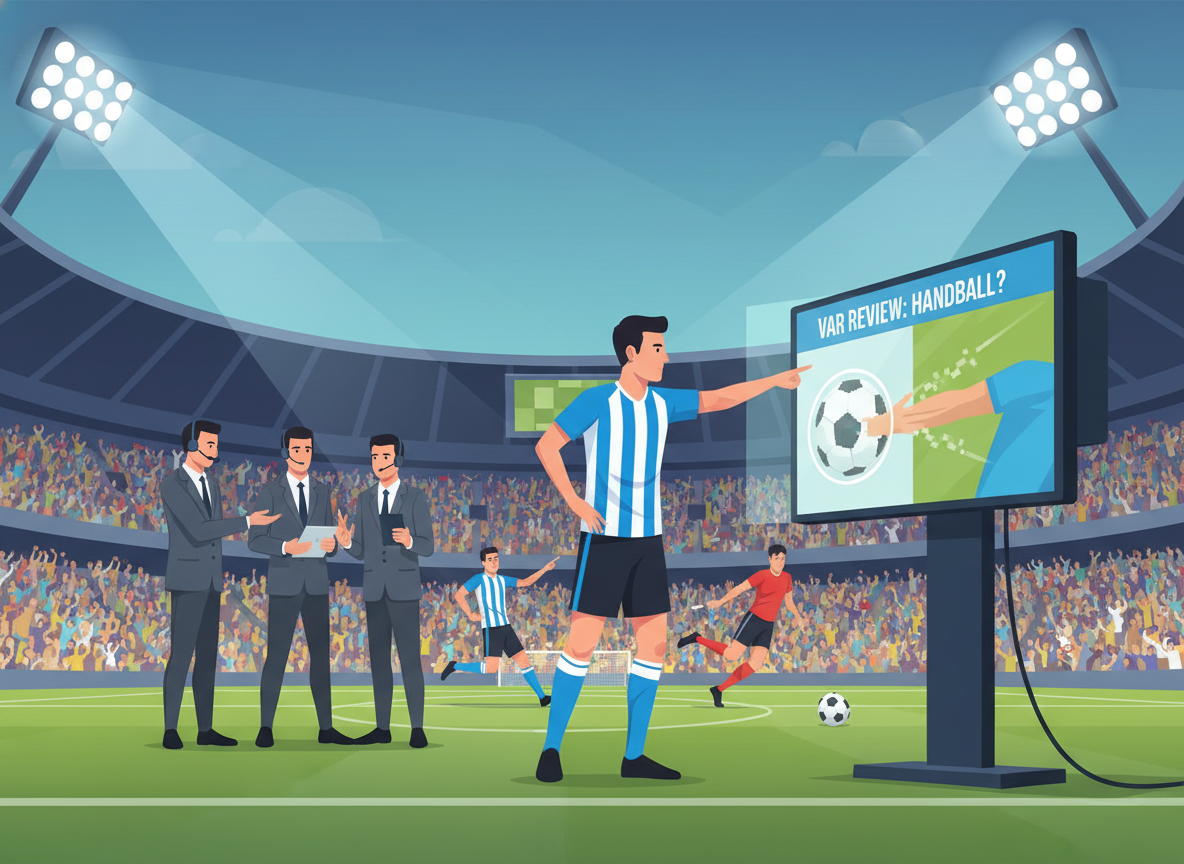
I’ve felt the stadium hold its breath, waiting for a verdict from a room miles away. That silence is the new normal. The introduction of the Video Assistant Referee (VAR) has fundamentally changed how referees approach the game.
The Role of the Referee’s Call Principle
The system operates on a core idea: support the on-field official. The referee’s call principle is meant to prevent endless rehashing of subjective moments. Yet, it’s a major point of contention.
Take Tino Livramento’s incident against Paris Saint-Germain. The penalty was given after the ball struck his arm. Was it a clear error? The referees in the booth had to decide. This process tests everyone’s patience during the play.
How VAR Reviews Influence Outcomes
Technology is a double-edged sword. It can correct mistakes, but it also magnifies debate. The 2025/26 Champions League provided a perfect example.
A review correctly overturned a penalty against Clement Lenglet. The ball had deflected off his chest, not his arm. Getting this right is crucial. It shows the system working as intended.
When the ball strikes a player, officials must ask: was the original decision “clearly and obviously wrong”? Understanding this helps me maintain balance when a call goes for or against my team.
| VAR Principle | Primary Intent | Match Example |
|---|---|---|
| Referee’s Call | Limit over-analysis of subjective incidents | Tino Livramento penalty (UCL 2023/24) |
| Clear & Obvious Error | Only reverse definitively wrong decisions | Clement Lenglet call overturned (UCL 2025/26) |
| Support Role | Assist, not replace, the on-field referee | General review process for arm contact |
Defensive vs Attacking Handball Offences
For a forward, the margin for error with your arms is razor-thin compared to a defender’s. This dual standard defines modern handball offences. It creates two separate realities on the same pitch.
Consider Kai Havertz’s disallowed goal against Aston Villa. The ball struck his arm, so the score was chalked off. In the same sequence, Matty Cash, a defender, wasn’t penalized. The threshold for an infraction simply wasn’t met for him.
Different Thresholds for Defenders and Attackers
A defender often gets the benefit of the doubt. Their primary job is to block and clear. An attacker, especially a player directly involved in scoring, operates under a stricter rule.
I coach my team to understand this. It changes how you position your body in the box. You learn to handle ball situations with more tactical intelligence.
Penalty Implications and Goal-Scoring Scenarios
If the ball strikes the arm of the scorer, the goal is automatically disallowed. Intent doesn’t matter. This forces every forward to be hyper-aware.
The mental lesson is crucial. You cannot handle ball incidents with a defender’s mindset. Knowing this helps you manage the immense pressure of a potential penalty call.
League-Specific Adjustments: Premier League and UEFA Guidelines
Ever notice how a weekend of watching matches can feel like you’re switching between two different rulebooks? Even under the global handball law, major competitions apply their own subtle shades of gray. Howard Webb’s guidelines for the 2024/25 Premier League season are a perfect example of this local tailoring.
Innovations in the Premier League
The Premier League has sharpened its focus. Officials now heavily weigh a player’s proximity to the strike when judging contact in the penalty area.
I appreciate this attempt to bring clarity. It specifically addresses those frantic moments where a ball hand arm deflection happens too fast to avoid. The core question remains: was the arm position justifiable for that specific action in the area?
UEFA’s Approach to Handball Interpretations
UEFA often charts a different course. Their tendency is to relax the whistle, especially when the ball’s trajectory takes an unexpected bounce.
This creates a distinct atmosphere in their competitions. The interpretation of an incident can genuinely shift depending on the tournament you’re in.
Navigating this requires a flexible mindset. You must understand that the handball law isn’t applied uniformly. This awareness itself is a strategic tool for any player moving between the Premier League and European stages.
Practical How-To Guide: Reading and Applying Handball Developments
Let’s break down the practical steps you can take to control the one thing you can: your own posture. This isn’t about debating the latest tweak. It’s about building habits that keep you in the game.
I focus on reading the play before the whistle blows. You must anticipate where the ball is going and how your body will react.
Identifying Justifiable Movements on the Field
Mastering the mental game starts with understanding what officials see. A justifiable arm movement has a clear purpose, like bracing for a fall or balancing during a jump.
When the ball is flying, your instinct might be to spread out. I train players to fight that urge. Keeping your arm tucked close to your side is the safest default position.
This is crucial now. A yellow card can be given for denying an obvious goal-scoring opportunity, even accidental contact. That caution changes a match.
Controlled movement avoids this frustration. It ensures you stay on the pitch to help your team.
| Defensive Posture | Risk Level | Likely Outcome |
|---|---|---|
| Arms tight to the torso | Low | Play continues; no call |
| One arm extended for balance | Medium | Subjective referee decision |
| Arms wide or above shoulder | High | Potential penalty & yellow card |
Remember, even accidental contact can lead to penalties if your hand or arm looks unnatural. Practice these techniques to minimize risk.
By focusing on justifiable movements, you defend smarter. You turn a potential yellow card into a clean tackle, preserving your team’s chance for success.
Conclusion
Looking back, I realize that the true test in this sport isn’t just about skill, but about how we adapt to its ever-shifting landscape.
Mastering the mental game is a lifelong pursuit. It demands both knowledge of the guidelines and the resilience to accept calls that feel unfair. This understanding transforms frustration into focus.
The hours we invest studying the game’s fabric are never wasted. They prepare us for the unpredictable bounce of the ball and the high-stakes moments that define matches. We learn to manage our reactions, preserving our love for the sport.
Ultimately, these regulations aim to protect the beautiful game’s integrity. Even when their application seems inconsistent, our shared passion remains constant. Let’s carry forward this clarity, embracing both the joy and the complexity that make football so compelling.