
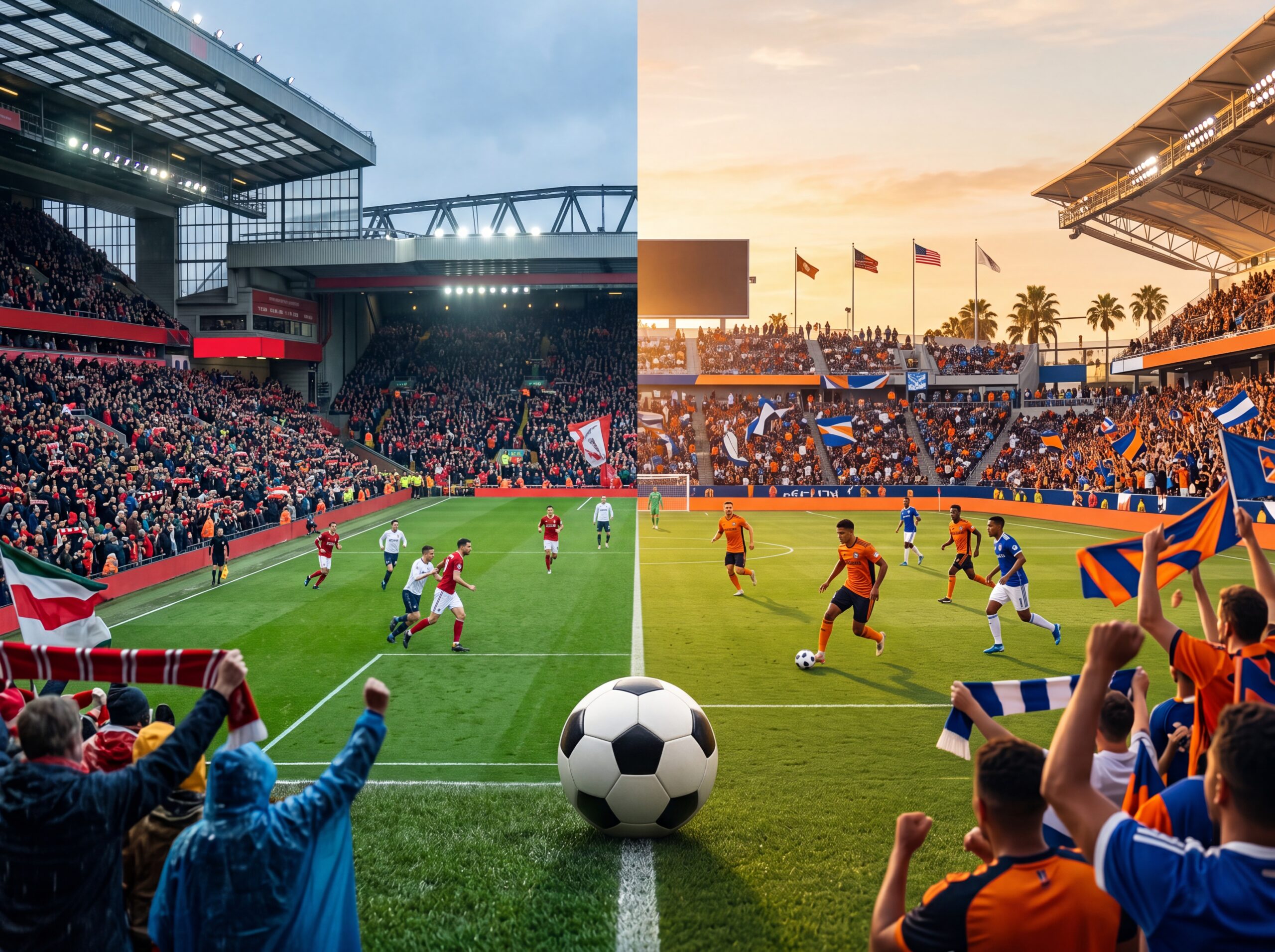
Football and soccer are two names for the same sport. In the United States and Canada, soccer means the round-ball game with 11 players and goals, because football already means the gridiron code. In the UK and most of the world, that round-ball game is football, and soccer is rarely used. The rules are identical. Only the words change.
Here is something most people get wrong: soccer is a British word, not an American invention. It started as Oxford University slang in the late 1800s and was common in Britain for decades. Americans kept using it to avoid clashing with their own football, while British usage faded later. Below is a full comparison of US and UK terms, where the words came from, and how to pick the right one for your audience.
Quick reference: US vs UK football terms
This table covers the swaps that come up most often when American and British fans talk about the game.
| US term | UK term | Notes |
|---|---|---|
| Soccer | Football | The sport itself |
| Field | Pitch | The playing surface |
| Game | Match | UK uses “match” for a single fixture |
| Cleats | Boots | Often “football boots” in the UK |
| Uniform / jersey | Kit / shirt / strip | “Kit” covers the whole outfit |
| Shin guards | Shin pads | Same item |
| Goalie | Keeper | Both shorten “goalkeeper” |
| Offense | Attack | The attacking phase |
| Defense | Defence | Note the spelling difference too |
| PK / penalty kick | Penalty / spot kick | UK rarely says “PK” |
| Tie | Draw | A level result |
| Zero-zero | Nil-nil | UK says “nil” for zero |
| Overtime | Extra time | The extra 30 minutes in knockouts |
| Schedule | Fixtures | The list of upcoming games |
| Standings | Table / league table | The ranking of teams |
| Season | Season / campaign | “Campaign” is common in UK media |
| Roster | Squad | The full group of players |
| Starting lineup | Starting XI | UK often uses the Roman numeral |
One word to watch: “tie”
This one causes real confusion. In the US, a tie is a drawn match that ends level. In the UK, a “tie” usually means a knockout fixture, as in “the FA Cup tie.” So a British fan saying “a big tie this weekend” is talking about an important match, not a draw. Context clears it up fast, but it is worth knowing.

What each country means by football and soccer
In the United States, football means the gridiron game with pads, helmets, and an oblong ball. Say soccer and people know you mean the round-ball game.
Canada has the same issue, with Canadian football alongside the American game, so soccer is the clearer everyday word there too. During NFL or CFL season especially, locals will often ask “you mean soccer?” if you say football.
Across most of Europe, South America, Africa, and Asia, football is simply the word for the game. Local forms like futbol in Spanish and futebol in Portuguese show how widely the name travels. Australia and New Zealand sit in the middle, switching between soccer and football depending on the audience.
A few practical rules:
- In the US, say soccer. It avoids confusion with gridiron, full stop.
- In international or UK settings, say football. It is the natural word almost everywhere else.
- In mixed groups, say “soccer (football)” once, then pick one term and stick with it.
Where the word soccer came from
The nickname was born in England, not America. When the Football Association codified the rules of association football in 1863, it split the round-ball game off from rugby football and other codes.
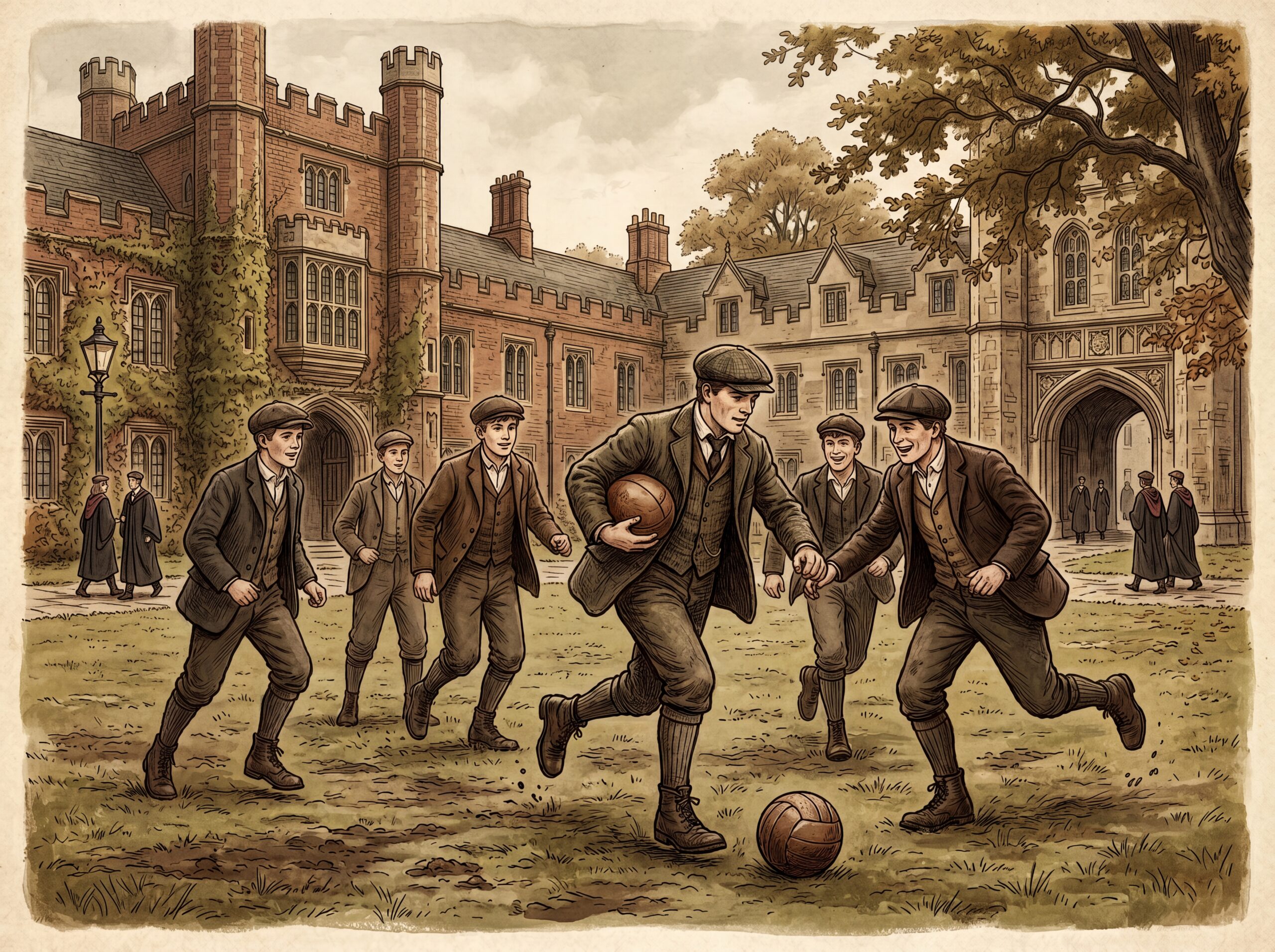
Oxford students then did what students do and invented slang. They took “association,” kept the middle, and added the “-er” ending that was fashionable at the time. Rugby football became “rugger,” and association football became “soccer.” The same habit produced both words.
Soccer stayed in common British use well into the 20th century. It only started to fade in Britain in the later decades, as football reclaimed its place as the default word and soccer came to feel like an Americanism. So the popular story has it backwards. Americans did not rename the British game. They kept an old British nickname that Britain itself eventually dropped.
Governing body names track this history. The United States has U.S. Soccer and Major League Soccer, founded in 1993. New Zealand Football rebranded from New Zealand Soccer in 2013, and Australia moved to a football-first identity in the mid-2000s. Each choice nudges what fans say.
US vs UK terms in practice
Small word swaps change the tone of a conversation quickly, so matching your audience matters.
For the game itself, the rule is simple: soccer in the US, football in the UK. For the gear, the surface is a field in the US and a pitch in the UK, footwear is cleats versus boots, and the outfit is a uniform or jersey versus a kit or shirt.
For match language, Americans talk about offense and defense, a PK, and a tie, while British fans say attack and defence, a penalty, and a draw. For organising the season, US fans read a schedule and standings, UK fans follow fixtures and the table. None of it changes the sport. It only changes how clearly you land your point with a given crowd.
Conclusion
Pick the term that fits the place and the people. In the US and Canada, soccer usually works best because football already means something else. Everywhere else, football is the natural word. The history explains the split, but the practical move is the same: read the room, say “soccer (football)” once if you are unsure, then stay consistent.
FAQ
What is the difference between football and soccer?
There is no difference in the sport. Football and soccer are two names for association football, the round-ball game with 11 players a side. In the US and Canada it is usually called soccer to avoid confusion with gridiron football. In the UK and most countries it is called football.
Where did the word soccer come from?
From England. After the Football Association codified the game in 1863, Oxford students shortened “association” using the slang “-er” ending, the same one that turned rugby football into “rugger.” That gave “soccer.”
Is soccer an American word?
No. It started as British slang and was widely used in Britain for much of the 20th century. Americans kept using it while British usage declined later, which is why it now sounds American even though it is not.
Why do North Americans say soccer instead of football?
Because the US and Canada already had their own sports called football. Using soccer keeps the round-ball game clearly separate from gridiron, so the older nickname stuck and became standard.
Did the UK ever use the word soccer?
Yes, commonly, through much of the 20th century. It faded from the 1980s onward as football became the default word again and soccer came to be seen as an Americanism.
Do other English-speaking countries use different terms?
Yes. Canada and the US use soccer. Australia and New Zealand switch between soccer and football depending on context. Ireland and most of the rest of the world use football.
What is the main vocabulary difference between US and UK usage?
Americans say field, cleats, uniform, penalty kick, offense and defense, schedule, and tie. British speakers say pitch, boots, kit, penalty, attack and defence, fixtures, and draw.
When should I use soccer instead of football?
Use soccer with audiences where gridiron football dominates, mainly the US and parts of Canada. Use football in international or UK settings. Match the dominant local game and you avoid confusion.
Does the naming difference change how the game is played?
No. The rules are the same worldwide under FIFA and the national associations. The name only affects how clearly you communicate, not the sport itself.