
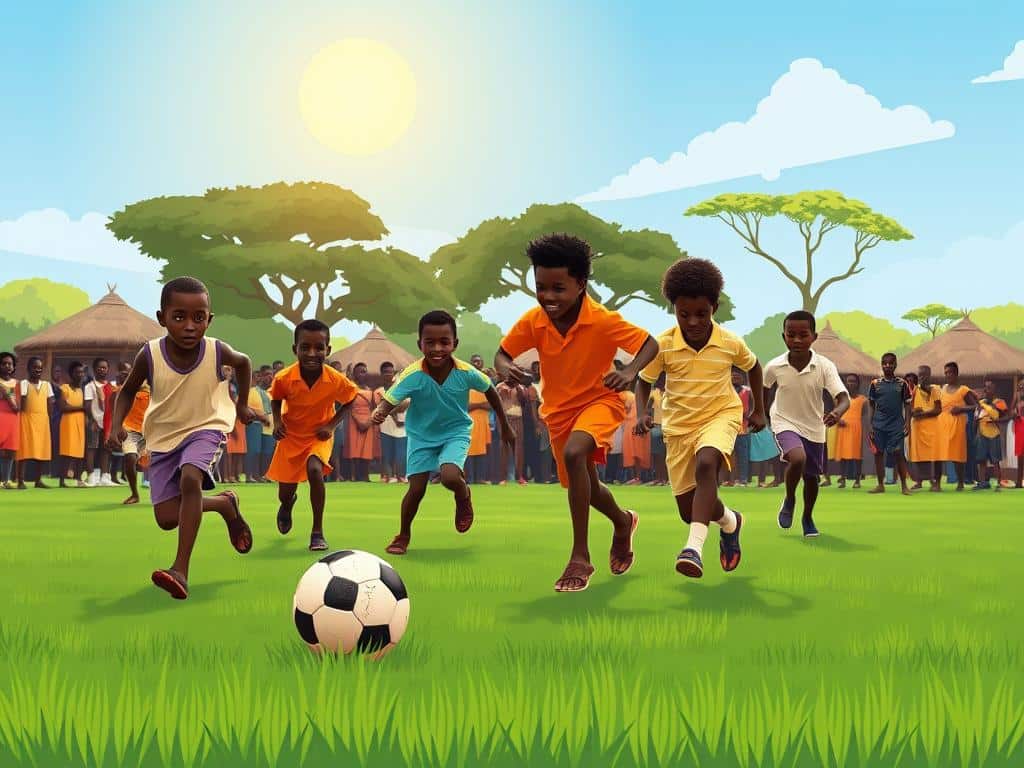
origin of soccer in africa landed on these shores via soldiers, traders, missionaries, and railways, and the first recorded matches took place in South Africa in 1862.
The rulebook that followed in 1863 gave structure and helped towns and mission schools turn a pastime into organized play. Early clubs like Savages FC, L’Oranaise, and Gezira SC show how local people adopted the game and made it part of daily life.
By the late 1800s associations such as SAFA formed, and by 1910 Africa had its first FIFA member. From club fields to the World Cup stage, that steady development reshaped the sport across the continent and the world.
Curious how those early steps led to landmark moments like Egypt’s 1934 World Cup and South Africa hosting 2010? Check my background at who I am for deeper context and sources.
Key Takeaways
- First matches were recorded in South Africa in 1862, before formal rules arrived in 1863.
- Mission schools, railways, and travelers helped spread the game quickly across towns.
- Early clubs and SAFA show organized play began in the late 1800s.
- Africa’s teams later made major World Cup and continental strides, shaping global football.
- Understanding early development clarifies why the sport is central to community and identity today.
The origin of soccer in Africa: from colonial pitch to continental passion
In 1862 a match in South africa between soldiers and civil servants marked the first recorded game on the continent. That event arrived before the 1863 rules, so local play developed fast and with real momentum.
Soldiers, traders, and missionaries shipped balls, boots, and basic structure. Railways stitched towns together and made inter-town games possible. Mission schools became training grounds where young people learned rules and formed teams.
Records show African and Indian teams active by the 1880s–1890s in southern regions. French-run clubs appeared in Algeria late in the 19th century. In West Africa, Cape Coast Excelsior formed in 1903. These examples show the game moved across the continent within a few decades.
Why it stuck: the sport fit town life. Ports and rail hubs had mixed populations and regular leisure time. That made organizing fixtures and rivalries simple, and local crowds turned matches into social events.
- 1862: first recorded match in south africa
- 1863: laws codified, giving structure
- Railways and mission schools accelerated spread
| Period | Key Actors | Notable Developments |
|---|---|---|
| 1860s | Soldiers, civil servants | First recorded match; arrival before formal rules |
| 1880s–1890s | African and Indian community teams | Regular club play in southern towns |
| Late 19th–early 20th | Colonial clubs, missionaries | Clubs in Algeria; Cape Coast Excelsior (1903) |
For a wider view on how these early moves shaped modern play, see soccer’s impact on the modern world. The early years explain why communities organized quickly when formal leagues arrived.
From informal games to early clubs and leagues
By the early 1880s, named teams were scheduling matches, choosing colors, and building local followings. That shift made play repeatable and visible.
Oldest surviving clubs: Savages FC, L’Oranaise, and Gezira SC
Savages FC (Pietermaritzburg), L’Oranaise (Oran), and Gezira SC (Alexandria) all began in 1882. These three clubs still exist today. They show how quickly organized soccer took hold across regions.
South African Football Association (1880) and FIFA ties by 1910
The South African Football Association formed in 1880 as a whites-only body. It brought structure, fixtures, and referees to local games.
In 1910 SAFA became the first African FIFA member. That link tied colonial leagues to global football rules and tournaments.
- Clubs and teams appeared before 1900 across South Africa, Egypt, and Algeria.
- Alexandria Stadium opened in 1929, a major step for North African venues.
- Early organization set standards for training, selection, and regular games.
| Year | Event | Why it mattered |
|---|---|---|
| 1880 | SAFA formed | Formal competitions began in south africa |
| 1882 | Three clubs founded | Long-lasting club identities emerged |
| 1929 | Alexandria Stadium | Dedicated venue for major games |
Building a home for the game: CAF and the rise of African competitions
When CAF began in 1957, fans and players finally had a shared stage for major tournaments. Founding members Egypt, Ethiopia, South Africa, and Sudan created a governing voice that matched political change across the continent.
CAF’s founding led quickly to the first african cup nations tournament. Only three teams played that initial event; Egypt beat Ethiopia 4-0 in the final. That result proved a continental trophy could grab attention beyond local leagues.
By the early 1960s qualification rounds arrived. From the 1962 edition more countries could try to reach cup nations finals. That shift let fresh teams and stories emerge and made tournaments more competitive.
Players and fans gained much: national teams found regular, meaningful matches. Tactics tightened, standards rose, and supporters got a calendar of must-watch football that united towns and cities.
- CAF gave football a continental home and steady development.
- Inaugural african cup showed continental trophies mattered.
- Qualification expanded in later years, bringing new teams forward.
- CHAN created a path for domestically based players to shine.
| Year | Event | Impact |
|---|---|---|
| 1957 | CAF founded | Unified governance and official tournaments |
| 1957 | First african cup | Continental trophy attracted wider attention |
| 1962 | Qualification rounds added | More countries competed; stronger contests |
Africa on the World Cup stage
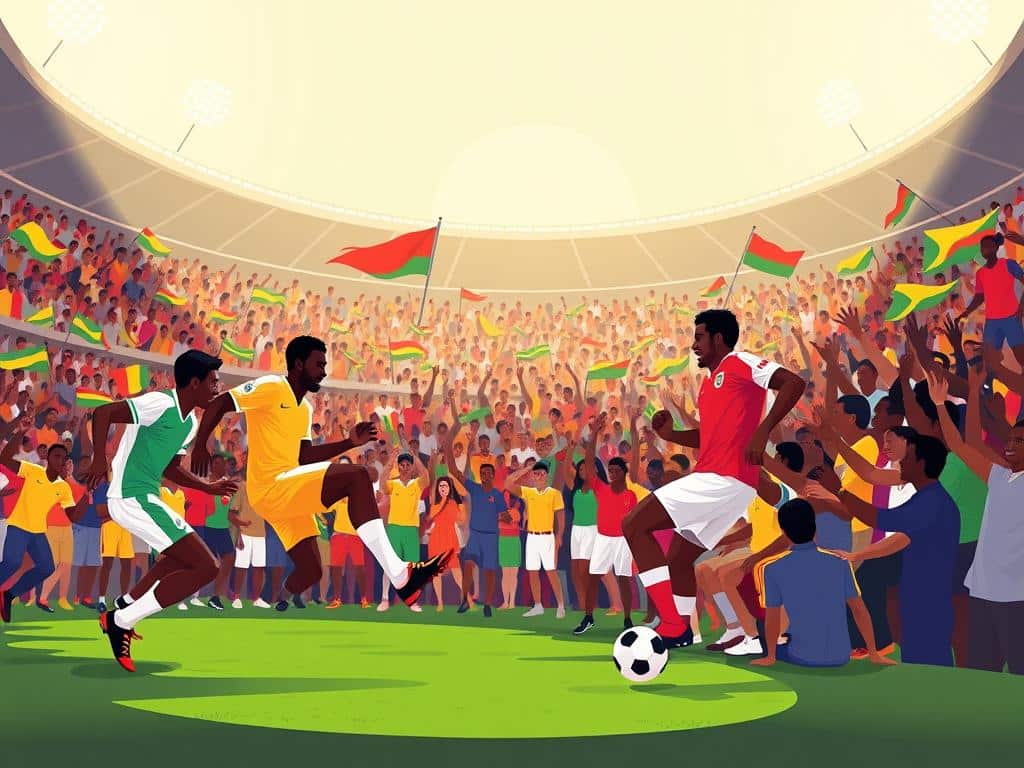
The continent’s climb on football’s biggest stage started early and gained force through protest and performance. Egypt’s lone entry in 1934 put an early marker on the world map. That single appearance mattered because it showed a place at the table was justified.
In 1966 CAF nations boycotted qualification after FIFA offered just a playoff spot with Asia/Oceania. The move worked: from 1970 FIFA guaranteed a berth. That change was structural and permanent for development and access.
Key breakthroughs and why they matter
- 1986 — Morocco: topped a group and reached the Round of 16. Proof that an African side could control big matches.
- 1990 — Cameroon: a quarterfinal run that reset expectations for how far a team could go.
- 2002 — Senegal: an opening upset and deep run that revealed wider talent pools.
- 2010 — Ghana: quarterfinals the same year South Africa hosted, keeping momentum alive.
| Year | Event | Impact |
|---|---|---|
| 1934 | Egypt appears | First presence on the World Cup stage |
| 1966–1970 | Boycott → guaranteed slot | Access expanded, more teams qualified |
| 2010 | South Africa hosts | First World Cup on African soil; global celebration |
Takeaway: each breakthrough added belief, experience, and visible success. Those years turned isolated appearances into regular, confident World Cup shows that advanced soccer and football development across the continent.
Clubs, leagues, and the “brawn drain” to Europe
For fans and clubs, the steady export of players has been a double-edged sword.
Why many sign abroad: European leagues offer higher pay, better training, and global exposure. More than 80% of the continent’s World Cup squad members have played for European clubs, which drives ambition and migration.
Domestic contrasts
South Africa’s top league is among the wealthiest on the continent. It benefits from broadcast deals and modern stadiums.
Elsewhere, clubs struggle to keep seasons afloat. Losing top talent lowers match quality and hurts gate receipts.
Peter Alegi’s case study
Peter Alegi points to two paths. Michael Essien rose to Champions League stardom and wealth. Albert Youmba, by contrast, faced hardship after a failed trial. That sharp contrast shows risk and reward over time.
EPL’s pull and cultural reach
The Premier League shapes viewing habits. A 2024 poll in Nigeria found 59% watched the EPL versus 34% for the local league. Club loyalties—Chelsea, Manchester United, Arsenal—follow viewers across borders.
- Clubs try remedies: youth academies, sell-on clauses, and partnerships.
- Long-term development depends on reinvesting transfer gains into facilities, coaching, and fan experience.
| Issue | Strength | Consequence |
|---|---|---|
| Player migration | Higher wages, exposure | Local match quality drops |
| South africa league | Broadcast revenue, stadiums | Regional benchmark for others |
| Fan habits | EPL viewing culture | Sponsorship shifts abroad |
Women’s football: growth against the odds
Grassroots women’s matches began quietly in Nigerian towns during the 1960s, led by clubs and school teams. Early efforts in South Africa also started then, but many projects stalled without steady backing.
By the 1970s West African clubs grew stronger. A Dakar side met an Italian club in 1974 and later played Guinea in 1979. Those games proved there was appetite beyond local play.

From early efforts to an official tournament
CAF launched the African Women’s Championship in 1998. Nigeria won the first five editions and then reached the 1999 Women’s World Cup quarterfinals. That run showed real potential and raised the profile of national teams.
Funding gaps and late institutional support
Support arrived slowly. SAWFA formed but remained fragmented for years. Funding shortfalls still limit training, travel, and medical care compared with the men’s side.
- Early leaders: Nigeria and South Africa drove initial progress but lacked long-term backing.
- Continental stage: The 1998 championship gave teams a recurring target.
- Reality check: Limited resources mean many talented players face barriers to full development.
| Issue | Challenge | Signs of progress |
|---|---|---|
| Funding | Few budgets for leagues and travel | More sponsorship deals and youth programs |
| Institutional support | Late federation attention; unequal resources | National federations now create women’s pathways |
| Competitive exposure | Few regular fixtures historically | CAF competition and scout interest rising |
People behind the game keep pushing. Coaches, volunteers, and players win small battles—more leagues, better coaching, and clearer pathways. The next step is scale: turn these bright spots into wider, lasting development for the sport across many countries.
Style, culture, and the social realities around the game
Small-sided games on cracked fields teach flair, balance, and quick thinking. Street play builds a unique craft. Kids learn close control and trickery without perfect gear.
Street football ingenuity: creativity, improvisation, and the Okocha Stepover
Street sessions make clever players. They solve tight-space problems and invent moves that dazzle stadiums later.
One famous example: Jay-Jay Okocha’s stepover became a global move. It shows how local flair can shape the sport.
Coaches then turn that flair into team play. The result: exciting, tactical football that still carries street roots.
Contested spaces: superstition, player trafficking, and governance challenges
Not all stories are joyful. Some teams rely on superstition and rituals under pressure.
Investigations reveal trafficking that harms hopeful players. Young people are moved with few safeguards. NGOs and major media document this stark reality.
Governance disagreements—about pay, selection, and leadership—also disrupt preparation and trust.
- Street play: builds confidence and inventiveness for players.
- Harms: trafficking and poor governance create real risks.
- Success: clubs like TP Mazembe and Raja show high club level at world contests.
| Issue | What it affects | Positive response |
|---|---|---|
| Improvisation | Ball control, creativity | Academies channel skills into tactics |
| Superstition | Mental preparation | Sports psychologists and rules |
| Trafficking | Player safety | Regulation, NGO interventions |
| Governance | Team stability | Transparency, better federation practices |
Conclusion
What began on simple grounds grew into a rhythm of leagues, cup finals, and World Cup nights. From South Africa’s 1862 matches to CAF’s first tournaments and a hosting year that captured global attention, the game has shaped how the world watches sport.
Teams, clubs, and players have driven stories that span a century. The african cup nations and cup nations qualifiers gave national sides the pressure they needed to rise at the World Cup.
Peter Alegi’s work reminds us talent moves for chance. Smart investment in coaching, facilities, and safe pathways will turn migration into shared success across countries and leagues.
Keep watching local derbies or World Cup nights—you’re part of a living story that keeps growing each year.