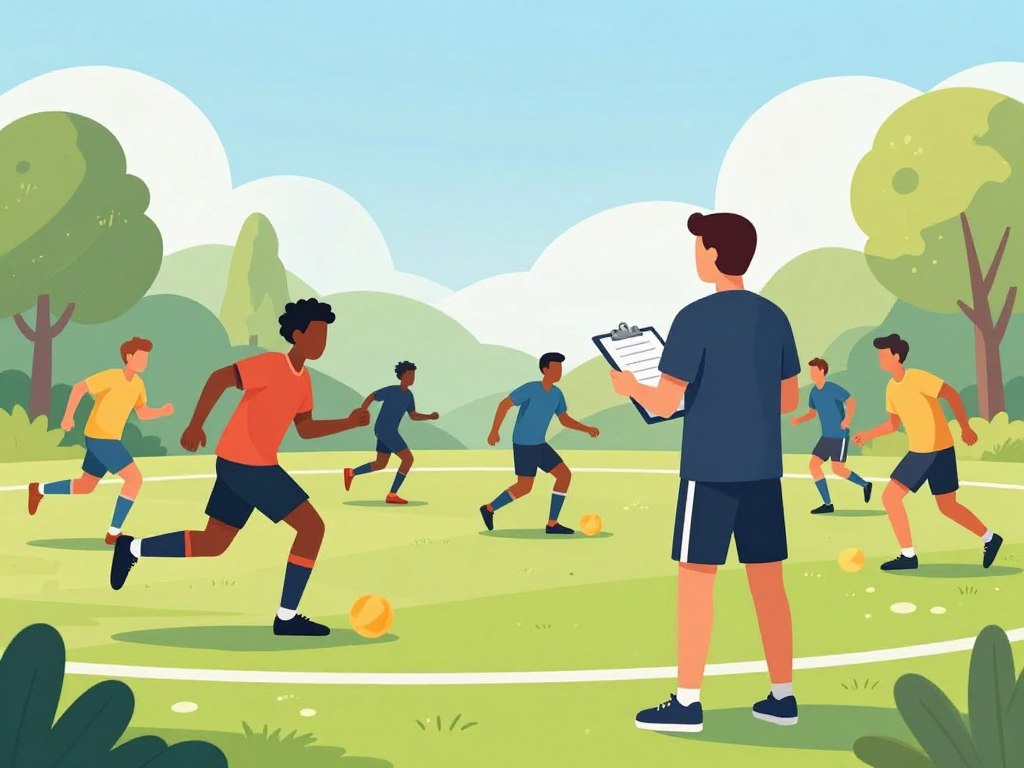

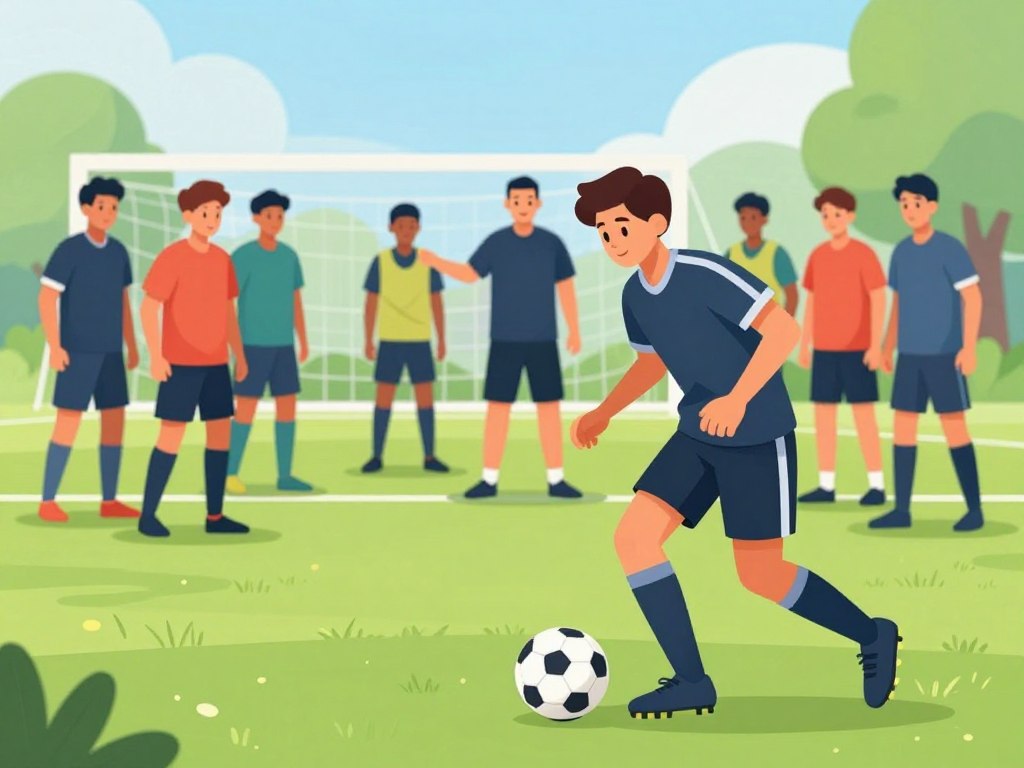
Did you know that research suggests up to 90% of a player’s performance in critical moments is determined by mental preparedness, not just raw skill?
I’ve stood on countless sidelines, watching athletes with incredible technique freeze when the pressure mounts. The difference wasn’t in their feet; it was in their minds.
Years of observation taught me a simple truth. The most powerful training sessions quietly build neural pathways for calm and clarity. They prepare you to make the right pass before you even see it.
Ever wondered why some players seem to have all the time in the world? Their secret isn’t supernatural speed. It’s a mind trained to read the game three moves ahead.
I still remember a young player who transformed. We shifted focus from endless repetition to developing situational awareness. His confidence soared because his mind was finally in the practice.
This guide is about crafting those moments. It’s about drills that challenge your focus as much as your first touch. Because true skills are born when physical action and mental sharpness meet.
Key Takeaways
- Most performance errors in critical game situations are mental, not physical.
- Effective training builds neural pathways for automatic, calm decision-making under pressure.
- The best players train their minds to read the game several moves in advance.
- Drills should integrate psychological challenges, like focus and awareness, alongside technical work.
- Consistent mental practice builds confidence that translates directly to match day.
- The gap between good and great players is often their psychological preparedness.
- Transformation happens when training sessions engage both the body and the mind.
Enhancing Mental Resilience Through Soccer Drills
I’ve witnessed players with average technique outplay stars simply because their minds were stronger. That resilience isn’t magic. It’s built through specific, repeated challenges in practice.
When you design activities that mimic the stress of a match, you forge a mindset that thrives under pressure. This is where real growth happens.
Understanding Mental Toughness on the Field
Mental toughness means staying composed when defenders close in. It’s making smart choices when your legs are tired. Keeping confidence after a missed shot is crucial.
These traits are crafted, not inherited. Every session where you push through discomfort adds to your psychological armor.
Boosting Focus Under Pressure
Your ability to concentrate amid chaos decides games. Drills that limit time and space force your brain to filter out noise.
You learn to see the play before it happens. This sharpens your decision-making when an opponent is breathing down your neck.
| Mental Challenge | Drill Focus | On-Field Result |
|---|---|---|
| Pressure from Opponents | Possession games in tight areas | Calm ball retention under duress |
| Decision Fatigue | Rapid passing sequences when exhausted | Smart, efficient choices late in the game |
| Bouncing Back from Errors | Immediate action after a missed shot | Unshaken confidence and quick recovery |
Essential Components of Effective Soccer Drills
Over the years, I’ve realized that the most transformative practice sessions always revolve around three non-negotiable elements. Every effective drill I design must challenge ball control in game-like ways, force rapid choices, and build habits that directly translate to matches.
| Essential Component | Drill Focus | On-Field Result |
|---|---|---|
| Realistic Ball Control | Mastering the feel of the ball under defensive pressure | Confident possession when opponents close in |
| Quick Decision-Making | Limiting time and space to force faster reads | Seeing plays develop before they happen |
| Habit Transfer | Weaving multiple skills together in chaotic scenarios | Automatic execution during real game tension |
Ball Control and Dribbling Techniques
This is the absolute foundation. You can’t execute a tactical plan if the ball bounces away from your feet under pressure. I learned this the hard way.
Elite control comes from thousands of purposeful touches. Your drills must mimic the chaos you’ll face. This builds the muscle memory for automatic play.
Precision Passing and Accurate Shooting
Great passing and shooting need more than technical repetition. They require context. You must practice while fatigued, with limited time, and a defender closing down.
Accuracy stems from mental calmness. The best drills incorporate physical exhaustion first. This teaches you to pick your spot and execute when tired.
Innovative Approaches in Developing Soccer Training Drills
The moment I stopped copying drills from a playbook was the moment my players started making real progress. Innovation means designing activities that target specific gaps in your team’s psychology and technique.
Tools like BlazePod devices are a prime example. They add reaction time and agility elements to standard exercises. This forces athletes to process visual cues while executing a skill, mirroring the intense cognitive load of a real game.
But the best ideas aren’t always high-tech. Simple constraints—smaller fields, touch limits, or multiple balls—break comfortable patterns. Adding points or competitions transforms mundane practice into an engaging challenge.
As a coach, I’ve seen that the core of innovation is personalization and novelty:
- Tailor activities to individual mindsets. Some players thrive on rivalry, others need confidence-building first.
- Introduce novel challenges constantly. This keeps the brain adapting and prevents skill plateaus.
- Focus on engagement. When athletes are mentally invested, development accelerates.
This approach keeps your sessions fresh and your group improving faster. It moves everyone beyond predictable routines.
Building a Foundation: Core Soccer Skills to Master
There’s a reason the ages between five and twelve are called the ‘golden age’ for learning sports. It’s when the brain is most receptive to building the motor movements for core skills. I’ve seen too many talented players plateau because they rushed past this phase.
Fundamental Techniques for Ball Mastery
True mastery isn’t about fancy tricks. It’s built through thousands of touches where you learn how the ball responds. You discover how it rolls, spins, and feels at different speeds.
Your feet must develop an almost unconscious relationship with the ball. You should manipulate it without looking down. Trust that your foot will find it exactly where your brain expects.
This deep comfort allows for creative play later. Individuals with this solid foundation attempt things others wouldn’t dare. The most important skill is receiving a ball under any circumstance and having instant control.
Ball mastery means training with all surfaces of your foot. Each surface becomes a tool you deploy automatically. This only comes from deliberate, foundational practice.
Drills to Improve Passing Accuracy and Game Vision
My perspective on passing shifted forever when a coach told me, ‘Stop looking at your feet and start reading the field.’ I realized the game isn’t about individual brilliance. It’s about connecting with teammates through perfectly weighted passes.
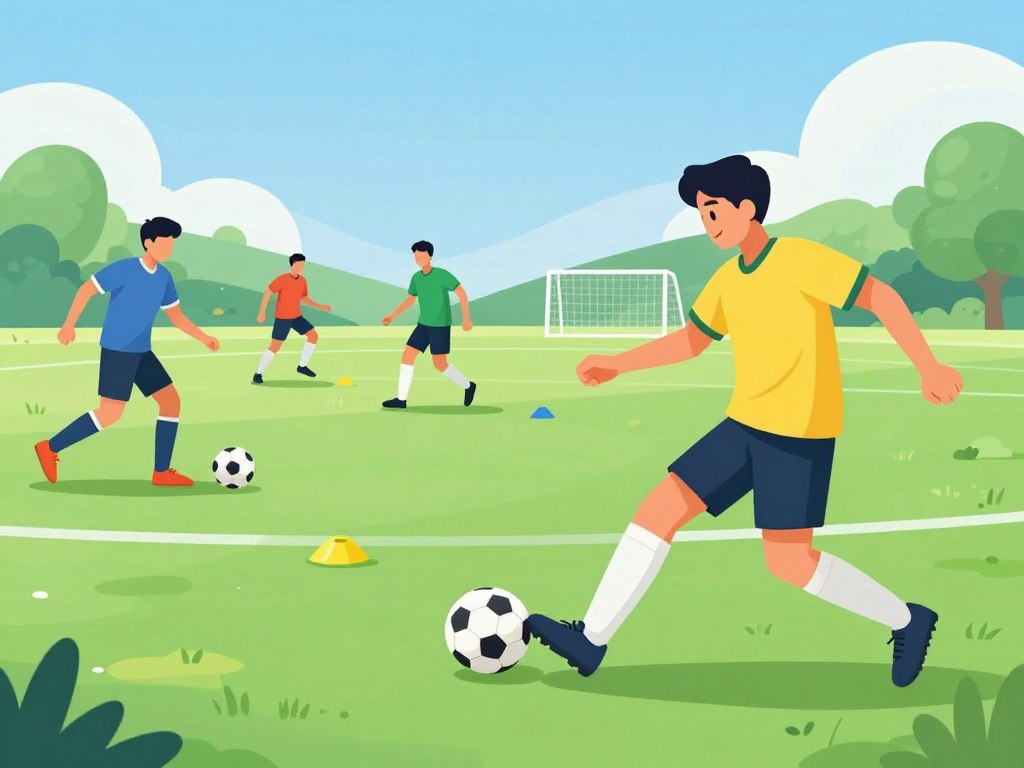
That moment taught me that true accuracy requires both technical skill and advanced vision. You must see the opportunity before it fully develops.
Short Passing Drill Strategies
Short passing is the foundation. Stand five yards from a partner. Use the inside of your foot to keep the ball on the ground.
This drill focuses on crispness and precision. There’s no room for sloppy technique. This close-range work builds the touch for every pass you’ll make.
Long Pass Techniques
Long passes require different mechanics. Move back 15-20 yards. Use the laces of your cleat for distance.
You must adjust your body angle and strike through the ball. These technical differences become automatic through hundreds of repetitions.
I’ve watched players with perfect technique fail in matches. They couldn’t read the field quickly enough.
Your drills must incorporate decision-making. The triangle combination exercise is excellent. It forces you to pass, move, and receive in tight spaces.
Train with purpose. Visualize game scenarios. Demand perfection from each delivery as if the match depends on it.
Enhancing Shooting Skills and Finishing Under Pressure
You can have flawless technique, but if you can’t execute when defenders are closing in, it doesn’t matter. This is where technical ability meets mental composure. True scoring prowess is forged in those high-stakes moments.
Power and Precision in Shooting
Finding the balance between power and accuracy is the great separator. You want to strike the ball firmly, yet place it precisely where the goalkeeper can’t reach. This duality defines consistent finishers.
The most vital skill isn’t raw force. It’s decisiveness. Hesitation kills opportunities. Your drills must train you to recognize the moment and commit without a second thought.
I always design activities that incorporate fatigue and defensive pressure. Shooting fresh and unopposed builds habits that crumble in a real game. You need to practice when you’re tired and a challenge is coming.
A fundamental drill involves a still ball 15-20 yards from the goal. Take one step and strike with your laces or inside foot, aiming for the corners. Focus on clean contact and placement over brute strength.
Your shooting improves when you practice with consequence. Set small targets in the net. Demand specific placement with each attempt. Track your success rate and refuse mediocrity.
I remember a player with tremendous power but wild shooting. After weeks of drilling precision, he scored the winner by calmly side-footing into the corner. Everyone expected a blast, but his mind chose the smarter finish.
Finishing under pressure means training your brain to stay calm. Create high-stakes scenarios in your practice where missing has a cost you care about. That’s how you build scoring nerve.
Integrating Conditioning Drills for Speed and Agility
You can drill perfect form all day, but if your body can’t keep up with your mind, you’ll always be a step behind. I learned this watching technically gifted players get dominated by faster opponents. Their conditioning advantage allowed them to close space before a skill could be executed.
True speed and agility are the physical foundations that let your skills shine in a match. They aren’t optional extras.
Quick Footwork via Ladder Drills
Ladder drills build the rapid foot movement patterns you need in tight spaces. Players work through squares or cones, moving forward, backward, and side-to-side as fast as possible.
These movements mirror exactly what you do when dribbling or changing direction explosively. It’s about training your nervous system for quick-twitch response.
I integrate this work into warm-ups. Start with basic patterns, then add speed and complexity. Eventually, add a ball to bridge the gap to game intensity.
Your body learns to maintain technical quality under fatigue. This is why combining conditioning with skill work, like in a comprehensive endurance training plan, is so powerful. It prepares you for the real field.
Drills Focused on Team Coordination and Communication
I once watched a team of individually talented players lose to a less skilled squad because they couldn’t move as one cohesive unit. That day taught me that the game is a shared language. Your teammates must read your body language and positioning to create synchronized movement.
This understanding develops best through specific drills. Small-sided games are my go-to method for building this collective intelligence.
Small-Sided Games for Real Match Scenarios
These activities compress the field into a tight area. This forces constant decision-making under pressure. Every touch matters more, and every communication breakdown costs you possession.
I customize rules to teach specific lessons. A through pass might be worth two points. A one-touch pass could be worth three. This players work encourages smarter play.
Triangle combination drills are also powerful. They teach players about quick passing and support angles. This builds the trust needed to attempt riskier passes that unlock defenses.
When your team moves as a unit, possession becomes nearly impossible to break down. You develop an unspoken rhythm with your teammates. That’s the ultimate goal of these coordination drills.
Youth-Focused Drills: Engaging Kids on the Soccer Field>
My biggest breakthrough came when I stopped calling them ‘drills’ and started calling them ‘games’. For young players, especially those aged five to twelve, fun is the gateway to learning. If an activity feels like play, they’ll practice essential movements for hours without a single complaint.
This age is a golden window for building motor skills. The right fun environment keeps kids motivated and breaks down barriers between different ability levels.
Fun Warm-Up Activities
Great warm-ups do two jobs. They get young bodies ready and create a positive emotional start. I use activities that feel nothing like traditional training.
Games like Fox Tails or Hospital Tag teach acceleration and body control. Cone Chase builds explosive speed and competitive spirit. Pac Man develops dribbling control and spatial awareness while following lines.
I remember a shy eight-year-old who transformed during these games. The fun brought him out of his shell. He was sprinting with a confidence I never saw in serious technical drills.
| Game | How to Play | Skills Developed |
|---|---|---|
| Fox Tails | Protect a fabric tail while trying to grab others’ tails. | Acceleration, deceleration, spatial awareness |
| Hospital Tag | Tag others and place a hand on the tagged body part. | Agility, body control, quick direction changes |
| Cone Chase | Race to collect scattered cones in a defined area. | Speed, decision-making, competitive focus |
| Pac Man | Dribble along lines while one player tries to tag others. | Dribbling under pressure, vision, evasion |
The secret isn’t dumbing down soccer. It’s wrapping challenging skills in pure fun. When children beg to play again, they’re getting the repetitions needed for genuine mastery.
Drills for Intermediate and Advanced Players
The jump from intermediate to advanced play isn’t about more skills; it’s about smarter decisions under fire. I’ve found that at this level, you’re not just training what to do, but when to do it and why.
This requires a game intelligence that only comes from complex, layered scenarios.
Tactical Training for Competitive Play
When I work with intermediate groups, I focus on transitional moments. Games are won and lost in the split-second after possession changes.
Drills should force choices between passing and dribbling. They must build awareness of positioning relative to teammates.
For advanced players, the activities shift dramatically. The goal is to mirror the specific challenges posed by organized opponents.
Possession games with positional constraints are essential. They teach a squad to maintain its shape while circulating the ball under pressure.
I design exercises that make athletes uncomfortable. If you’re always succeeding easily, you’re not growing.
| Focus Area | Intermediate Emphasis | Advanced Emphasis | Key Mental Skill |
|---|---|---|---|
| Decision-Making | Choosing pass vs. dribble in space | Reading defensive shape under duress | Risk vs. reward assessment |
| Spatial Awareness | Positioning when a teammate has the ball | Maintaining team shape in possession | Anticipating play development |
| Transition Response | Reacting to lost possession | Instantly switching from attack to defense | Game speed adaptability |
| Technical Execution | Using the weaker foot consistently | Executing the right skill at the right moment | Calmness under opponent pressure |
I remember watching an intermediate player grasp positioning relative to his team. His game intelligence jumped several levels as he started anticipating rather than reacting.
Your development now comes from training that challenges decision-making speed. The technical skill is there. Can you deploy it when the game is moving at full speed?
Utilizing Essential Training Equipment in Soccer Drills
The right tools don’t make a great session, but they can frame the perfect challenge. I learned this after years of believing I needed the latest gear. Some of my most effective activities use just cones and a ball.
Your creativity matters far more than your budget. Simple equipment becomes a powerful system when you understand its purpose.
It creates the structure where growth happens. The gear sets the stage, but your coaching brings the lesson to life.
Incorporating Cones, Goals, and BlazePod Devices
Cones are the ultimate versatile tool. I use them to mark a playing area, create dribbling courses, and even act as passive defenders. Their infinite configurations let you design new challenges instantly.
Mini goals are another game-changer. They multiply scoring chances in any drill. This gives players more finishing reps and builds the striker’s confidence through positive reinforcement.
Then there’s technology like BlazePod devices. These lights force athletes to react to random cues. It trains decision-making speed under chaotic, game-like conditions.
I remember early in my career, having minimal gear taught me a valuable lesson. Constraints breed the most creative training solutions. The goal isn’t to collect equipment. It’s to use each piece to develop the specific skills your players need.
Adapting Drills for Different Age Groups and Skill Levels
The art of coaching lies not in the drill itself, but in how you shape it for the person performing it. I learned this after years of watching the same activity overwhelm some players while boring others. Effective adaptation is perhaps the most important skill you can develop.
Customizing Drills for Beginners
For young age groups, like U6-U8, strip everything back. The goal is fun and basic ball familiarity. Remove defenders, time pressure, and complex rules.
Let them dribble a ball freely in a large space. The focus is on building confidence and a love for the game. This foundation is critical for all future skills.
Advanced Skill Drills for Experts
For older, advanced players, you add layers. U17+ athletes need high-level tactical execution. Introduce multiple defenders, tight time constraints, and specific positional requirements.
An expert must keep the ball while scanning for teammates and making decisions under duress. This complexity mirrors real match intensity and is essential for growth.
When I customize, I adjust three key variables:
- Space: Smaller areas increase difficulty.
- Time: Adding limits creates pressure.
- Opposition: More defenders raise the challenge.
Mastering this adaptation is a core part of building mental toughness. It ensures every player is challenged at their exact level.
Real-Life Coaching Insights and Success Stories
True player development is a story of resilience, written over seasons through countless repetitions and guided discovery. The best insights come from watching what works on the grass, not in a theory book.
I’ve learned that growth isn’t a straight line. You’ll see plateaus, sudden leaps, and frustrating regressions. The coach who understands this stays patient.
Observing successful soccer programs reveals clear patterns. They build strong foundations first. Understanding the basics beats fancy tricks any day.
Lessons from Successful Soccer Programs
The most important lessons are simple. Consistent training shows real improvement every three to four weeks. Players gain better touch, speed, and control.
Making drills fun keeps young players engaged. This intensifies their love for the game. That passion is critical for competitive soccer later.
I remember a team that struggled early. We focused on possession and celebrated small wins. By season’s end, they played beautiful, controlled soccer.
Your coaching success won’t come from copying drills. It comes from creating the right environment. Your job is to let players teach themselves through discovery.
Maximizing Drill Effectiveness Through Consistent Practice
The most common mistake I see isn’t a lack of effort, but a lack of patience with the process itself. Real improvements come from showing up two or three times a week. You need that regular time on the field.
I’ve learned you need at least three to four weeks of consistent work to see real change. Your touch gets softer. Your passes become sharper. This is how ability becomes automatic.
Tracking Progress and Making Adjustments
You must measure your progress honestly. I keep simple records of how players perform in key areas. This tells me if our practice is working.
When a drill isn’t producing the intended results, I modify it. Your effectiveness as a coach depends on this flexibility. Stubborn repetition of a failing activity wastes precious time.
| Skill Area | Measurement Method | Expected Timeline for Improvement |
|---|---|---|
| Ball Control & First Touch | Successful receptions in tight space drills | 3-4 weeks of consistent practice |
| Passing Accuracy | Completion percentage to a moving target | 3-4 weeks of consistent practice |
| Shooting Precision | Shots on target from various angles | 3-4 weeks of consistent practice |
| Decision Speed | Time to release the ball under pressure | 4+ weeks of consistent practice |
This data shows clear trends you can’t see day-to-day. It proves your training is working, even when daily progress feels invisible. Purposeful practice builds the muscle memory for game day.
Overcoming Common Challenges in Soccer Drills
Adaptability is the secret weapon for turning training challenges into breakthroughs. What works for one player often fails for another. The flexible coach who can adapt on the fly gets far better results.
The biggest hurdle is keeping drills fresh while providing needed repetition. My solution is simple. Disguise repetition inside game-like activities where players get hundreds of touches without realizing it.
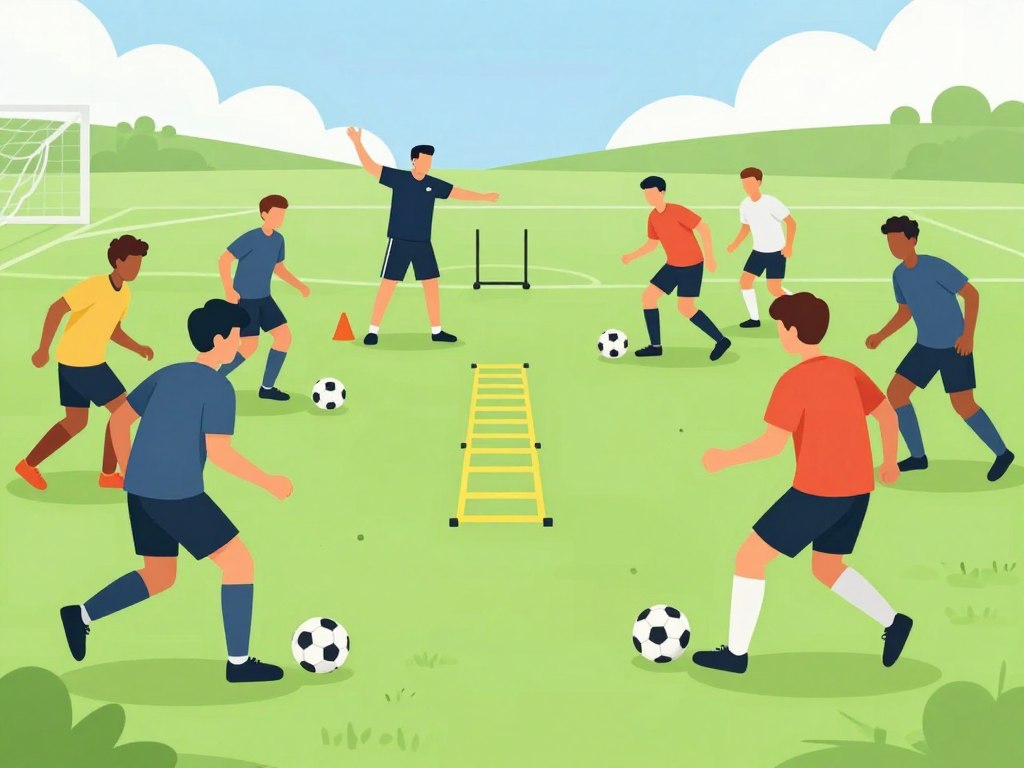
Many players struggle to transfer practice performance to real matches. The drill doesn’t replicate the pressure, speed, or chaos. I solve this by progressively adding game-realistic elements.
When an athlete can’t control ball or keep ball under duress, I’ve likely progressed too fast. The fix is stepping back to a simpler version. Build the foundation first.
Most problems aren’t player problems. They’re coaching problems. If multiple players fail at a drill, I modify the activity. I clarify the goal instead of blaming them.
Your way forward depends on your unique situation. Consider the opponent you face and your group’s skill level. Then tailor your approach accordingly.
Conclusion
Ultimately, the true measure of any training philosophy is found in the quiet confidence of your players during the biggest moments.
This journey of building both mind and skill never truly ends in soccer. Each season tests your understanding of the game.
Real transformation doesn’t come from copying drills. It grows from understanding core principles of learning, then applying them through smart training.
I still remember when I shifted focus from perfect drills to perfect learning environments. That change made all the difference.
The mental aspect separates players of equal technical ability. Your consistent practice standards determine whether they develop that crucial edge.
Focus on a strong foundation over fancy tricks. With purposeful effort, you’ll see skills like ball control improve every few weeks.
I hope this guide offers a way forward. Your most valuable lessons will always come from your own experience with each player.