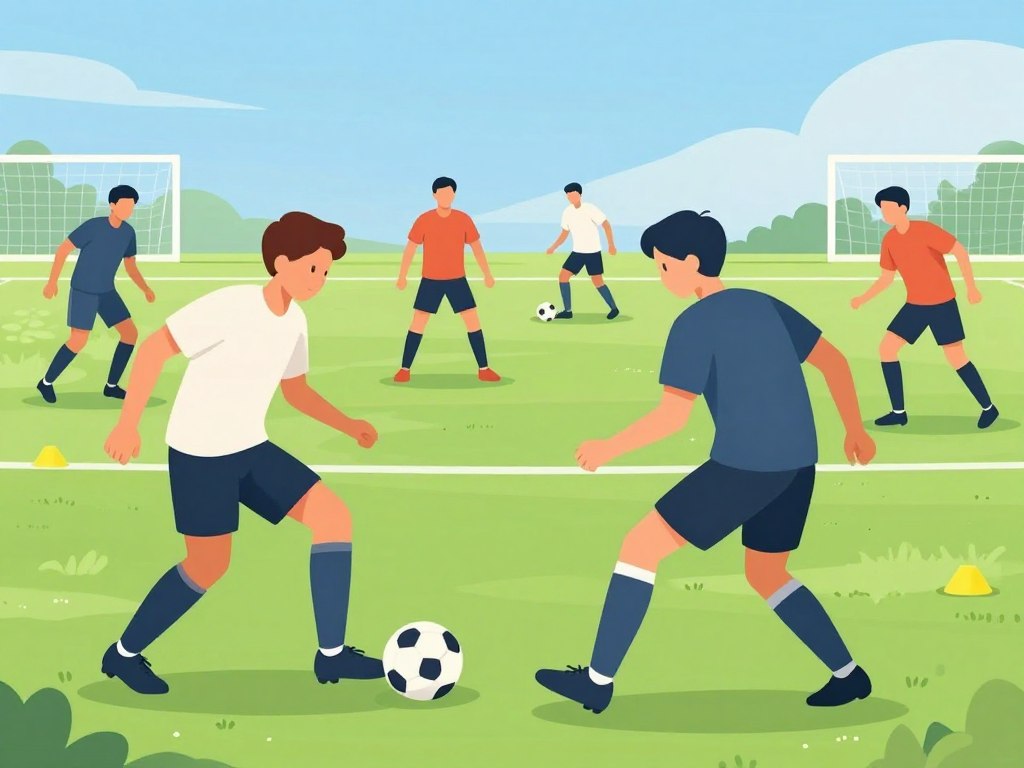


Ever felt your stomach drop just before kickoff and wondered whether nerves will ruin the day?
I’ve seen pros and youth players trip up the same way; the mind pulls you toward outcomes instead of the pitch. That jump forward steals clear thinking and shrinks brave first touches.
I’ll set a simple map: define what confidence looks like on the field — quick recovery after mistakes, calm decisions, and willing runs. Then I’ll show how to treat confidence as a repeatable skill you can build, not a fixed trait.
Focus on what you control: mindset, sleep, nutrition, recovery, and consistent reps. Those inputs boost performance under pressure and help you reset after a mistake.
This guide fits every player — starters, subs, defenders, goal scorers — and aims at real U.S. weekend games and tournaments where emotions run hot.
Key Takeaways
- Confidence shows up as clear thinking and brave first touches.
- Reframe nerves as excitement; it keeps attention on the present.
- Control mindset and daily habits to improve game performance.
- Build simple routines that help reset after errors.
- This approach works for players at every level and position.
Confidence on the Pitch Starts With What You Can Control
I believe confidence comes from habits you can repeat the week and the day before a game. Focus on controllables and you shrink the role of luck, refs, and opponents.
Control the controllables
Mindset matters: name one process goal for the first 15 minutes. That keeps pressure usable and specific.
Sleep, recovery, nutrition, and consistent training are the physical things that move confidence. Do the basics well and performance follows.
Swap outcomes for process goals
Replace “win at all costs” with clear actions: scan before receiving, take one touch, sprint five yards after a pass. Those steps work in any match.
Use nerves as useful energy
Pre-game anxiety is just adrenaline. Say, “This is getting me ready,” then name three first actions you will execute.
| When | Controllables | Examples | Benefit |
|---|---|---|---|
| This week | Sleep windows, short reps, hydration | 8–9pm sleep window, 10-minute ball work, 2L daily water | Quiet confidence before match day |
| Game day | Warm-up, process goals, breathing cue | Scan twice, two progressive passes, 4-breath reset | Reduce pressure and steady nerves |
| If shaken early | Shrink focus, next-action plan | Find safe pass, sprint, call for ball | Let confidence catch up with effort |
how to stay confident in soccer by Redefining “Success” on Game Day
Redefining success on match day changes what your mind chases. If success lives only in the scoreline, confidence will swing with every result; outcomes depend on teammates, refs, and opponents, not just your choices.
Drop heavy expectations. Phrases like “I must score” or “we have to win” create pressure that pulls attention away from present decisions. That pressure makes mistakes louder and recovery slower.
Clear, measurable process objectives by position
- Winger: first touch into space on 70% of receptions; one overlap attempt each half.
- #6 (holding midfielder): scan before 80% of receptions; complete 6 simple passes under pressure.
- Center back: three clear communication cues in the first ten minutes; hold line and force one pass back per opponent attack.
Make objectives count in real time: scan rates, recovery runs after turnovers, and early communication are observable. Track them mentally or ask a coach for a quick halftime check.
Script for coaches and parents
After a game, lead with Jenn Ireland’s flip: “How did you play?” Praise visible process actions—overlaps, quick recovery, smart decisions—not just goals and final score. That wording ties confidence to repeatable actions, not fickle results.
| Role | Controllable Objective | How to Measure |
|---|---|---|
| Winger | First touch into space; one progressive run | Count receptions with forward touch; note at least one successful overlapping run |
| Holding Mid | Scan before receiving; safe pass rate under pressure | Estimate scans per 10 receptions; percentage of simple completed passes |
| Center Back | Early vocal cues; force backward pass | Record communication instances; mark opponent passes forced backward |
When players focus on process, their mind frees up. They stay calm and spot more opportunities. Coaches reward reliable execution with minutes, and that builds long-term confidence and better performance.
Build Early-Match Momentum With Simple, High-Percentage Plays
Minutes matter: the first clean exchanges often set the tone for the whole match.
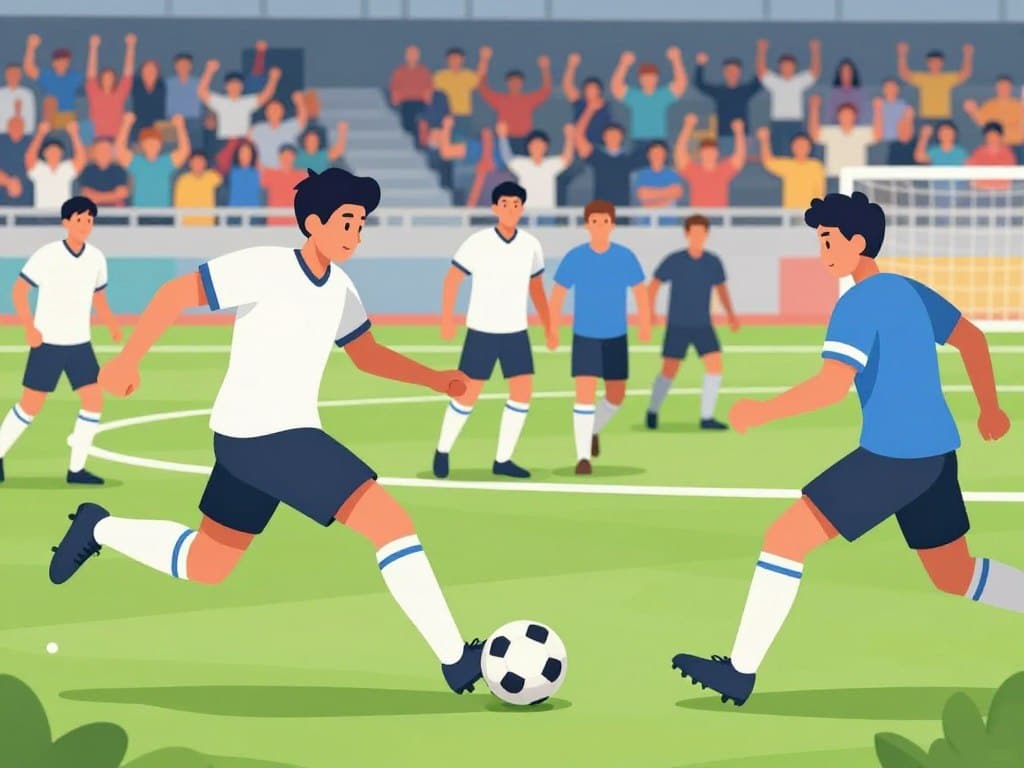
I like a plain plan for the opening three minutes: two safe involvements and one supportive run. That sequence gives a player quick feedback and begins to settle nerves without flashy risks.
Connect short passes to find rhythm, tempo, and touch under pressure
Short, safe passes create rhythm. Fullbacks play a line pass, then support the return. Center mids use one-touch back or around, earning time for teammates.
These simple moves let you feel the ball and pace, even when the first five minutes feel chaotic. The goal is clean connections that build trust on the pitch.
“Fit in, then stand out” once you’re reading opponents and space
First fit in: match the team’s tempo and make easy choices. When you see opponents shift and space opens, stand out with a smart progressive pass or a creative run.
- Decision cues: first touch away from pressure; if unsure, keep your team moving forward.
- Role examples: winger sets and spins; striker pins and lays off; fullback supports after the line pass.
| Minute | Action | Why it helps |
|---|---|---|
| 0–1 | Safe reception + short pass | Builds touch and basic rhythm |
| 1–2 | One supporting run | Creates passing lanes and confidence |
| 2–3 | Two connected passes, slight progressive intent | Tests opponents and boosts confidence |
Play to Your Strengths While Managing Weak Spots
When you name two or three game-changing strengths, practice becomes purposeful and less noisy. I want players to pick strengths that actually change matches—pace in behind, first touch, passing range, 1v1 defending, or a pressing engine.
Identify and track
Find the top strengths with film and feedback
Watch a short clip and journal one clear win: what did you do that helped the team? Ask a coach one direct question about your best action. Ask a trusted teammate what they expect from you under pressure.
Turn the journal into a weekly plan
Example entry: Strengths—first touch (good), forward passing (great). Goal—10 high-intensity minutes on first-touch boxes, 15 finishing reps, 12 wall-pass patterns.
Weekly plan: two strength sessions (10–20 minutes high-intensity each) plus one development session that targets a weak spot. Keep reps short, sharp, and consistent.
Smart decisions that manage weaknesses
Pick situational rules that avoid predictable trouble spots. Example for a CDM: check shoulder early, receive half-turned, play back or bounce the ball if pressed. That reduces risk without removing creativity.
| Focus | Session | Drills |
|---|---|---|
| First touch | 10–15 min | First-touch boxes; scanning-to-pass reps |
| Passing range | 15 min | Wall-pass patterns; progressive balls to space |
| Pressing/Recovery | 10 min | Pressing lines; quick recovery sprints |
Do this and opportunities follow: coaches use you more, teammates look for your touches, and confidence grows because your strengths are repeatable. At U.S. youth and travel level, consistent reps and honest film review help any player become better without overcomplication.
Recover Fast After Mistakes and Stay Calm Under Pressure
Mistakes happen; the best players are fast at fixing them and moving on. I coach the “next action” rule: name the next useful thing and do it before your mind replays the error.
Next action examples: recover run, get compact, scan, or show for the ball. Say the cue out loud and act. That shifts focus from blame to clear decisions.
Turn a turnover into effort
If you lose the ball and you’re close, counter-press for five seconds. If you’re not close, sprint back and get behind the play. Either route turns a bad moment into value for the team.
Replace negative talk with executable cues
Swap “I blew it” with short cues: “scan,” “simple,” “two steps to the ball,” or “shoulder check.” Those words feed the body with tasks, and confidence follows action.
Quick reset tools between plays
- One deep breath and shoulders back.
- Quick clap or eye contact with a teammate.
- Micro-routine: scan, breathe, move.
| When | Immediate Action | Why it helps |
|---|---|---|
| Right after error | Name next action; act within 3–5s | Stops replaying and restores control |
| After turnover (close) | Counter-press for ~5s | Recovers ball and punishes opponent |
| After turnover (far) | Sprint recovery; get behind the ball | Reduces danger and shows effort |
Play like this and teammates trust you more. Quick recovery, calm body language, and small cues protect performance and keep a match within your control.
Use Communication and Leadership to Boost Confidence for You and Teammates
A single clear shout at the right moment can change the rhythm of a match and the mood of a team. I use voice as a shortcut: when you speak, you engage and stop overthinking. That engagement lifts individual performance and helps teammates feel safer on the field.
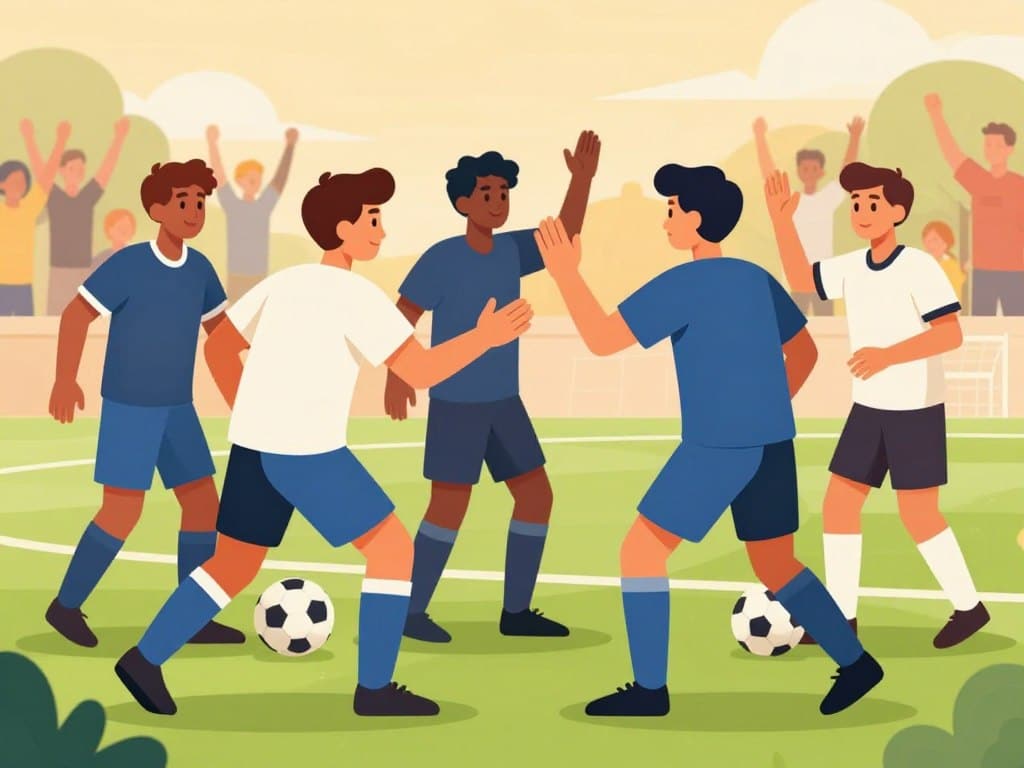
Talk early, talk often
Simple phrases work best: say “man on” when pressure arrives, “time” when there’s space, “turn” for a progressive option, “line” for runs, “switch” to shift play, and “I’m here” to offer support. Use them quickly and clearly; timing matters more than volume.
Positive reinforcement after errors
Keep the level steady with short recoveries: “next one,” “I’ve got you,” or “keep playing.” Those three words stop spirals and protect a player’s abilities from shrinking under pressure.
Lead by example
Work rate and composure are contagious. Sprint back, stay fit, and talk late in the game. When one player shows effort and calm after a bad call or missed chance, the whole group mirrors that behavior and boosts confidence across the level.
| Moment | What to say | Why it helps |
|---|---|---|
| After a conceded goal | “Next one, stick together” | Builds reset and collective focus |
| After a bad ref call | “Keep calm, play our game” | Shifts energy back to controllables |
| After a missed chance | “I’ve got you, keep going” | Prevents self-blame and restores action |
Increase Game IQ to Feel More in Control Against Opponents
Seeing the next play before it arrives makes the ball feel manageable, not surprising. That simple habit lifts your decisions and shrinks the shock when the pass comes your way.
Scan your shoulders to know pressure before your first touch
Scan twice: once as the ball leaves a teammate and once as it arrives. That tells you where pressure will come from and what your first touch must do.
Center mids check both shoulders. Fullbacks look at the winger and the inside channel. Strikers read center backs’ hips before drifting to the ball.
Pre-decide options: plan one safe pass and one progressive pass
Pick two clear choices before the touch: a safe option that keeps possession and a progressive option that risks space. Your first touch then matches the plan, not the panic.
Make the safe choice the default when pressure is high. Use the progressive choice when space opens or teammates call for it.
Stay within your role so coaches trust you—and your confidence grows
Play your job well; that reliability wins minutes and freedom later. When coaches see smart discipline, they let players explore more on the pitch.
Practice assignment: add shoulder scans into rondos and passing drills this week. Count scans per rep and reward the player with the most correct reads.
| Focus | Drill | Goal |
|---|---|---|
| Shoulder scanning | Rondo with mandatory pre-pass check | Scan twice before each reception; 8/10 correct reads |
| Pre-decision work | Passing pattern with one safe + one progressive option | Choose correct option in 7/10 reps under light pressure |
| Role discipline | Position-specific small-sided game | Complete role objectives and maintain spacing for full length |
Turn Every Match Into Confidence-Building Feedback
Treat every game as a short lab where you collect proof, not excuses. I watch clips with simple questions and you can, too; film reveals repeatable patterns faster than memory ever will.
Use video analysis to spot patterns: decisions, spacing, timing, and execution
Simple checklist: decisions (was there a simpler option?), spacing (was I in the right pocket?), timing (early or late?), execution (clean pass to the correct foot?).
Study pro players in your position to borrow movement and choices
Pick one pro and watch 10–15 minutes. Write three “steal this” actions—movement, opening, and a clear touch. Example: a right back studies Dani Carvajal for spacing and overlap timing.
Translate film into training: one focus for the week, one focus for game day
Limit yourself: one weekly focus and one game-day cue. Match the work with drills like scanning rondos, one-touch under pressure, receiving on the half-turn, and recovery sprints.
| Film Insight | Weekly Drill | Game Cue |
|---|---|---|
| Late arrival into space | Timing runs drill | “Arrive early” |
| Poor first touch | Half-turn receiving | “Half-turn” |
| Missed outlets | One-touch outlets | “Simple out” |
When you see progress on film, it becomes evidence. That evidence will build confidence in matches and training far better than empty pep talks.
Conclusion
Here’s the bottom line: the real difference is this — chasing outcomes increases pressure; executing simple processes builds steady confidence and better play over time.
Next game checklist: pick three controllable objectives, open with two safe ball actions, and use one short reset routine after any error. Name them before kickoff and run them when things get noisy.
Use film and short weekly drills as evidence. Match brief training with a clear mindset cue and one ability-focused rep each week.
Goals still matter, but they lag. The fastest path to more goals and wins is consistent execution of controllables that reduce pressure for your team and you.
I’ve seen players change over seasons, not speeches. The field teaches you under real pressure; practice those moments and the results will follow.