

A top coach once told me, “The game is won in the mind before it’s won on the field.” That idea changed everything for me.
I still remember watching a striker ghost past three defenders. He didn’t just sprint; he arrived at the perfect moment. I sat there wondering, how did he know?
Mastering this skill isn’t about raw speed. It’s about reading the rhythm of play. You must feel the invisible connection between yourself and the ball carrier.
Ever notice why some athletes are always in the right spot? Others charge too early and get caught. The difference is in the split-second commitment.
This guide shares what I’ve learned. We’ll explore the technical details, the tactical awareness, and the psychological edge. You’ll find practical drills used by coaches around the world.
Whether you’re a striker seeking more chances or a midfielder supporting attacks, this transforms your entire approach. It’s about developing an intuitive sense for when space opens.
Key Takeaways
- Well-timed movements create clear goal-scoring opportunities, like 1v1 situations with the keeper.
- Success depends on game intelligence and anticipation, not just physical speed.
- The connection between the mover and the passer is a crucial, often unspoken, understanding.
- Great offensive play involves trusting your instincts and your teammate’s vision simultaneously.
- Practical training methods can build the mental frameworks needed for better anticipation.
- This skill is valuable for every position involved in attacking phases of play.
- Mastering this transforms you from a reactive participant into a proactive game-changer.
Understanding the Importance of Well-Timed Runs
I recall a specific match where our entire offensive strategy clicked into place, not because of a flashy skill, but due to our synchronized runs. The difference was palpable; we weren’t just a group of individuals anymore.
This precision is the heartbeat of a potent attack. It forces defenders into reactive chaos and unlocks opportunities that seem to appear from nowhere.
Enhancing Offensive Play
Your movement without the ball is arguably more critical than your touch with it. A perfectly timed run manipulates the entire defensive structure.
You pull markers out of position, which instantly creates gaps for overlapping players. New passing lanes open for your teammates that simply didn’t exist a moment before.
I’ve watched teams transform their output by focusing on this. Passes that once seemed risky become perfectly weighted through balls into dangerous space.
Building Team Chemistry
This skill builds an unspoken language between players. You start to anticipate a teammate’s intention just from their body shape or a glance.
When your team trusts your timing, they will attempt more ambitious passes. They know you’ll meet the ball in stride.
That trust forms through shared practice and experience. The best teams have a collective rhythm; each player’s movement complements the others, creating a fluid, attacking unit.
Key Principles of Timing Runs on the Field
Think of your best run ever. What made it work? For me, it always came down to two things: my body and my eyes.
Your physical commitment and your visual awareness are the twin engines of effective movement.
Commitment and Body Positioning
Half-hearted movement is easy to defend. When you decide to go, explode into the space with conviction. Your sprint must be a statement.
Angle your body before you move. Keep your shoulders open to see both the ball carrier and the defensive line. This stance lets you read the entire play.
I’ve learned that watching the ball isn’t just tracking its flight. It’s about interpreting the passer’s body language, anticipating the exact moment of release.
Reading the Defense
Smart players constantly scan. Is the opposition holding a high line? That’s space to attack with a direct, forward run.
Are defenders sitting deep? A curved run, checking back toward the ball, might be the better option to receive between lines.
Your trigger is key. Start your movement as your teammate receives possession and gets their head up. Vary your angles and timing to keep defenders guessing.
True commitment means sometimes you won’t get the pass. But your run still stretches the game and creates for others. This selfless act is crucial for maintaining confidence on the pitch, knowing your role extends beyond just receiving the ball.
Essential Tips on How to Time Runs in Soccer
Have you ever felt that sudden, instinctive pull toward an empty patch of grass? That’s your game intelligence kicking in. Recognizing these moments separates good players from great ones.
Recognizing Space to Attack
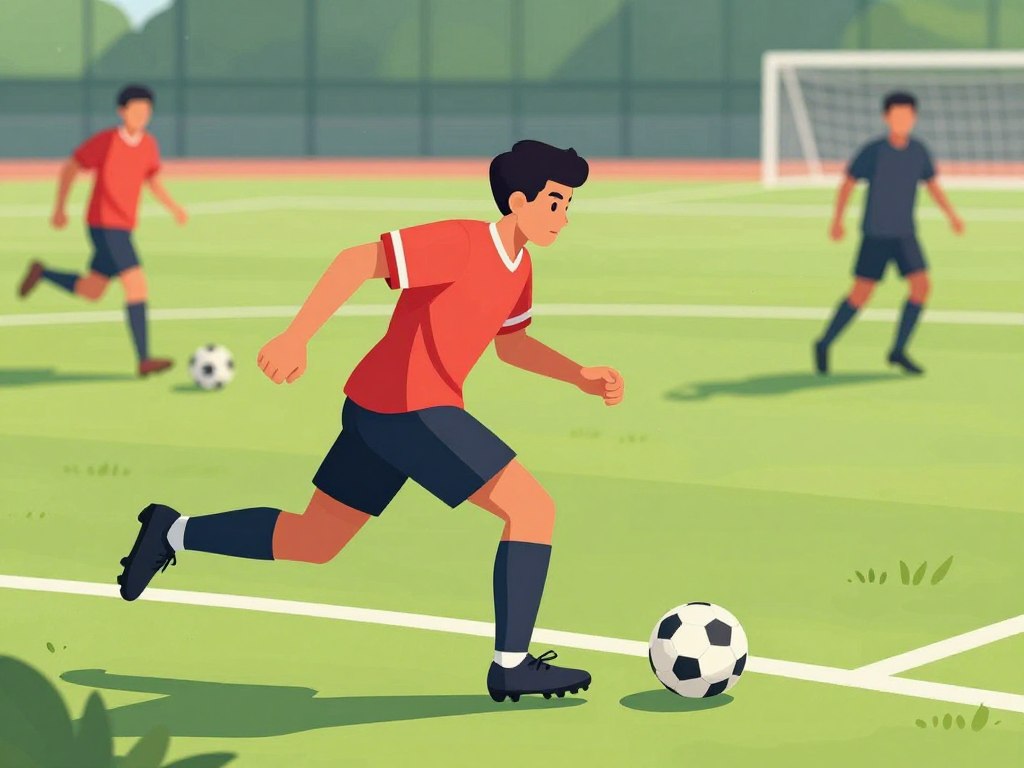
This skill is about seeing the field differently. You start noticing pockets between defenders that others miss. Constant scanning is non-negotiable; keep your head on a swivel.
Sometimes the space isn’t there, so you create it. A decoy movement can pull a marker away, opening a lane for a teammate or yourself. The best attacks often come from these selfless actions.
Focus on vertical movements that break defensive lines. A direct sprint between center-backs is far more dangerous than a lateral shuffle. Your timing must be precise.
The transition moment is golden. As your team wins the ball, defenders are disorganized. A quick, decisive run into that chaos creates clear chances.
Inside the penalty area, this becomes critical. Arrive a second early, and the area gets crowded. Arrive a second late, and the pass is intercepted. It’s about feeling the rhythm of the play and exploding into the right area at the perfect instant.
Drills and Practice Sessions to Sharpen Your Runs
I once designed a training session that felt like a lightbulb moment for our entire squad. The right practice structure turns theory into instinct.
Deliberate repetition in game-like environments builds the anticipation you need. Let’s explore two powerful formats.
Small-Sided Games (4v4 + Targets)
This session forces constant decision-making. You work in a 40×20 yard area with five-yard zones at each end.
Only neutral target players stand in these zones. Your task is to time your entry perfectly.
The scoring system rewards smart movement. One point for dribbling into the zone, two for receiving a pass there.
A three-point play involves the target player and a through pass. This drill gives immediate feedback on your timing.
When the ball goes out, target players restart play quickly. This mimics the transitions where well-timed movements are most lethal.
Full-Pitch Scenarios (10v10 and 11v11)
Progressing to larger areas is crucial. A 10v10 setup between penalty areas bridges the gap beautifully.
End zones contain a goal and a keeper. Twenty outfield players work in formation.
You must coordinate your runs with the team’s tactical shape. The same scoring system applies, plus two points for passing into the opposition keeper’s hands.
Playing two nine-minute matches allows for halftime adjustments. Your coach can highlight what worked.
Finally, full 11v11 removes all artificial conditions. It reveals if your timing is truly ingrained.
| Drill Type | Field Setup | Key Focus | Scoring Emphasis |
|---|---|---|---|
| 4v4 + Targets | 40×20 yards with five-yard end zones | Timing runs into constrained space | 1 pt for dribble, 2 pts for pass received, 3 pts for third-man run |
| 10v10 + Goalkeepers | Between penalty areas with end zones containing goal/keeper | Coordinating runs within team formation | Includes 2 pts for pass to opposition keeper’s hands |
Integrating Tactical Awareness into Your Movement
I’ve always believed the smartest players see the field in layers, not just as a flat surface. This awareness transforms random effort into intelligent, game-controlling movement.
Assessing Defensive Lines
Your first job is constant scanning. Is the opposition holding a high line? Are defenders sitting deep? You adjust your approach based on this live read.
A high defensive line invites a sprint in behind. Your timing must be razor-sharp to stay onside. The goal is to break lines vertically, slicing between defensive layers.
This disrupts the entire block. I’ve found the best player makes movement that pulls defenders out, creating space for the team.
True awareness means predicting where a marker will be when the ball arrives. See a player ball-watching? That’s your trigger. The relationship between your runs and their lines is always shifting. Anticipating this shift is control.
Designing Training Sessions That Mirror Game Situations
The most impactful training sessions I’ve ever been a part of blurred the line between the practice ground and game day. They recreated the specific chaos and decision-making pressure you face in a real match.
Effective coaching plans build this environment deliberately. The structure itself becomes the teacher.
Using Cones and Zones for Precision
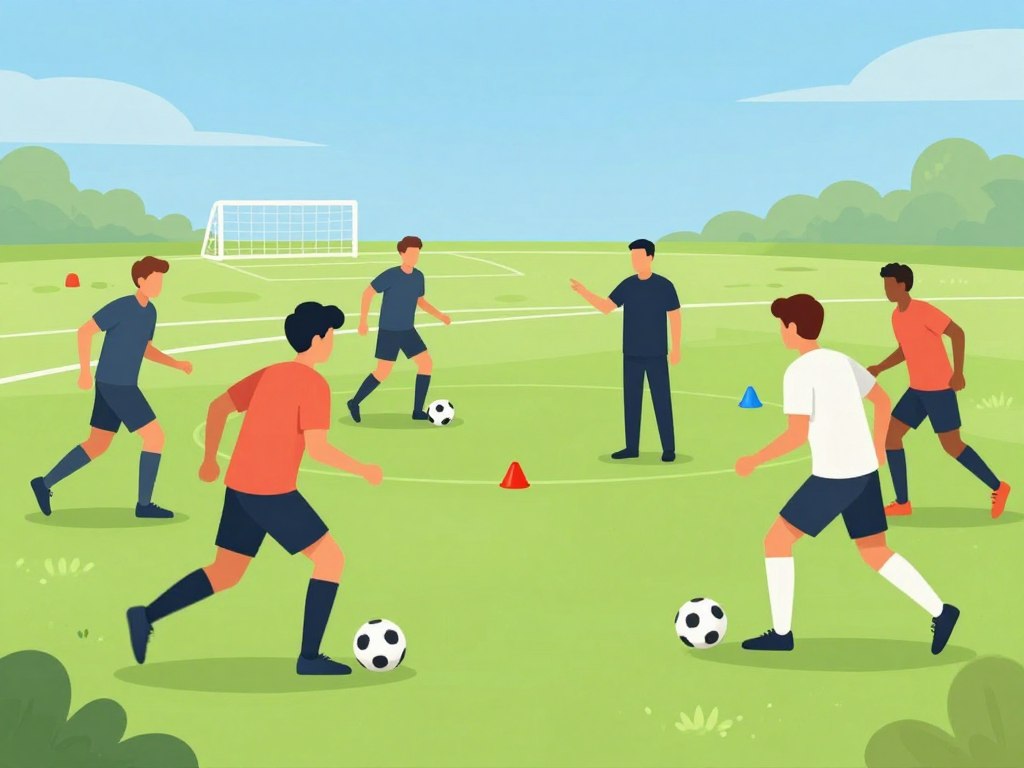
Cones and marked zones give players a clear visual target. Abstract ideas like “attacking space” become concrete areas you must enter.
I’ve seen a coach transform understanding by marking a danger zone. The challenge shifts to timing your entry into that exact space. This makes improvement measurable.
Adapting Drills to Real Match Conditions
The best plans progress. Start with controlled zones, then remove constraints until play is free-flowing.
Adaptation is key. If your next opponent holds a high line, your session should emphasize runs in behind. You can set one team in a specific formation to replicate them.
This flexible approach is powerful. The same session structure can teach attacking runs and defensive positioning. It makes excellent use of training ground time.
Weekly sessions cement these concepts. It’s a continuous refinement of a team’s philosophy, not a one-time lesson.
Implementing Timely Attacking Movements During Matches
I remember a goal we scored that felt less like a play and more like a shared thought. Our center-back played a simple pass to the winger. He linked with a central midfielder, and our fullback surged forward on cue.
That’s the magic of execution. All your practice finds its purpose here.
Linking Passes with Forward Runs
Synchronized movement unlocks defenses. Think of a midfielder breaking the line to receive the ball. A forward makes a decoy run toward the play, dragging defenders.
This creates space for a winger to explode into the penalty area. The keeper is now scrambling.
These combinations rely on trust. The passer must believe the runner will be there. Your attacking movements should be purposeful, yet varied.
Check to the ball sometimes. Spin behind the line other times. Keep defenders guessing every match.
| Movement Pattern | Key Sequence | Runner’s Role | Outcome |
|---|---|---|---|
| Third-Man Overlap | 5 → 7 → 8 | Fullback (2) overlaps to cross | Service into the box |
| Line-Breaking Decoy | 3 → 8 (breaking line) | Forward (9) drags defenders | Space for winger (7) in penalty area |
| Late Arrival | Sustained possession | Midfielder arrives late in box | Shot on goal after defense commits |
The final pass often goes to the player who timed their entry perfectly. This game intelligence separates good teams from great ones.
Evaluating Performance and Adjusting Strategies
I keep a simple notebook. After every match, I jot down one thing about my movement that felt right and one that felt off.
This habit forces honest reflection. The full game is where coaching staff sees if your learning from practice translates.
Utilizing Game Feedback to Fine-Tune Timing
Evaluation isn’t about counting passes received. Did your movement create a chance, even if the ball didn’t find you?
Be open to your coach’s perspective from the sideline. They see patterns you miss in the flow of play.
Video review is invaluable for learning. It shows if you consistently start a second late. My advice is to focus on one timing aspect per game.
Work on third-man movements this week. Focus on penetrating runs the next. Small adjustments build over a season.
When the ball goes exactly where you expected, remember that feeling. Replicate it. Mistakes are lessons, too. A step offside teaches a crucial delay.
By the end of the season, players who evaluate and adapt develop an intuitive edge.
| Feedback Source | Focus Area | Actionable Insight |
|---|---|---|
| Self-Assessment | Honest post-game review | Identify one successful and one missed run. |
| Coach’s Sideline View | Overall movement patterns | Ask for specific feedback on your timing triggers. |
| Video Analysis | Mechanical timing errors | Note if your first step is consistently early or late. |
| Training Session Debrief | Connecting practice to games | Link coaching points directly to upcoming match scenarios. |
This cycle turns each session and game into a step forward. Great players aren’t born; they’re built through consistent, smart adjustment.
Conclusion
Looking back on my own journey, the most profound improvements came not from a single moment, but from a steady accumulation of small, smart decisions. Mastering this skill is a continuous path of learning. I’ve given you the framework—the principles, drills, and coaching points—to build upon.
The best players share key traits: spatial awareness, total commitment to their movement, and a feel for their team’s rhythm. When your timing clicks, the ball finds you. Your entire team creates more dangerous chances in every area.
My advice? Be patient and trust the process. Even top coaches and players refine this throughout their careers. Now, step onto the ground and start. Make these plans your own, adapting them to your style of play. The goal is constant growth, one perfectly timed movement at a time.