
Johan Cruyff once said, “Technique is passing the ball with one touch, with the right speed, at the right foot of your teammate.” That idea captures the artistry we’re after. It’s not just about hitting the target; it’s about bending physics to your will.
I still remember my first time seeing a shot arc through the air. It dipped right into the top corner. That moment felt like pure magic. It changed how I saw the entire game.
Soccer became more than power. It was about manipulation. Learning to put spin on the soccer ball opens doors straight shots can’t. You bypass defenders and confuse goalkeepers. Legends like Beckham and Roberto Carlos built careers on this technique.
This skill separates good players from great ones. It’s a journey of patience. Every practice session brings you closer to that breakthrough. Understanding a few core principles turns mystery into mastery. It also builds the mental confidence needed for those high-pressure moments.
Key Takeaways
- Curving the ball is a fundamental skill for set pieces, crosses, and long-range attempts.
- The spin applied to the ball causes it to move in a curved path through the air.
- You can generate this spin using either the inside or the outside of your foot.
- Mastering this technique allows you to create scoring chances from difficult angles.
- Notable professionals like David Beckham and Cristiano Ronaldo are famous for this ability.
- Success relies on precise contact point, body positioning, and follow-through.
- Regular, focused practice is essential to develop consistency and feel.
Essential Techniques to Curl the Ball
I spent years thinking a powerful shot was enough. Then I realized the true weapon was a pass or shot that bent around defenders. Mastering this starts with two core methods.
Exploring Method 1: Inside Foot Approach
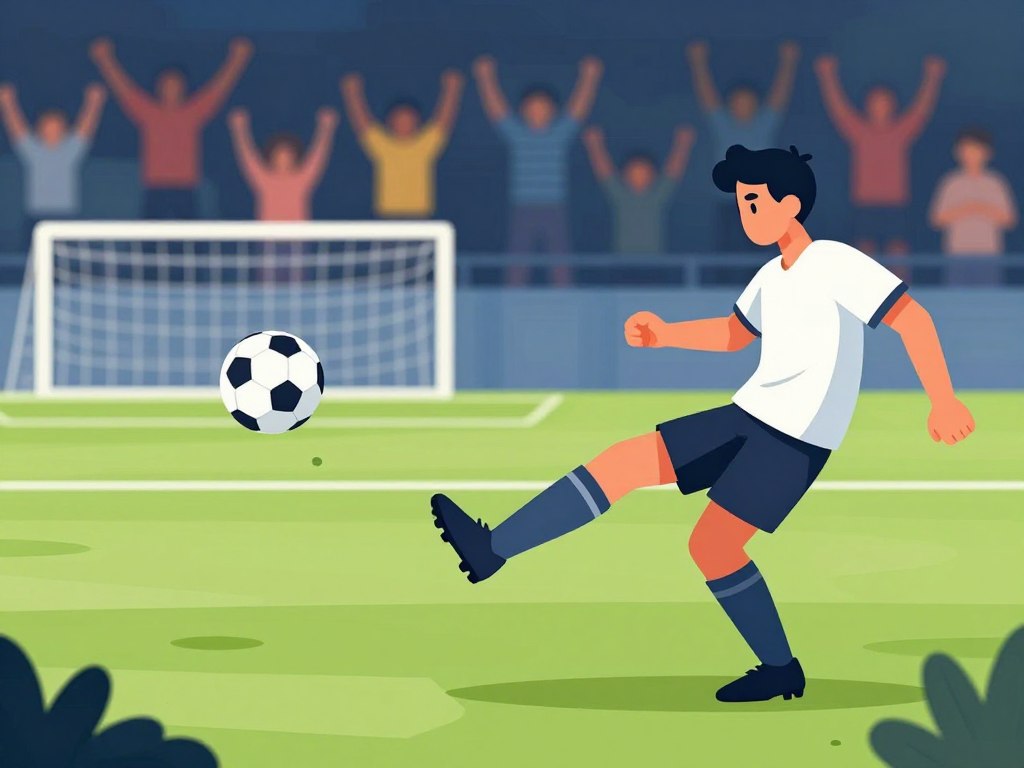
This method feels most natural. Approach the ball at a slight angle, with your body facing right of the target if you’re right-footed. Your plant foot is the anchor; place it about a foot away, pointing where you want the initial bend.
Strike with the broad inside of your foot, not your toe. Aim for the ball’s lower-right quadrant. The follow-through is key. Swing your leg across your body in an outside-to-inside motion.
Exploring Method 2: Outside Foot Approach
The outside foot kick, or trivela, creates opposite spin. It feels awkward at first. Your approach is more angled, and your plant foot sits farther from the ball.
You make contact with the outside part of your foot. The strike point is similar, but the leg swing is different. You whip your leg across your body from the inside out. This imparts fierce side spin.
Understanding the Physics Behind the Curl
The magic of a curving shot isn’t magic at all—it’s pure physics. I remember seeing a ball swerve and thinking it was luck. Then I learned about the forces at work, and everything changed.
This knowledge turns random attempts into calculated strikes. You stop hoping and start knowing.
The Role of the Magnus Effect
That beautiful bend is called the Magnus effect. A rotating ball drags the air around it. One side moves with the ball’s motion, the other fights against it.
This creates a pressure difference. High pressure on one side, low on the other. The ball gets pushed toward the low-pressure zone, causing the curve.
Heinrich Magnus described it in 1852. Isaac Newton saw it in tennis back in 1672. The same rule applies to football today.
How Spin Influences Ball Trajectory
The direction of your curve depends on the spin axis. Clockwise spin bends it right; counter-clockwise bends it left.
More spin isn’t always better. There’s a sweet spot for maximum bend. Clean contact at the ball’s lower center is key.
Distance matters too. The Magnus effect has more time in the air to work over longer passes. Modern soccer balls, with their textured surfaces, respond better to spin than old leather ones.
| Factor | Effect on Curve | Practical Tip |
|---|---|---|
| Spin Rate | Higher spin increases curve, but only to an optimal point. | Focus on clean, sweeping contact, not brute force. |
| Strike Point | Hitting lower and off-center generates more effective rotation. | Aim for the ball’s lower quadrant, not the middle. |
| Air Density | Thinner air (at altitude) reduces the Magnus effect slightly. | Expect a slightly straighter flight on very hot or high-altitude days. |
| Ball Surface | Textured panels grip the air better, enhancing swerve. | Use a modern match ball for practice to feel the true effect. |
Grasping this physics makes you a smarter player. You manipulate air pressure with intent. This understanding complements advanced spatial overload tactics, where precise passing angles are crucial. You’re not just kicking; you’re conducting an experiment with every strike.
How to Curl the Ball in Soccer for Effective Free Kicks
My heart used to pound before every set piece, until I learned to see the wall not as a barrier, but as a guide. It forces the keeper to guess. A well-struck ball makes that guess wrong every time.
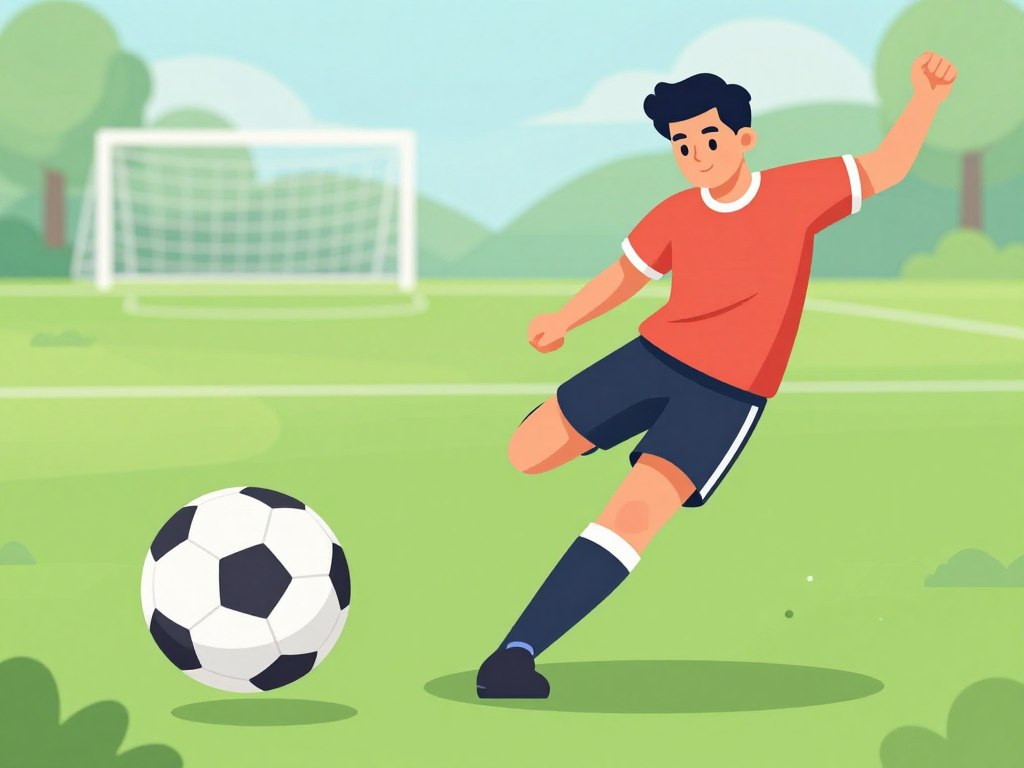
I still remember my first successful free kick from 25 yards out. The wall jumped, the keeper dove, and the ball found the side netting. That moment is pure artistry.
Foot Positioning and Contact Points
Your foot placement at the moment of contact determines everything. A millimeter off means hitting the wall. Clean, consistent contact on the ball’s lower quadrant is non-negotiable.
David Beckham mastered the inside-of-the-foot technique. Roberto Carlos famously used the outside. Both required absolute precision. Muscle memory from repetitive practice makes this automatic in games.
Adjusting Plant Foot and Body Alignment
For a free kick, your plant foot setup is more deliberate. Place it a bit farther from the ball, pointing just right of your target. This creates the angle for the curve soccer ball path.
Your entire body contributes. A slight lean, with shoulders tilted, generates extra spin. This is how you bend soccer ball with both finesse and power.
| Distance from Goal | Primary Objective | Key Technical Focus | Example Style |
|---|---|---|---|
| 18-22 yards (Edge of area) | Dip over the wall | Strike with topspin; follow-through upward. | Juninho Pernambucano |
| 23-27 yards (Prime free kick range) | Bend soccer ball around the wall | Clean side contact; full, sweeping leg swing. | David Beckham |
| 28-35+ yards (Long range) | Combine power and maximum swerve | Strike lower on the ball; aggressive follow-through. | Roberto Carlos |
The best takers make their body and foot work as one fluid unit. From that calm setup to the final whip, it’s a single motion designed to beat the target.
Tips for Maximizing Accuracy and Power
Balance is the silent partner in every successful shot. It’s the foundation that lets your technique shine. I learned this after watching many players with perfect contact still miss the goal.
Their body wasn’t stable through the finish. You must build from the ground up.
Maintaining Balance and a Proper Follow-Through
Coach Walter Merino taught me the motion should trace a “J”. This shape naturally incorporates a full follow-through. Cutting it short stops the curl ball mid-flight.
Your plant foot must be consistent. It anchors your entire body. A proper follow-through completes the sentence you started with your kick.
Practicing with Real-Game Scenarios
Generic practice isn’t enough. Set up a wall of cones. Place the soccer ball at 20, 25, and 30 yards out.
Visualize a game situation every time. I dedicate time to corner kicks, aiming for in-swinging balls that dip toward the far post. This translates directly to assists.
Train when you’re tired. That’s when true muscle memory is tested.
Integrating Expert Advice into Your Routine
Coach Misty Benson’s tips changed my game. She warned against “toe-punching” on outside foot strikes. Use the correct part of your foot.
Perfect the technique first at 60% power. Then gradually increase intensity. I film my kick and compare it to pros.
See the differences in your body position and adjust. This deliberate integration turns advice into instinct. You’ll start to bend ball with both precision and force.
Conclusion
Your plant foot anchors more than your body—it steadies your entire technique. I’ve shared both the inside foot and outside foot methods. The physics of spin and air pressure are now tools you understand.
Legends like Beckham and Messi built careers on this skill. It’s a fundamental, repeatable motion. It transforms free kicks and corners into genuine threats.
Your strike relies on clean contact and a full follow-through. True power comes from precision, not force.
Now, take this to the field. Set up a wall of cones. Practice from different yards and angles. Spend time making the motion instinctive. That’s where theory becomes skill, and you truly learn to bend the soccer ball.