
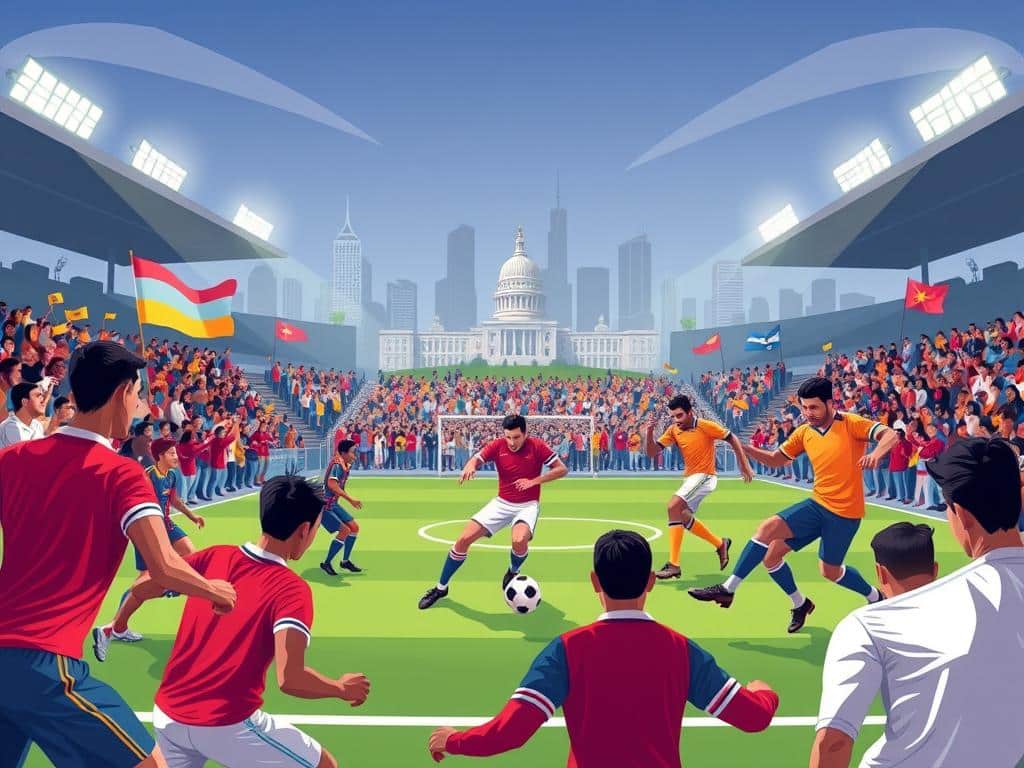
When the world cup lights up a city, the moments on the pitch ripple into public life and debate. I’ve seen how a single tournament can sharpen questions about rights, national image, and who gets to set rules.
From FIFA’s suspension of Russia to the USWNT’s equal-pay settlement, these are not just sports headlines; they are decisions that shift budgets, laws, and public trust. Fans, players, and leaders all play parts in how the beautiful game shapes culture and policy around world.
We’ll trace key moments in history, show evidence where hosting changed voting and city planning, and point to where future flashpoints may appear. If you want a straight, practical view — with names, dates, and outcomes — start here and check my background at who I am.
Key Takeaways
- Major tournaments like the world cup act as a stage for national and global debates.
- Governance choices—FIFA bans, hosting bids—have measurable effects on public life.
- High-profile cases such as the USWNT deal show sport can drive legal and social change.
- Hosting events can nudge voting and local policy, backed by empirical research.
- The relationship between fans, players, and states shapes narratives that outlast games.
Why the world’s game is a political force
Billions watching a match turn simple plays into moments that shape national stories. Soccer is the most watched sport on Earth, so the game carries real power when eyes and emotions gather.
When a world cup draws huge audiences, leaders and brands treat it like prime public space. Fans tune in from every time zone. That reach makes stadiums and broadcasts ideal for messaging.
The sport carries culture and history into public view. Think of EURO 2020/2021 and Russia‑Ukraine symbolism on shirts and flags. Those images fast become headlines and debate across the world.
| Reason | How it plays out | Example |
|---|---|---|
| Mass reach | Global TV and social spread ideas quickly | World Cup viewership exceeds many mega-events |
| Visible rituals | Anthems, banners, and chants signal values | European matches showing national tensions |
| Fan agency | Supporters mobilize protests and campaigns | Tifo displays that pressure federations |
Football’s networks move faster than many institutions. In short, the beautiful game links people, brands, and states in ways that shape civic life over time.
Mechanisms of influence: how the sport translates into power
Mega-events let a country package its image and deliver it to billions. Hosts use the world cup and continental tournaments to show competence, hospitality, and culture—soft power in plain sight.
Social mixing in stands follows the contact hypothesis: fan zones and local clubs bring people together across lines. That face-to-face contact can reduce prejudice and reshape how people view strangers in civic life.
Teams and clubs act like civic groups. They mobilize volunteers, fund relief, and push campaigns. When players speak up, media amplify those messages and institutions respond.
How these levers work in practice
- Nation branding: hosts stage competence and values during a world cup to sway global opinion.
- Homophily and migration: people cluster around thriving football hubs, reinforcing local culture and voting habits.
- On-field signals: armbands, walkouts, and statements turn a match into a news hook that sets agendas beyond the field.
| Mechanism | Where it appears | Effect |
|---|---|---|
| Contact | Stands, fan zones | Greater empathy; shifted attitudes |
| Branding | Host ceremonies, hospitality | Soft power gains; tourism boost |
| Player activism | Post-match interviews, social media | Agenda-setting; policy attention |
FIFA’s reach and real-world consequences
FIFA can move faster than states when it decides who plays and who sits out. On Feb. 28, 2022, FIFA suspended all Russian teams. That ruling affected qualification paths for the Qatar 2022 and UEFA Women’s Euro 2022 tournaments.
From suspending Russian teams to shaping international norms
Federation bans impose swift costs: teams lose chances to qualify, broadcasters rewrite schedules, and sponsors rethink deals. Those immediate effects show how a sports body can enforce standards faster than some diplomatic channels.
When governing bodies outrun governments in authority
Experts note FIFA’s reach can eclipse intergovernmental action at key moments. Kit designs, flags, and anthems become flashpoints in tournaments. Ukraine’s EURO 2020 kit referencing Crimea is one such example.
- The world cup turns eligibility and discipline into concrete matchday rules.
- FIFA’s control over calendars gives it leverage across many countries and leagues.
- New standards on safety or rights push local organizers to change laws or practice.
| Action | Immediate effect | Broader consequence |
|---|---|---|
| Suspension of teams | Removed from qualifiers | Rewrites sporting and diplomatic ties |
| Disciplinary rulings | Match bans or fines | Sets behavioral norms for men and women players |
| Hosting decisions | Access to revenue and prestige | Alters incentives for a state to reform practices |
Conclusion: FIFA is not omnipotent, but its rulings reshape matches and moments in ways that enter history fast. That explains why countries court approval and why reform campaigns keep pushing for more transparency.
Sportswashing versus scrutiny: the World Cup as a political mirror
Big tournaments act like microscopes; they magnify a host country’s choices for the whole world to inspect. That spotlight can polish a nation’s image or expose deep problems. The 2022 world cup in Qatar drew sustained scrutiny over labor and human rights. Reporters, unions, and NGOs tracked conditions, contracts, and promised reforms.
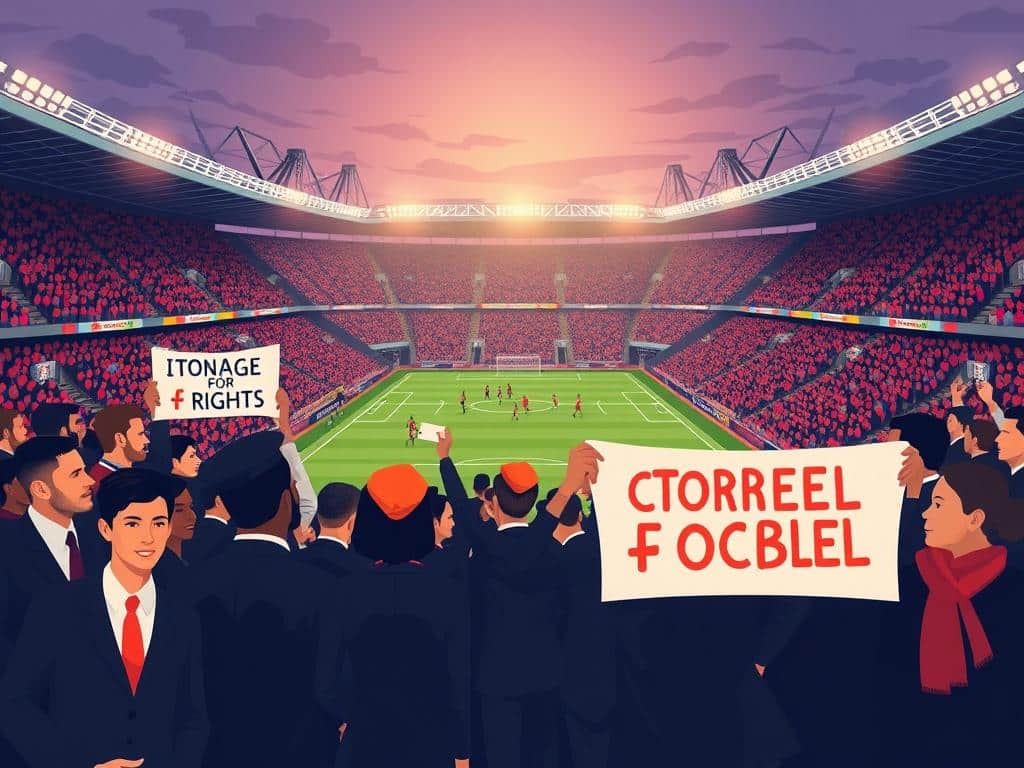
Qatar’s human rights debate and global attention dynamics
The tournament showed how attention cuts both ways. Prestige and tourism rose, but media and watchdogs kept pressure on labor standards and transparency. When players or campaigns highlight abuse, those stories push governments and organizers to answer public questions.
Club ownership, wealth, and backlash: the PSG example
Club ownership changes perception of a state. Qatar’s Emir owns Paris Saint‑Germain. Big signings like Messi and Neymar brought headlines, yet Champions League exits and fan anger created a political story beyond transfers.
- Visibility: fifa world cup scrutiny accelerates probes into contracts and safety standards.
- Fan leverage: banners, boycotts, and chants force teams and owners to respond.
- Player voice: stars can move issues from sports pages to national debates — recall the USWNT’s $24 million settlement and broad public support for rights claims.
| What organizers promise | What scrutiny checks | Possible outcome |
|---|---|---|
| Modern stadiums and jobs | Labor contracts and oversight | Policy changes or reputational damage |
| National branding | Media investigations | Short-term prestige or long-term questions |
| High-profile ownership | Results and fan reactions | Legitimacy gains or backlash |
In short, the line between sportswashing and accountability is set by transparency, access, and whether reforms happen. If watchdogs keep pressure high, a world cup can prompt real change — or at least public records that hold a state to account.
The impact of soccer on politics in crisis and conflict
A single qualification match in 2005 became a turning point for a nation on the brink.
After Côte d’Ivoire reached the world cup in 2005, Didier Drogba and his teammates filmed a direct plea for peace. The men used the locker room, the cameras, and the moment right after matches to ask people to stop fighting and back elections.
The result: the message helped catalyze talks that led to a ceasefire, even if the conflict later resumed. It showed the soccer team as a unifying symbol across regions, religions, and ethnic lines.
- A country watched a team win and then heard players call for unity.
- Timing mattered: the appeal came immediately after a high‑emotion match.
- The world cup stage amplified the plea beyond national borders.
- For policymakers: partner with trusted figures when urgency matters.
| Action | Timing | Effect |
|---|---|---|
| Locker-room plea | Immediately after matches | Raised national mood; pushed talks |
| Players’ video | Same day broadcast | Reached people and state actors |
| World cup qualification | Peak attention time | Global awareness; short-term unity |
Clubs as political actors: FC Barcelona and Catalonia
Few clubs wear a region’s flag as openly as FC Barcelona does in stadium rituals and public statements.
Barcelona links club and city through language, symbols, and a supporters-owned model. Members elect presidents and influence club policy. That structure gives fans formal power beyond cheering in the stands.
Rituals carry history. Supporters chant for independence at the 17th minute to recall 1714. Those chants turn games into living lessons about rights and regional memory.
In 2017, Camp Nou sat empty for a match as protest. Playing behind closed doors sent a clear signal: absence can be a public claim about democracy.
How the club acts in public life
- Supporters-owned governance makes Barcelona a civic actor, not just a team chasing trophies.
- Players and presidents speak on rights and representation, using global broadcasts to press for change.
- The rivalry with Real Madrid channels class and national narratives that reach beyond football.
| Element | How it appears | Effect |
|---|---|---|
| Member votes | Elect club leadership | Formal civic voice for fans |
| 17th-minute chants | Matchday ritual | Keeps history visible worldwide |
| Empty stadium protest | Symbolic no-show | Globalizes local grievance |
Barcelona is a clear example of how teams become institutions that shape debate. Fans, players, and presidents form a triangle that moves culture and state conversations long after a single game ends.
United States trends: from 1994 to 2026
The 1994 world cup planted seeds that turned casual viewers into lifelong fans.
The 1994 tournament reset U.S. football. It drew record crowds and TV audiences. That success led to Major League Soccer in 1996. New clubs and youth programs followed.
States that hosted matches kept the memory. Local media and sponsors began to value the sport more. Cities like Atlanta and Los Angeles turned stadiums into recurring venues for big matches.
1994 FIFA World Cup as an exogenous shock to American soccer
The shock was practical. The U.S., as a host, had to build marketing, ticketing, and fan services fast. That investment seeded local clubs and regular attendance habits.
How hosting changed fandom, markets, and attention over time
Growth came in waves: MLS launches, a strong women’s game, and steady TV deals. Multi-country hosting now spreads costs. The U.S., Mexico, and Canada will test coordination in 2026.
- Fan habits: Event curiosity became habitual viewing and youth play.
- Markets: States with matches saw lasting sponsor interest.
- Venues: Large stadiums proved they can fill seats for football events.
| Year | Milestone | Effect |
|---|---|---|
| 1994 | World Cup hosted in U.S. | Surge in interest; commitment to pro league |
| 1996 | MLS launch | Local clubs and markets grew |
| 2026 | U.S./Canada/Mexico co-host | Shared costs; test multi-country coordination |
In short, the history explains why your state leaders now chase tournaments and why fans can catch world-class matches nearby. I expect 2026 to blend spectacle and civic strategy in new ways.
When tournaments move votes: evidence from U.S. elections
Big tournaments can shift what voters talk about in a state long after the final whistle.
Researchers using two-way fixed-effects and dynamic difference-in-differences find that 1994 world cup host states saw about a 0.16-point rise in Democratic presidential vote share. The effect is small but detectable and matters in close races.
Host states and Democratic vote gains after 1994
The data: rigorous models point to event exposure, not pre-existing trends, as the driver.
Why MLS didn’t replicate the shift, but women’s tournaments did
MLS franchises produced no similar change. Mega-events, not routine seasons, create broad public contact. The 1999 and 2003 women’s world cup tournaments showed ~0.15-point lifts, likely tied to national pride and wider fan bases.
Implications for 2026 FIFA matches in swing states
With 2026 fifa host cities set, Georgia and Florida should expect concentrated media, matches, and civic activity. Polarization today may dampen national spillovers, yet local campaign plans should treat matchdays as outreach opportunities.
- Small numeric shifts can swing close contests.
- Mega-events create unique civic contact that regular seasons do not.
- Smart stakeholders pair matchdays with community programs to extend effects beyond the stadium.
| Event | Estimated shift (points) | Note |
|---|---|---|
| 1994 world cup (host states) | 0.16 | Men’s tournament; two-way FE/DID models |
| 1999 & 2003 women’s world cup | ~0.15 | Similar directional effect |
| MLS franchise presence | 0.00 | No measurable statewide shift |
Gender, rights, and the politics of success
Winning streaks on the world stage change how fans and lawmakers see fairness in pay and support.
The USWNT settled a class action for $24 million. That money funds post-career programs and growth for women’s soccer. The payout matters practically and symbolically.
Public backing rose because a successful national team made the claim feel like common-sense fairness. Players became trusted messengers for broader rights. Their voices pushed discussions into workplaces and public life.
Title IX and uneven geography
Title IX created pathways for girls. Yet compliance varies across states. Many schools, especially in Republican-led states, still lag in roster spots and investment.
- Success fuels legitimacy: repeated wins help frame equal pay as fairness, not special pleading.
- Symbolic shift: the settlement resets expectations for contracts, bonuses, and benefits across the sport.
- Pipeline matters: a strong girls’ system plus visible heroes raises the ceiling for future talent.
| Element | Effect | Example |
|---|---|---|
| Settlement money | Funding and signaling | Post-career programs |
| Public support | Political pressure | National team success |
| Uneven Title IX | Geographic gaps | State roster shortfalls |
Rivalries, nationalism, and cross-border narratives
When neighbors meet on the pitch, the scoreboard is only part of the story. Big matches turn chants, crests, and venue choices into public statements. I’ve watched this play out in stadiums and on evening news.
Mexico vs. U.S. is the clearest example in North America. Those matches mirror migration debates, trade tensions, and cultural pride. Fans bring banners. Players face extra scrutiny. Venues and selection choices can signal national mood.
Mexico–U.S.: proximity as proxy
Matches become shorthand for bigger disputes between countries. They pressure federations and local leaders. Crowd choreography, ticket allocation, and media framing all matter.
Jersey statements and pitch tensions
Ukraine’s EURO 2020 kit that referenced Crimea made a jersey into a geopolitical message. That design turned a team emblem into a global headline. Referees and organizers suddenly managed more than the laws of the game.
- Neighbor derbies can inflame or mend relations.
- Jersey art, armbands, and chants carry clear symbolism.
- Fans act as narrators; media amplify their storylines.
- Players often serve as accidental diplomats after key moments.
| Element | What it signals | Consequence |
|---|---|---|
| Venue choice | Who is welcomed | Local debate and national spotlight |
| Kit design | Territorial claims or solidarity | International headlines; organizer rulings |
| Supporter choreography | Collective identity | Policy attention and security planning |
In short, football and soccer matches between close teams often act as a stage for wider national narratives. Matchdays are not just 90 minutes; they shape who gets heard and how countries talk to each other.
Economic promises, civic risk, and multi-country hosting
Hosting a major tournament rewires city budgets and political calendars fast. When cities sign up, they promise streets, transit, and security that match global standards. That pledge carries real costs and political scrutiny.
Why cities share the burden: spreading costs and political accountability
Co-hosting lets multiple countries split bills and blame. Shared delivery ties city and state leaders into joint oversight. That reduces single-city risk when budgets swell.
Host city choices, return on investment, and public sentiment
Cities sell bids using data: proven attendance, sponsor interest, and hotel capacity. Strong MLS markets, like Atlanta United, help the narrative. Yet voters still fret about long-term bills and white elephants.
- Shared cost: countries and states split infrastructure and security expenses.
- Transparency: clear contracts and legacy plans calm public doubts.
- Legacy ROI: parks, transit upgrades, and community programs matter more than short-term GDP bumps.
- 2026 test: the 2026 fifa tri-national plan widens reach but raises coordination needs.
| Decision | What it shows | Result |
|---|---|---|
| Proven attendance | Market demand | Stronger bid and sponsor interest |
| Modular stadium design | Cost control | Lower risk of unused venues |
| Transparent legacy plan | Public trust | Higher voter support after events |
Bottom line: a cup host bid must balance civic pride with fiscal realism. Treat residents as partners, not spectators, and the tournament can leave usable assets instead of debt.
Conclusion
Big matches concentrate attention in a way that forces leaders to answer questions they might otherwise avoid.
I’ve shown examples—from FIFA’s suspension of Russia to the USWNT settlement, Qatar scrutiny, Barcelona’s role, and Côte d’Ivoire’s 2005 plea—that the game can reshape public debate and policy in real time.
Data from U.S. host states after 1994 and the women’s cups suggest tournaments leave lasting civic footprints. Hosts and cities must pair spectacle with clear budgets, rights safeguards, and legacy plans.
For fans and leaders alike: keep watching, raise demands, and use the world cup spotlight. When football meets public life, the way we act now writes the next years of our shared history around world.