
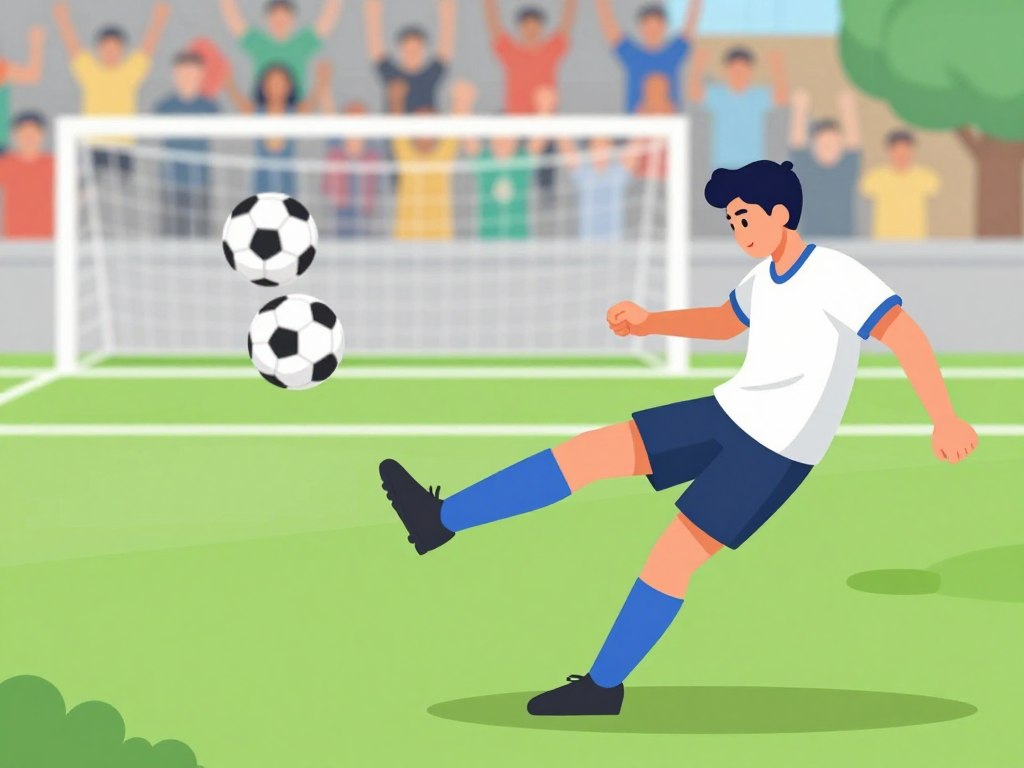
Pelé once said, “Success is no accident. It is hard work, perseverance, learning, studying, sacrifice and most of all, love of what you are doing.” That love is what drives us to master the subtle arts of the game.
I still remember my first attempt. The ball skidded pathetically along the ground. It felt nothing like the magic you see when a pro delicately lofts it over a charging goalkeeper.
That moment of perfect finesse is what we’re after. This specific skill requires striking the ball’s lower-middle with your instep to create a lofted trajectory with backspin.
It’s not about power. It’s about soft touch and pinpoint accuracy. This ability separates average players from exceptional ones. It’s a game-changing weapon that creates opportunities when defenders think they have you covered.
We’re going to break down everything. From the fundamental mechanics to advanced in-game applications. You’ll understand the “why” behind every movement and decision.
Key Takeaways
- The chip is one of the most challenging skills in soccer, demanding finesse over power.
- Proper execution requires striking the ball’s lower-middle with the instep to create loft and backspin.
- Mastering this technique separates average players from exceptional, tactically aware ones.
- It acts as a strategic weapon to bypass defenders and create scoring chances.
- Understanding the “why” behind the mechanics is as important as the “how” for consistent success.
- This guide will cover fundamental mechanics and advanced applications for all levels.
Understanding the Fundamentals of a Chip Shot
That moment when the ball hangs in the air, then drops softly at a teammate’s feet—that’s the magic of a proper chip. It feels different from any other pass. To create it, you need to grasp two core ideas.
Differentiating a Chip from a Lofted Pass
Many think a lofted pass and a chip are the same. They’re not. A lofted pass has a flatter trajectory. It lands and keeps rolling.
A true chip has a higher, rainbow-like arc. More importantly, it carries backspin. This spin makes the ball stop or slow dramatically on contact with the ground.
Think of your foot like a golf wedge. You sweep under the ball to create that rotation. Without the sweep, you just get a floaty balloon.
The Role of Backspin and Arc in Control
Backspin gives you command over what happens after the ball lands. This is critical for dropping it into tight space behind a defender.
The arc is your safety margin. A higher trajectory means more clearance, but also more hang time. You must match the arc’s height to the situation.
Strike through the lower-middle of the ball with your instep. This single motion creates both lift and rotation. Once you understand this physics, you can manipulate the ball‘s behavior on demand.
Distance control becomes intuitive. A longer follow-through and firmer strike send it farther, all while keeping that essential backspin and arc.
Mastering Technique: How to Chip a Soccer Ball Accurately
The difference between a floater and a precise chip often comes down to a single, critical angle. I learned this after many failed attempts. Your approach sets the stage for everything.
Come at the ball from about 45 degrees. This angle lets your body sweep underneath it naturally. Your non-kicking foot becomes your guide.
Place it six inches behind and nine inches to the side of the ball. Point it where you want the kick to go. This foot placement is everything for control.
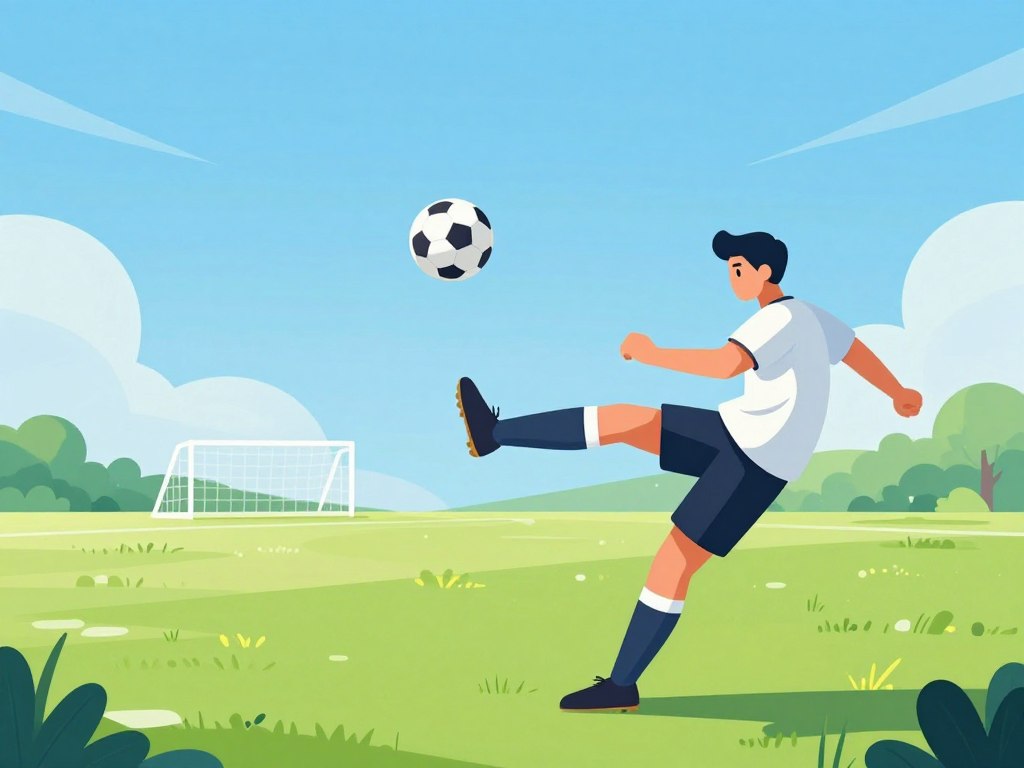
Now, think of your kicking foot as a wedge. Point your toes outward and lock your ankle tight. Strike the lowest part of the ball with your instep.
Keep your torso over the ball. Leaning back sends it sky-high. A compact, upward flick of the leg finishes the technique.
For beginners, try a slightly soft soccer ball from 5-7 yards away. It’s more forgiving and builds confidence in this way.
There are two main methods for creating that essential backspin. Each suits different situations on the ground.
| Technique | Foot Contact | Best For | Spin Characteristic |
|---|---|---|---|
| Toe-Flick | Top of the toes | Quick elevation, short range | Sharp backspin, stops quickly |
| Laces Drive | Upper laces/instep | Greater distance, maintained lift | Controlled backspin, softer landing |
| Hybrid Sweep | Full instep sweep | Balanced height and distance | Moderate spin, predictable bounce |
Mastering this technique isn’t about power. It’s about that soft, surgical touch. Your kicking motion becomes an art.
Step-by-Step Drills and Practice Routines
I learned early on that you can’t just wish for a perfect chip; you have to build it, one repetition at a time. The right drills create that muscle memory. They turn awkward motions into smooth, automatic skill.
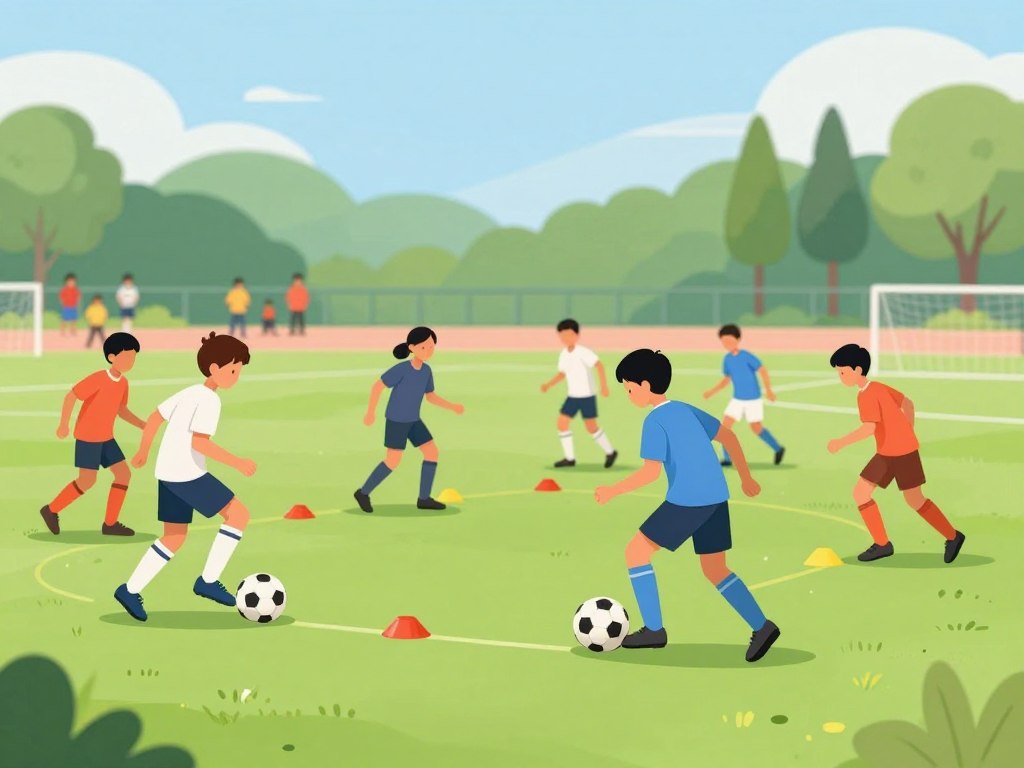
Start simple. Stand about ten yards from a partner with a stationary ball. Take turns sending it back and forth. This grooves the basic sweeping motion. It feels boring, but it’s essential.
Next, have your partner roll the ball slowly toward your foot. Strike it as it arrives. This teaches timing and generates that beautiful backspin. It’s a game-changer for control.
Drills for Static and Moving Balls
Young players (ages 7-8) should just explore the feel. For ages 9-15, this is prime training time. Always work both feet equally during these sessions.
Don’t assume older players have this down. Many high school teams lack proper technique because they never spent time on these fundamentals.
Integrating Obstacles into Practice
Now, add a cone between you and your partner. Graduate to a mannequin or a live defender. The goal is to loft the pass over the obstacle and into your teammate’s path.
For a fun target challenge, try hitting the crossbar from different angles. It builds incredible confidence and sharpens your aim. This translates directly to game situations.
Finally, simulate real play. Set up a 4v2 drill where every pass must be chipped. Or practice chipping over a defensive line after a dribble. Success here depends on your positioning for passes as much as your technique.
Body Mechanics and Foot Placement Tips
Your body’s geometry in that split second before contact dictates the entire outcome. I see players focus solely on their swinging leg, forgetting that stability and angle originate from the ground up.
Optimal Plant Foot Position and Angle
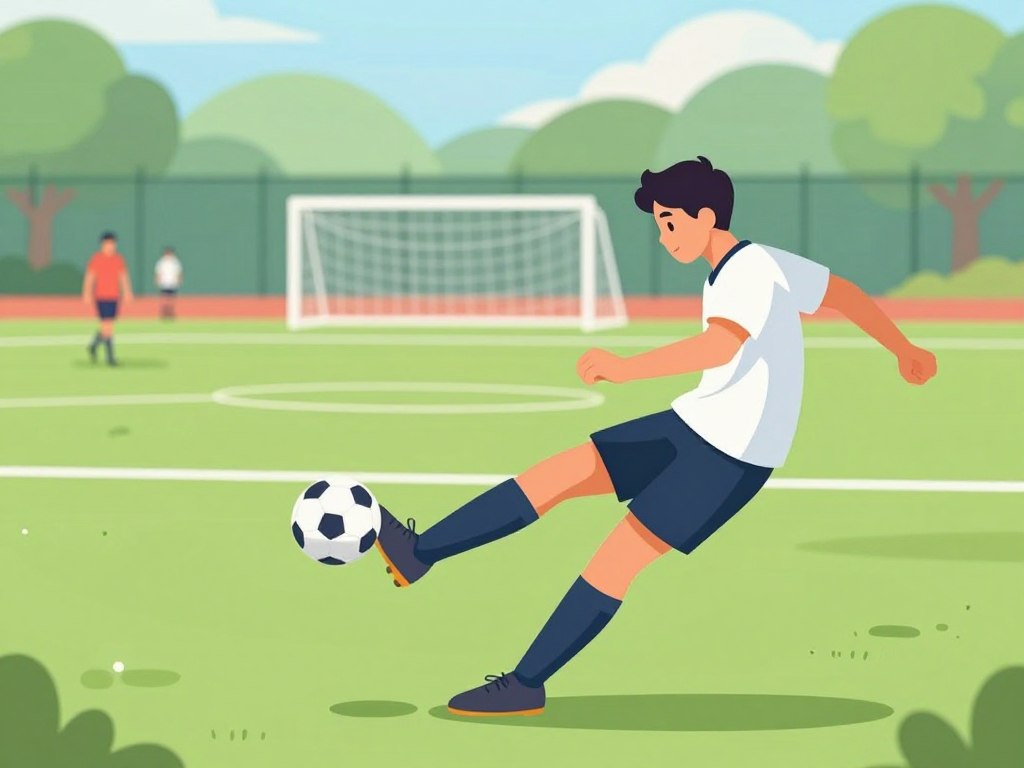
Let’s start with your anchor. Position your non-kicking foot about six inches behind the ball and nine inches to the side. Point it precisely toward your target.
Because of your approach, your ankle will naturally turn on the ground. This creates the leverage needed to sweep underneath. If this foot is wrong, you’ll never find the right part of the ball.
Kicking Foot Alignment and Follow-Through
Now, your striking foot. Turn it outward, showing the inside edge to the sky. This forms the wedge. Strike the absolute lowest center with a locked ankle.
Your body must stay over the ball. Leaning back sends it over the bar. As you make contact, push your upper body slightly forward.
Your leg follows through upward, not out. Bend your knee early so your thigh finishes near your chest. This compact, snapping motion generates perfect loft.
It’s the signature of a player with real control. Master this technique, and that delicate chip becomes a reliable soccer weapon.
Advanced Tips from Seasoned Coaches
The best advice I ever received didn’t come from a drill. It came from watching a goalkeeper’s positioning during a tense match.
That split-second read separates good players from great ones. You must see the game through a coach’s eyes.
Real-World In-Game Adaptations
Spot when the keeper ventures off their line. This is your golden chance. They expect a driven shot, not a delicate lift over their head.
Another prime situation is a flat defensive line. A well-timed chip ball over the top can unlock their entire team. Vision and confidence are key here.
Always take a quick peek at your target first. Then, lock your eyes on the spot you intend to strike. This ensures clean contact and accuracy.
Coaching Insights and Progressions
Accuracy always trumps raw power. A twenty-yard pass that lands perfectly is better than a forty-yard one that misses.
Common mistakes ruin opportunities. Approaching straight-on kills lift. Using the inside of your foot creates sidespin, not backspin.
Design specific training for these moments. Practice chipping over an advancing keeper from different angles. Work on chips from dead balls and on the run.
| In-Game Scenario | Player’s Read | Recommended Action |
|---|---|---|
| Goalkeeper off line | Keeper’s body is forward, space under crossbar | Quick, lofted shot with backspin for a goal |
| Compact defensive line | Flat back four with space behind | Chip pass to a teammate’s timed run |
| Rolling ball delivery | Ball moving toward you, defender closing | Redirect with inside foot or lift with instep |
| Breakaway opportunity | One-on-one with keeper, angle tight | Finesse chip to far post, using the arc |
Spend time mastering both feet. This skill gives you a massive advantage from either side of the pitch. Confidence comes from this deliberate practice.
Conclusion
True mastery of the chip transforms you from a predictable player into a creative soccer threat. You now hold the blueprint for that perfect, arcing pass. The mechanics are tools for your control.
More importantly, you understand the *why*. This lets you adapt during any game situation. Striking the ball cleanly with backspin becomes instinctive. It makes the technique second nature.
Remember, even the best players refine this kicking skill. Be patient. Build confidence through consistent training. Your real journey begins now.
Skills like this open new tactical dimensions. You’ll see passing lanes and create goal-scoring opportunities others miss. Challenge yourself with realistic pressure.
So get out there. Start with short, focused practice. Use a slightly soft ball to build touch. Players at all levels can benefit from this soccer intelligence. Grow by deeply understanding each skill. Then make it your own.