
Did you know the ball is often in active play for less than 60 minutes in a standard 90-minute contest? That fact always makes me pause. It highlights how much of the beautiful game is shaped by the pauses, not just the action.
I still remember the palpable tension during those long injury delays. The crowd holds its breath. Understanding how these moments are managed is crucial for any fan who wants to grasp the full picture.
A professional match is officially 90 minutes long, split into two 45-minute halves. But the clock almost never tells the whole story.
When the clock nears the end of a half, the referee must account for every lost second. This ensures fairness despite the inevitable interruptions. It’s fascinating how this added time is calculated.
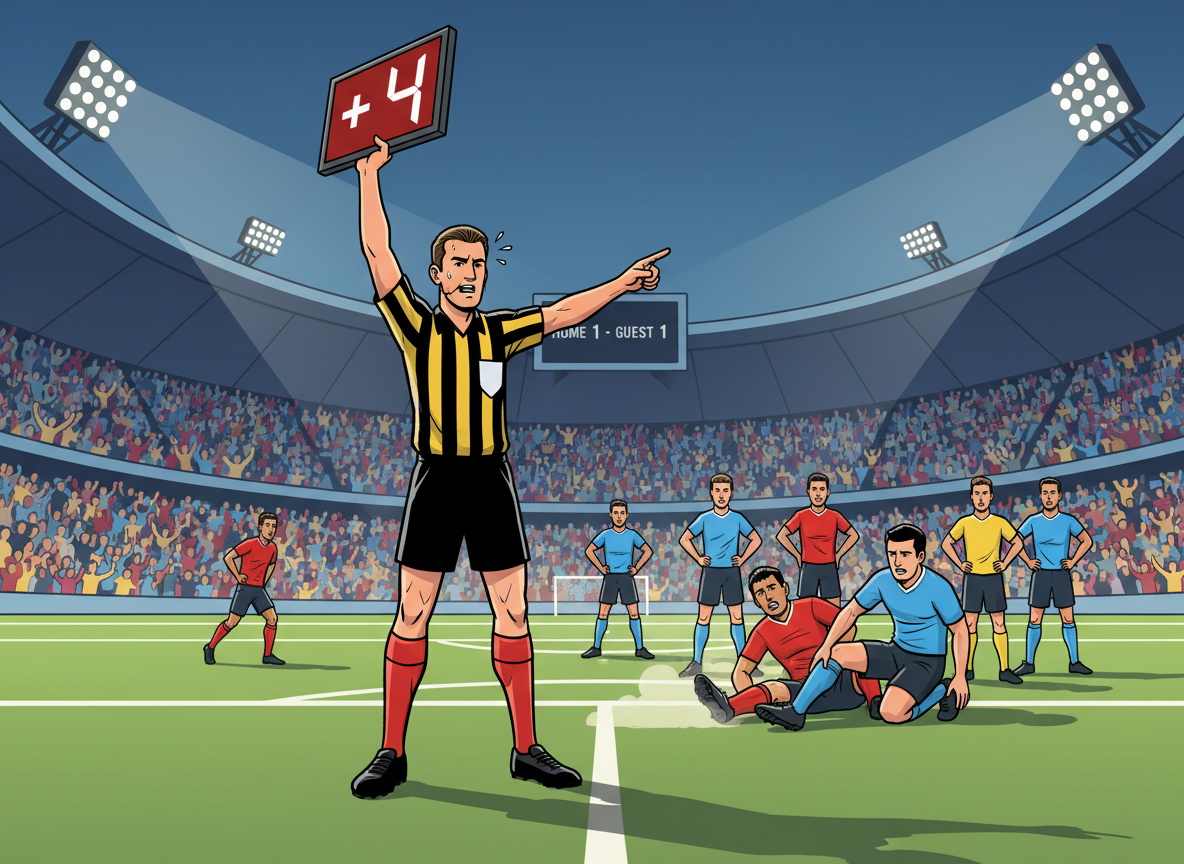
That board held up by the fourth official signals more than just minutes. It tells us the contest is a complex test of endurance and focus, right to the final whistle.
Key Takeaways
- A standard match lasts 90 minutes but includes two separate 45-minute halves.
- The referee has the sole responsibility to track all delays during play.
- Stoppage time is added to compensate for pauses like injuries and substitutions.
- This added period turns the end of a game into a critical psychological battle.
- The fourth official visually signals the minimum amount of stoppage time to be played.
- Every pause, big or small, contributes to the total time added on.
- Understanding this process deepens your appreciation for the sport’s flow and fairness.
Understanding the Dynamics of Stoppage Time
Have you ever watched the clock tick past 90 minutes and wondered where all that extra time came from? I recall the disbelief when 28 minutes were added in a single half. It was a Carabao Cup match back in 2019. A floodlight failure caused the massive delay. That day, the clock felt like a mere suggestion.
How Stoppage Time Is Calculated
The referee tracks every moment play stopped. This includes goal celebrations and injury evaluations. Each pause is mentally logged to ensure the second half reflects the true duration.
Major events can create huge additions. At the 2022 world cup, England versus Iran had 24 minutes of added time. Officials prioritize fairness over a rigid 90-minute structure.
| Match | Event | Minutes Added | Primary Reason |
|---|---|---|---|
| Burton Albion vs Bournemouth (2019) | Carabao Cup | 28 | Floodlight failure |
| England vs Iran (2022) | FIFA World Cup | 24 | Multiple injuries & substitutions |
| Typical Professional Game | Standard League Match | 3-5 | Goals, substitutions, time wasting |
Roles of Referees and Officials
The head referee has the final say on the match duration. They signal the added minutes to the fourth official. This official then displays the time on an electronic board.
When a team would benefit from time wasting, the referee must be vigilant. Extra time is often extended to account for these tactical delays. It’s all detailed in this guide on how extra time works in soccer.
Their core duty remains. They ensure every goal and injury is accounted for. This maintains the flow and fairness we all love about the game.
Mastering Soccer Injury Stoppage Rules
Modern protocols have transformed how we handle those anxious moments when an athlete goes down. I find it fascinating. The balance between urgent medical care and maintaining the contest’s flow is now a precise science.
Dealing with Injuries and Game Disruptions
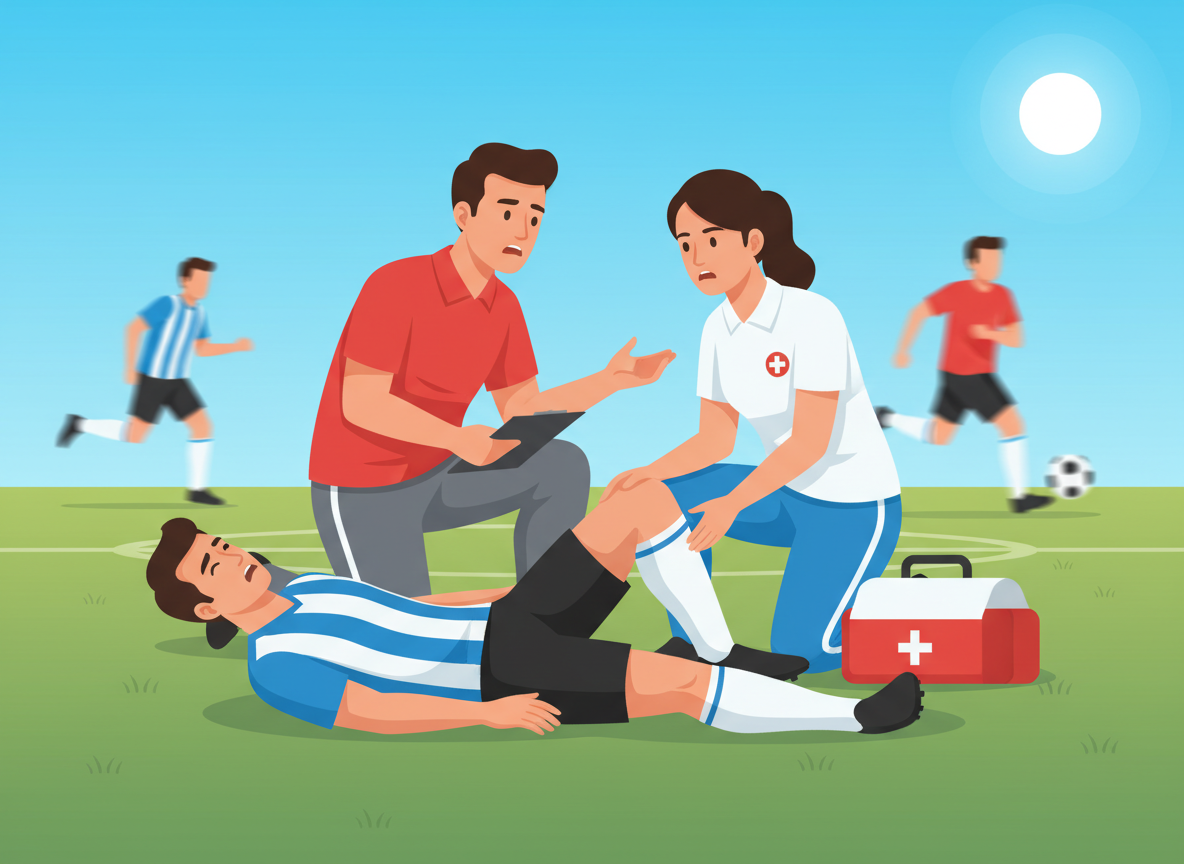
If a competitor is on the ground for over 15 seconds, the official will stop play. This play stopped moment allows for a quick assessment. The player must then leave the field for a mandated two-minute treatment window.
This change forces a team to adapt instantly. They play a man down, which tests their tactical resolve. It drastically cuts down on deliberate delays.
Head collisions are treated with extreme caution. The 2022 world cup set a new standard. Every player must now pass a thorough evaluation before returning.
The referee has the final authority to halt the match for safety. This prevents teams from exploiting a fake situation to protect a lead. It safeguards the game‘s integrity.
Every legitimate stoppage is logged. The lost minutes are added back as stoppage time. This ensures the full, fair duration is always played.
- The 15-Second Rule: Prevents lingering and keeps the action moving.
- Mandatory Two-Minute Treatment: Reduces wasted time and forces tactical adjustments.
- Stringent Head Injury Protocols: Prioritizes long-term player safety above all else.
When the treated athlete returns, they must wait for the official’s signal. This orderly restart is fair to both sides. These rules show how the sport evolves. It now prioritizes the well-being of players without sacrificing a single goal‘s competitive value.
Innovative Changes and Their Impact on Matches
What if I told you that a simple 10-second rule is dramatically cutting down on late-game delays? I find this shift fascinating. The sport is actively refining its flow to reward skill over gamesmanship.
Leagues are testing bold ideas to keep the action honest and continuous. These adjustments are reshaping how we experience every critical moment.
New Initiatives in MLS and Global Competitions
I’m impressed by the timed substitution rule. It requires a player to leave the field within ten seconds. This achieved a 99.7% success rate in MLS Next Pro trials.
It effectively curbs the time wasting that often plagues a match’s end. When a team fails, the incoming athlete must wait a full minute. This penalty forces immediate discipline.
Another clear change is the clock. In MLS, it now counts up during stoppage time. Everyone knows exactly how many minutes remain in the second half.
VAR Transparency and On-Field Announcements
The introduction of in-stadium video announcements is a massive step forward. It allows every fan to understand why the referee made a specific call.
This transparency helps the official maintain control. The crowd is no longer left guessing during a lengthy VAR review. It supports the referee even if the process adds a few minutes.
Implications for Players, Teams, and Betting Markets
These changes force a team to adjust its strategy in real time. They know a late substitution could result in a costly penalty. The game becomes a truer test of skill.
The impact even reaches betting markets. Every goal and minute of extra time can drastically alter a wager’s outcome. Clearer time and transparent VAR decisions create a more predictable environment for all.
Conclusion
At its heart, this sport is a constant negotiation between flowing action and necessary pauses. I find it remarkable. The true beauty lies in how this balance protects players while preserving the relentless chase for a goal. It’s about respecting the spirit of play itself.
I’ve seen how recent changes reshape a team‘s strategy in those crucial final minutes. Knowing a delay could lead to a penalty adds a new layer of tactical honesty. This makes every second of stoppage time a truer test.
Looking ahead, this commitment to clarity and safety will only deepen our connection to the game. Understanding this managed flow of time—from the first whistle to the final kick—makes you a more insightful fan. It connects you to the evolving, thoughtful heart of the sport every player loves.