
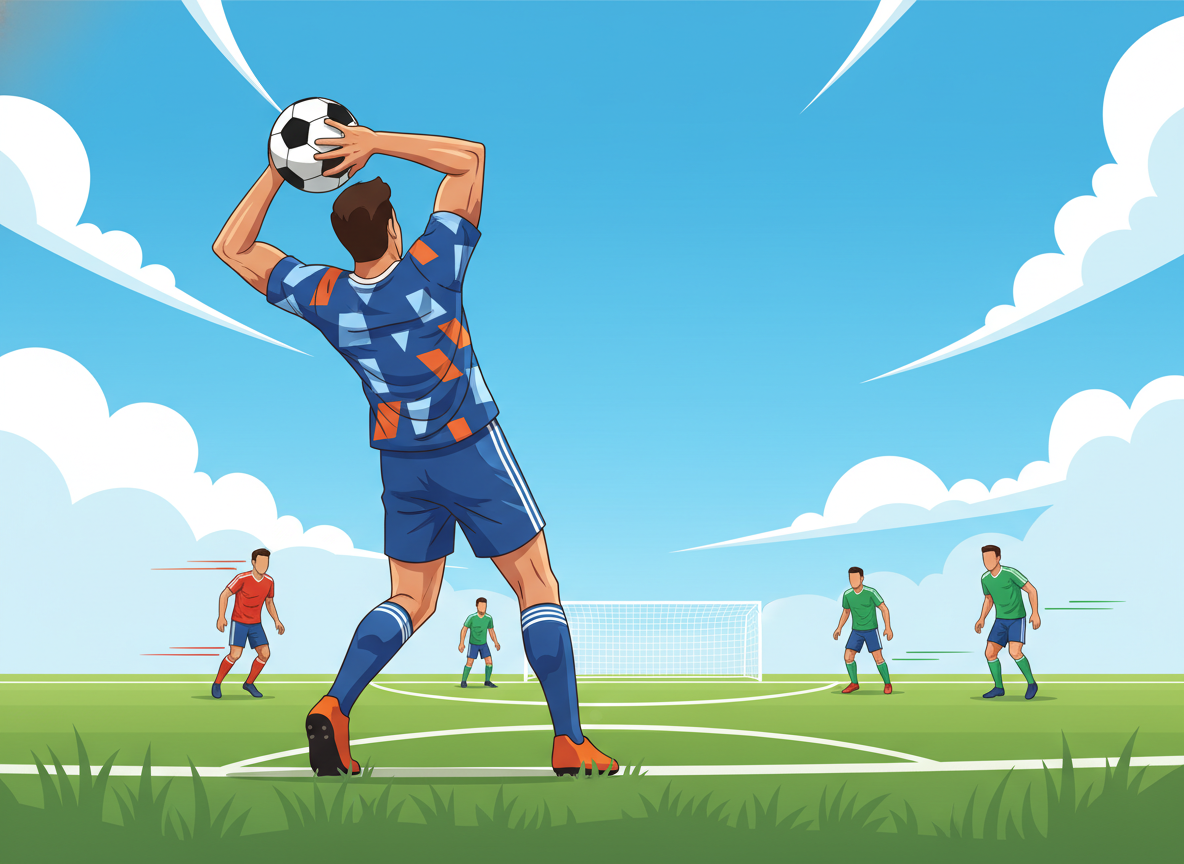
Did you know the original 1863 FA laws required a restart from the sideline to be thrown at a perfect right angle? It’s a quirky piece of history that shaped our sport.
I often reflect on how this fundamental moment controls the flow of a match. That simple act of putting the ball back into play is governed by precise laws for fairness and consistency.
The current IFAB Laws of the Game define everything clearly. Since 1883, the two-handed delivery has been mandatory; it ensures every player follows the same standard.
Precision here is non-negotiable. You must handle the ball with care to maintain possession and build an attack. It connects us to over a century of evolution in this beautiful game.
Mastering this skill isn’t just about following the laws. It’s about understanding a restart that can turn defense into opportunity in a heartbeat.
Key Takeaways
- The throw-in is a fundamental restart governed by the IFAB Laws of the Game.
- Its rules have evolved significantly since the original 1863 FA laws.
- The two-handed delivery method was formally adopted in 1883 and remains standard.
- Proper technique is essential for maintaining possession and launching effective attacks.
- This restart is a strategic moment that can directly influence match momentum.
- Understanding the history and laws provides deeper appreciation for the skill involved.
- Precision and consistency are required for a legal and effective throw-in.
Fundamentals of Throwing Technique on the Pitch
You might not realize it, but the laws governing this moment are all about balance and control. I find that a proper restart hinges on your connection to the pitch itself.
It’s a physical conversation between you and the ground. Get it right, and you maintain possession smoothly.
Correct Body Positioning and Stance
I always face the field squarely. This isn’t just a habit; it’s required by the laws.
Your shoulders should be aligned with the touchline. A balanced stance lets you generate power without losing control of the ball.
Every player must feel centered before the delivery. It’s the foundation for everything that follows.
Foot Placement and Legal Requirements
Here’s the non-negotiable part. The thrower must have part of each foot on the line or the ground outside it.
I think of it as anchoring myself to that boundary. Stepping fully over invalidates the entire effort.
Research from Brunel University points to a 30-degree release angle for maximum distance. But your part foot contact must be secure first.
| Aspect | Key Point | Why It Matters |
|---|---|---|
| Foot Contact | Part of each foot on touchline or outside | Ensures a legal restart every time |
| Body Orientation | Facing the field of play | Allows for accurate and controlled delivery |
| Ball Release | Two-handed from behind the head | Maintains possession and meets the standard |
| Release Angle | Approximately 30 degrees | Optimizes for both distance and teammate targeting |
Practice this stance until it’s automatic. A player who masters these fundamentals turns a simple restart into a real advantage.
You control the ball and the next move. That’s the power of good technique.
Essential soccer throw-in rules: Mastering the Legalities
I still remember the first time a referee called me for a foul throw; it taught me the importance of the details. That moment clarified everything. The laws exist not to restrict, but to create a fair and consistent restart for everyone on the pitch.
Getting it right means understanding the framework. It’s about more than just putting the ball back in play.
Understanding IFAB Law 15
This specific law is your blueprint. It mandates that the thrower must use both hands equally.
The delivery must start from behind and over the head. I always think of it as drawing a full arc with the ball.
You must also face the field play directly. This orientation ensures your intent and action are clear to all.
Avoiding Common Throw-In Violations
Most mistakes happen when players rush. A foul is called if the ball doesn’t travel from behind head to front in one fluid motion.
Releasing it too early or using one hand dominates the error list. The laws are strict here to maintain fairness.
Focus on a continuous, smooth action. That keeps possession with your team.
| Legal Execution | Common Violation | Direct Consequence |
|---|---|---|
| Two-handed delivery from behind the head | Using one hand or a “baseball” throw | Turnover of possession |
| Continuous motion over the head | Stopping or dipping the ball mid-arc | Foul throw called |
| Feet on or behind the touchline | Foot fully over the line at release | Restart awarded to opponents |
| Facing the field of play | Body angled toward your own goal | Referee may deem it illegal |
Study this table. Internalizing these contrasts is how you master the legalities and avoid costly turnovers.
Step-by-Step Guide for a Legal Throw-In
There’s a quiet art to the moments before the ball returns to play. I find this setup phase is where you truly claim control of the restart.
Preparing for the Throw: Setup and Positioning
First, locate the exact spot where the ball left the field play. Your restart must happen right there.
I suggest a deep breath before delivering the ball. Set your feet firmly. Focus your eyes on a teammate’s run.
Once the ball enters the field, it is officially in play. The game has instantly resumed. You cannot touch it again until another player makes contact.
Every player must be alert to receive. Proper setup separates a smooth transition from a costly turnover.
| Key Setup Step | Common Error | Direct Outcome |
|---|---|---|
| Identify the exit point on the touchline | Taking the restart from the wrong spot | Referee orders a retake; loss of momentum |
| Secure foot placement on/behind the line | Stepping fully over the line at release | Foul throw; possession turnover |
| Visual target selected before the throw-in is taken | Hesitating and looking after the ball is in play | Poor pass; intercepted by opponents |
| Controlled, two-handed delivery from behind the head | Rushing the motion or using one hand | Illegal restart awarded to the other team |
Take your time on the touchline. A good restart flows from calm preparation. It connects directly to mastering positioning for the next phase of play.
Identifying Offences and Recognizing Penalties
I learned more from my first foul throw than from a dozen successful ones. That sharp whistle taught me that the laws have clear teeth. Understanding these penalties protects your possession.
When a Throw-In Is Retaken or Awarded to the Opponent
The core rule is simple. The restart is awarded to the opposing team of the player who last touched the ball before it crossed the line. You earn the chance, but you must execute it legally.
If you lift a foot or fail to use both hands, a foul is called. The ball is then awarded to your opponents. It’s a frustrating turnover for a small technical error.
Another costly mistake is a double touch. If the thrower contacts the ball again before any other player, the referee awards an indirect free kick. This is a harsh penalty that gives the other team a great chance.
| Offence | Direct Consequence | Key Detail |
|---|---|---|
| Foul Throw (e.g., foot over line) | Turnover; throw-in awarded to opponents | Based on who last touched ball before it went out |
| Thrower touches ball twice | Indirect free kick for opposing team | Ball must touch another player first |
| Illegal handling during the restart | Direct free kick (or penalty in area) | Separate infraction from the throw-in itself |
Keep these laws in mind. A clean restart keeps you in control and avoids gifting opportunities to the other side.
Strategies to Maximize Throw-In Effectiveness on Field
I’ve always believed a great team finds goals in the most ordinary moments, even when the ball has gone out of bounds. This restart is a hidden chance to dictate the next phase of play.
You must think beyond simply returning the ball to the field. The real art lies in using this moment to pressure the defense and create a genuine chance.
Using the Throw-In to Create Scoring Opportunities
The laws are clear: a goal scored directly from this action is not allowed. If the ball flies straight into the net, the referee awards a goal kick.
This rule doesn’t limit your attack; it defines it. The strategy becomes about the second touch. A well-placed delivery can bypass the entire midfield.
I’ve seen teams use a long, driven ball into the penalty area. A flick-on or a header from a teammate then creates the real scoring opportunity.
Every player on the field must be moving. Static targets are easy for defenders to mark. Clever runs pull defenders apart, opening space for the receiver.
Your aim is to turn a defensive situation into a high-pressure moment for the opposing team near their own goal. A precise pass can do just that.
Remember, the ball must touch another player first. Master this strategic layer, and you transform a basic duty into a powerful weapon.
Advanced Techniques: Flip and Long Throws
When you think you’ve seen every possible restart, along comes a technique that turns the ordinary into something spectacular. I find these advanced methods fascinating because they push the boundaries of what we expect from a sideline restart.
Learning the Flip Throw: Break the Norm
The flip throw, popularized by athletes like Michael Lewis, uses a somersault’s momentum. Lewis set a world record of 59.817 meters in 2019. This technique propels the ball further than a standard thrower can manage.
You must ensure the ball behind your head remains the motion’s focal point. Even during the acrobatics, the laws demand both hands deliver it from over the head. When the ball touched the ground mid-flip, it’s still legal if the thrower maintains contact with the line.
Benefits of a Powerful Long Throw
I find a powerful long delivery, like those perfected by Rory Delap, transforms a simple restart. It can reach the six-yard box, turning it into a set-piece threat. This puts immediate pressure on the defense.
Every player on the ground must be ready. A long, driven ball bypasses midfield lines. It creates chaos and scoring chances from a seemingly neutral situation.
| Technique | Key Benefit | Legal Consideration | Practice Focus |
|---|---|---|---|
| Flip Throw | Maximum distance; surprise element | Feet must stay in contact with the touchline; continuous two-handed motion | Acrobatic control and consistent release point |
| Long Throw | Direct set-piece delivery into the penalty area | Standard throw-in laws apply; no direct goal allowed | Upper body strength and pinpoint accuracy |
Mastering these skills requires significant repetition. The core laws still govern every action. But for a player willing to practice, they offer a huge strategic edge.
Practice Drills to Enhance Your Throw-In Skills
I often tell my squad that mastery is built in the quiet moments of practice. The ground becomes our classroom, where we translate the laws into reliable muscle memory.
This is where a good team separates itself. Consistent repetition turns a basic restart into a strategic weapon.
Team Drills for Coordination
I run a simple but effective exercise. The thrower focuses on maintaining part foot contact with the ground outside the line.
Meanwhile, every other player must move into space. Once the throw-in taken, the ball play begins instantly.
A key rule governs this: the thrower must not touch the ball again until it has touched another player. This forces quick, decisive passing.
We also place passive defenders two meters away. This simulates real pressure and teaches spatial awareness.
Individual Techniques for Consistency
Your personal work is just as vital. Isolate the mechanics of your delivery on the ground.
Concentrate on a smooth release point. Your goal is to place the ball accurately at a teammate’s feet or chest.
This part of your foot must stay anchored. Practice until this stance is unshakable, even under fatigue.
That consistency ensures you never gift possession away. It turns a routine duty into a moment your team can trust completely.
Tactical Applications and Game Time Management
Tactical intelligence isn’t just about grand strategies; it’s in these small, decisive moments. I think about how a simple restart can control the clock and the mood of a match. The laws are clear, but your brain must be clearer.
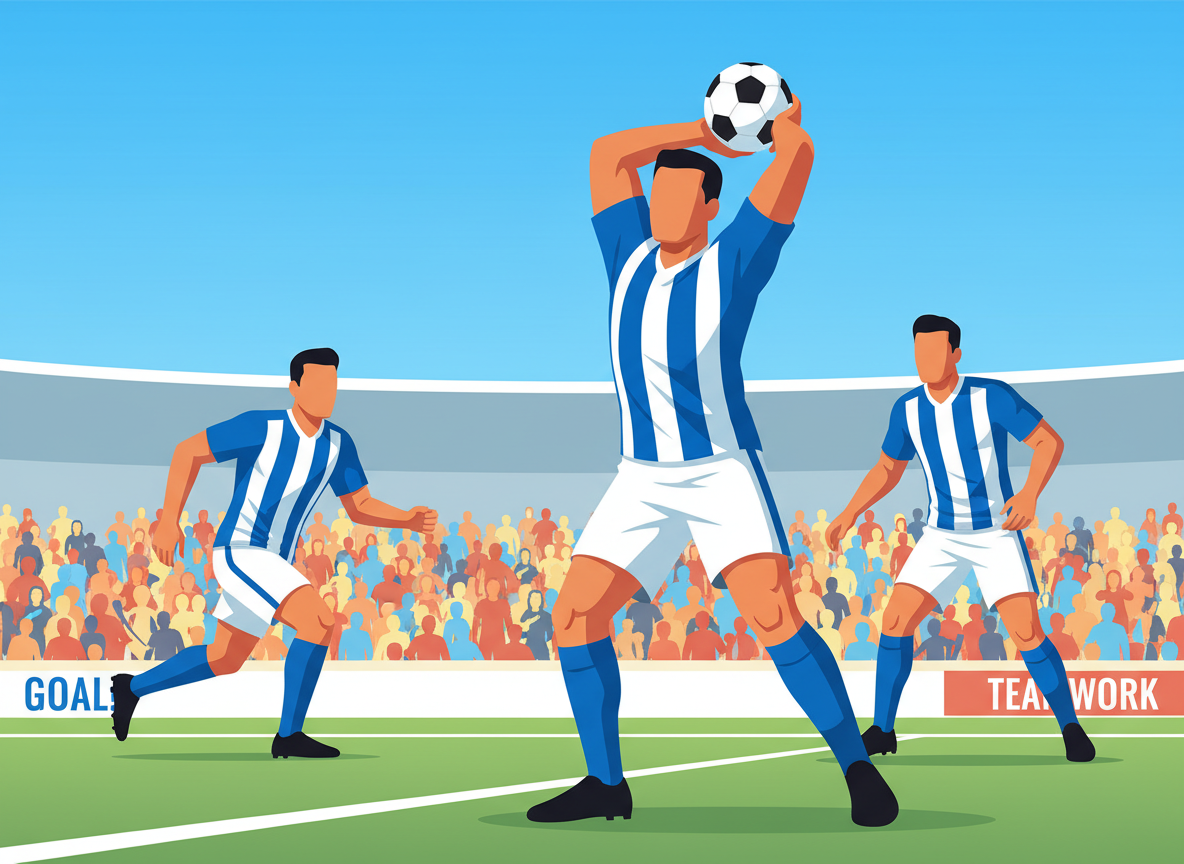
Effective Throw-In Scenarios
Managing time is critical. Remember, the referee will caution any player who delays the restart. Opponents who unfairly distract you can also be booked.
I teach my team to be efficient. When the ball is awarded ball, a quick throw-in taken can catch the opposing team off guard. It instantly resumes ball play.
When delivering ball, don’t just kill time. Actively look for a teammate who has not touched another player. Your pass must be purposeful.
If the ball last touched ball of the opponent, you earn the restart. But you must touch the ball only after it has touched another. This rule prevents a quick re-grab.
| Scenario | Tactical Goal | Key Consideration |
|---|---|---|
| Quick Restart | Surprise defense; maintain momentum | Avoid delay to prevent a caution |
| Strategic Delay | Manage game clock; organize setup | Ensure you are not deemed to be wasting time |
| Targeted Delivery | Find a specific unmarked player | The ball must ball touched a teammate first |
True awareness means knowing when to slow things down and when to speed up. It’s about feeling the rhythm of your team and the match. A smart decision here can preserve a lead or spark a comeback.
Conclusion
In the end, respect for the game’s framework allows creativity to flourish within its boundaries. I believe true mastery here comes from honoring the laws while trusting your instincts.
Your hands and head work together to place the ball precisely. Every player has the power to turn a routine moment into a real chance. It’s about giving your team a clean restart to build from.
A good throw maintains rhythm; a great one changes it. Your team relies on that consistency. Always ensure the ball is delivered with purpose.
Remember, a fluid motion keeps possession with your side. Avoid the errors that gift a free kick to the opposing team. The ball must touch another player first; that simple rule defines your next move.
Keep refining these details. They build confidence and control, which often decide matches. I hope you feel ready to use this throw not just correctly, but cleverly.