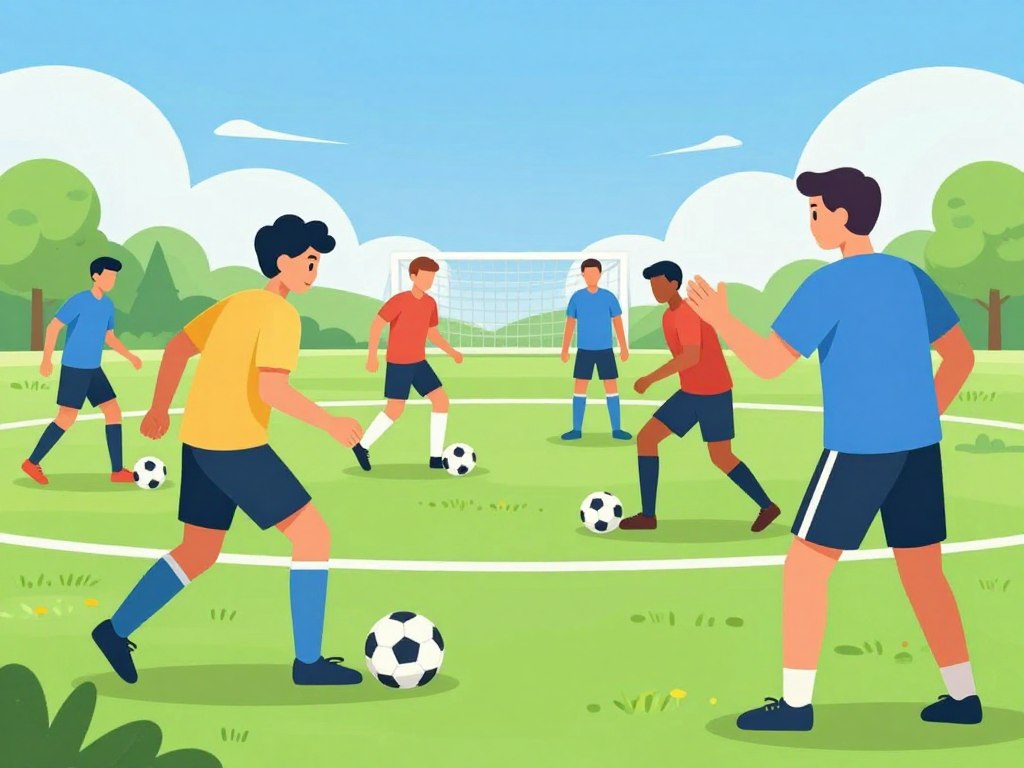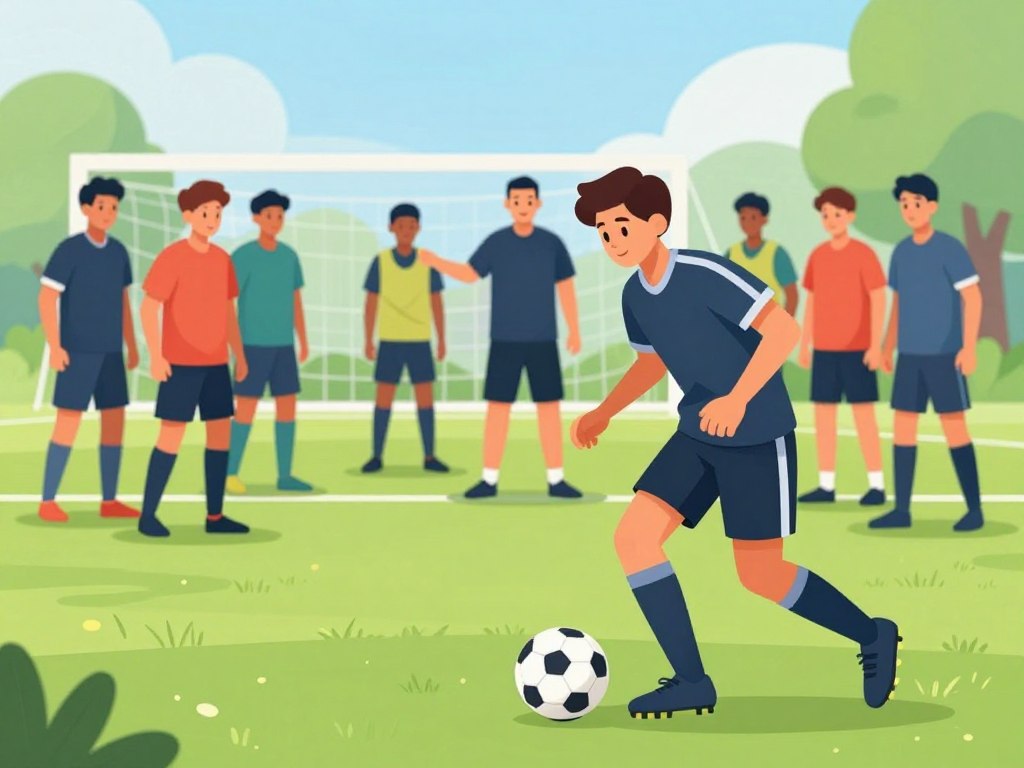

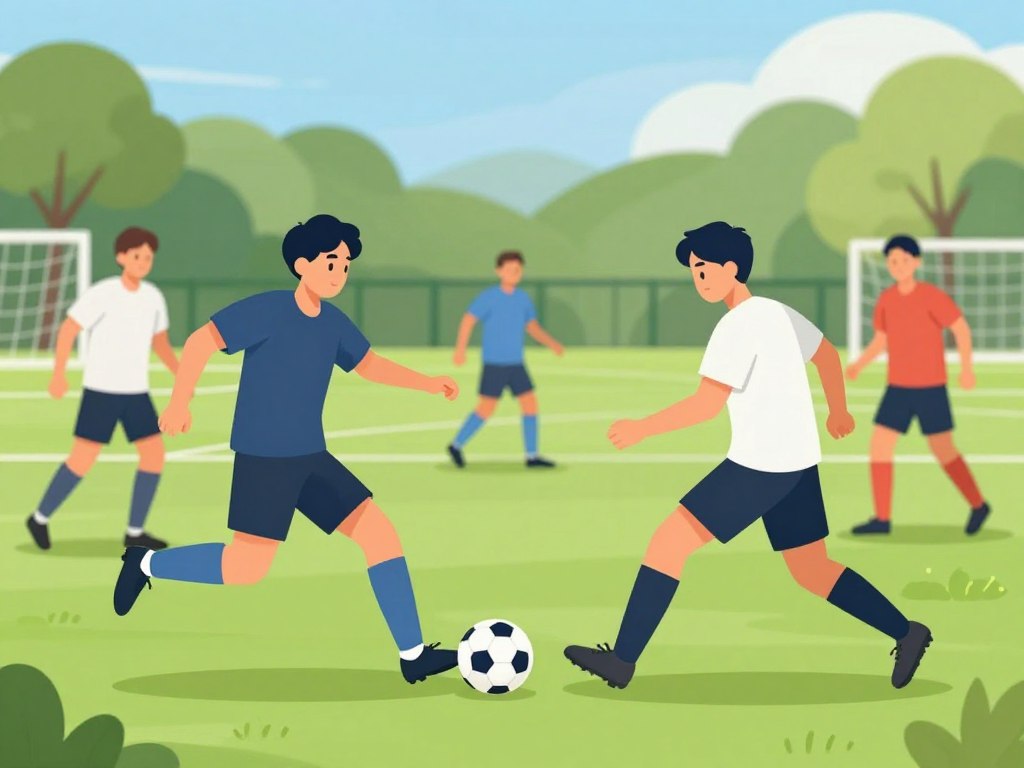
Johan Cruyff once said, “Playing football is very simple, but playing simple football is the hardest thing there is.” That truth hits home every time I think about moving the ball with speed and purpose.
I still remember watching Barcelona’s tiki-taka style unfold. The ball moved like lightning, but it wasn’t magic. It was a disciplined, shared understanding of space and timing.
This style revolutionized the modern match. It demands that every player thinks ahead, ready to receive and distribute in a single, fluid motion. When you see stars like Messi or De Bruyne make it look effortless, that’s the secret.
Mastering this technique isn’t just for elites. It’s the foundation that separates good players from great ones. It’s about making the game faster for your team and slower for your opponents. To execute it well, your mastering positioning for passes is just as crucial as the contact itself.
These practical exercises will help you develop that sharpness and soccer IQ, whether you’re training alone or with a group.
Key Takeaways
- One-touch passing dramatically increases the speed of play, a cornerstone of modern soccer.
- Legendary teams like FC Barcelona popularized this fast, possession-based style.
- Top players like Lionel Messi and Kevin De Bruyne excel due to their first-time distribution.
- This skill set is accessible and vital for players at all levels, not just professionals.
- Effective practice drills build both technical skill and crucial spatial awareness.
- Improving in this area makes the game feel easier for you and harder for the opposition.
Understanding the Power of One Touch Passing
I still remember the first time I truly understood the power of moving the ball with a single contact. It wasn’t in a big game; it was during a simple training exercise. The rhythm was infectious, and suddenly, the whole field opened up.
That moment showed me this skill is about more than technique. It’s a mindset that changes how you see the game.
How One Touch Increases Game Speed and Agility
When you release the ball instantly, you increase the tempo dramatically. The movement flows, and defenders must scramble to keep up. This constant shifting forces them into a reactive state.
Your team’s agility improves because everyone is thinking ahead. The play develops faster, creating more openings before the defense can settle.
The Role of Quick Passing in Unbalancing Opponents
The primary goal is to disrupt the other team’s shape. Fast distribution makes defenders chase. They get pulled out of position, creating precious time and space.
I’ve watched teams like Barcelona use this in the final third. They move it so swiftly that the defense cracks under the pressure. This exhaustion leads to mistakes and clear opportunities on goal.
| Aspect of Play | Slow, Multi-Touch Play | Quick, First-Time Play | Key Advantage |
|---|---|---|---|
| Defensive Reaction | Defenders can organize and apply pressure. | Forces continuous chasing and reactive decisions. | Creates mental and physical fatigue. |
| Team Energy | Consumes more energy in possession. | Conserves your team’s energy while moving forward. | Your team controls the game’s pace. |
| Chance Creation | Gives opponents time to close down space. | Exploits gaps before they disappear. | Generates higher-quality scoring opportunities. |
Getting Started with one touch passing soccer drills
I learned more about connection from a simple wall and a ball than from any complex tactical talk. That foundational work builds the muscle memory you need. These initial activities are your gateway to faster, more intuitive play.
Essential Drill Setup and Equipment
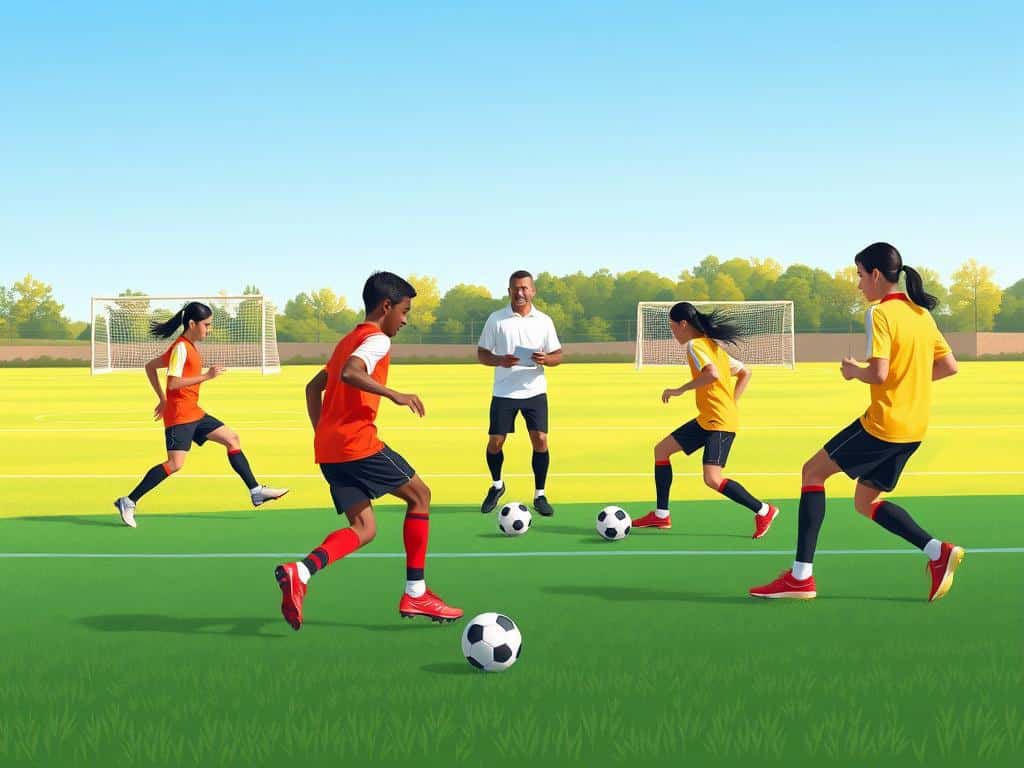
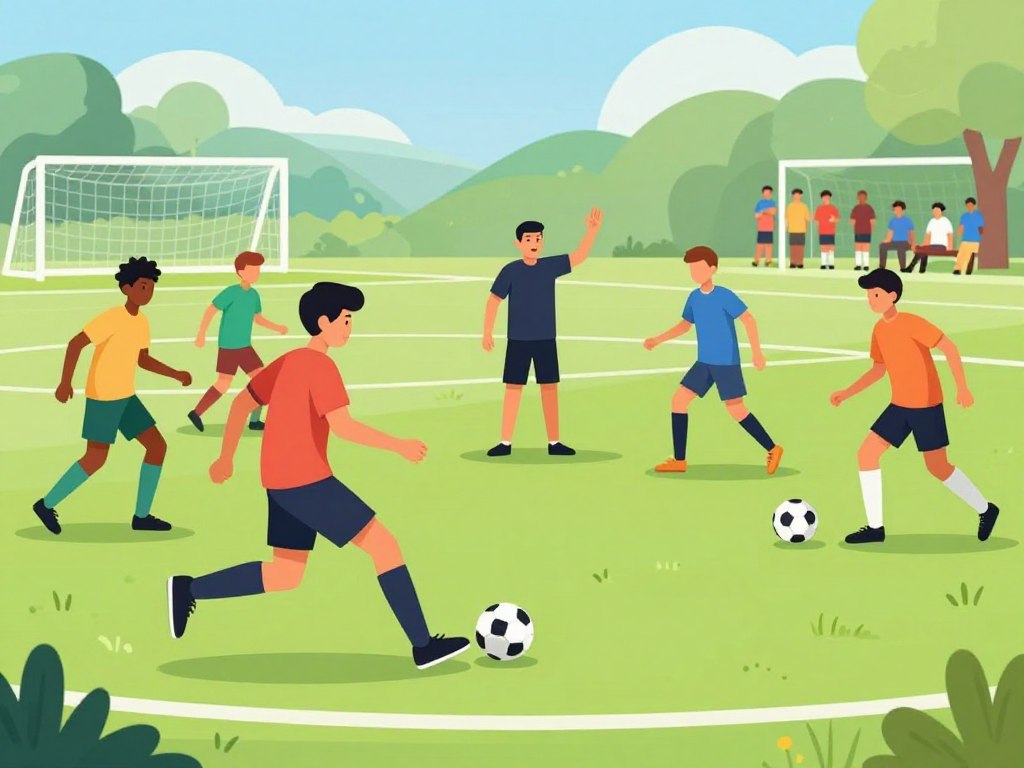
For group training, you need a basic grid. Set four cones ten meters apart to form a square. Split your squad into two teams of five.
One group stands in the middle. Arrange them in two offset rows, creating a zig-zag channel. Their task is to move the ball from one end to the other using first-time distribution.
If a player takes two contacts or makes a bad pass, the sequence restarts. Each successful journey scores a point. The other team runs a relay around the square. This adds fitness and friendly competition.
| Drill Type | Equipment Needed | Key Focus | Ideal Repetitions |
|---|---|---|---|
| Wall Passing | Ball, Wall, Tape/Chalk | First-Touch Control & Accuracy | 100 per foot |
| Zig-Zag Team Drill | 4 Cones, 10 Players, 1 Ball | Speed of Play & Team Coordination | Play to 10 Points |
Warm-Up Techniques to Sharpen Your Touch
Your solo practice is just as vital. Find a solid wall and mark a target with tape. Stand a few feet back.
Strike the ball with your instep, aiming for the mark. Receive the rebound and immediately play it back. Do a hundred passes with your right foot, then switch.
This wall work provides instant feedback. It forces quick adjustments in your stance and touch. Consistency here builds the ability to perform under pressure.
Progressing Through Intermediate Passing Drills
Consistency isn’t built in simple drills; it’s forged in exercises that mimic match intensity. This stage tests your technique under more realistic, dynamic pressure.
Enhancing Accuracy and Building Consistency
The square passing drill became a favorite of mine. You set up a 15-yard square with cones and position a player at each corner.
The goal is constant movement and first-time distribution. Alternating direction forces you to use both feet and think ahead.
Passing gates changed how I viewed precision. You aim through narrow targets made of two cones. Every ball must be weighted perfectly.
This drill builds timing and accuracy under a clock. It directly translates to hitting a teammate in stride during a fast break.
Short and long pass exercises teach vital versatility. You switch between a crisp 10-yard pass and a driven 20-yard ball.
Mastering both distances makes you unpredictable across the field. It’s a core skill for effective counter-attacking tactics.
| Drill Name | Primary Focus | Key Challenge | Setup Tip |
|---|---|---|---|
| Square Passing | Movement & Team Coordination | Receiving on the move and releasing instantly | Adjust cone distance to simulate different pass lengths |
| Passing Gates | Precision & Timing | Threading the ball through a tight window consistently | Create a sequence of gates to add complexity and urgency |
| Short/Long Pass | Versatility & Adaptability | Switching technique and power without losing accuracy | Use two clear lines 20 yards apart; players switch lines after each set |
These intermediate activities build the repeatable consistency you need. It’s not about the occasional great play, but making the right one repeatedly.
Building Advanced Passing Skills on the Field
Advanced passing isn’t just about technique; it’s about seeing the game a step ahead. This is where your practice becomes a tactical weapon. You learn to exploit space and create opportunities before defenders react.
Switching the Field for Tactical Advantage
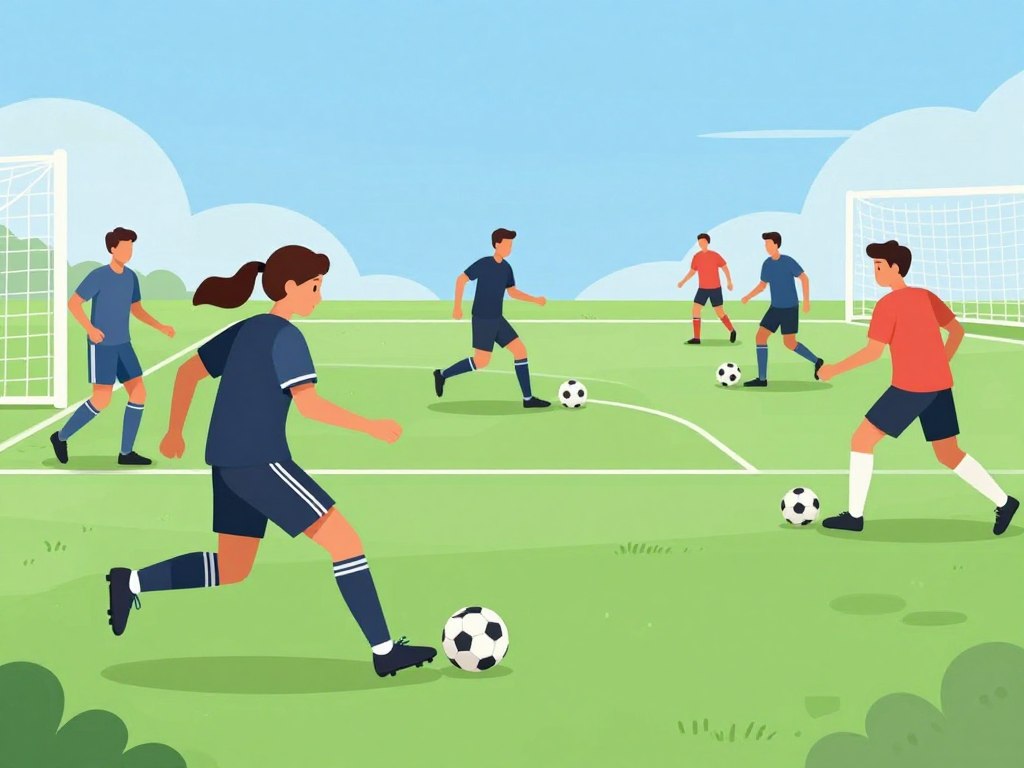
I had to learn this the hard way. It requires vision and awareness of space. You set up a large area with teammates on both sides.
The objective is to practice long, diagonal balls that stretch defenses. Scan the pitch before you receive. This identifies switch opportunities early.
Combining Drills to Simulate Game Scenarios
Rondo variations teach decision-making under pressure. You’re on the outside of a circle, limited to two contacts. Defenders in the middle try to intercept.
It forces quick thinking and constant communication. Attacking combination drills tie everything together. Set up cones as defenders.
Practice one-twos and overlaps, then finish with a shot. This sequence builds coordination and timing.
| Drill Name | Primary Focus | Key Challenge | Pro Tip |
|---|---|---|---|
| Switching the Field | Vision & Spatial Awareness | Executing accurate long passes under pressure | Scan the field before receiving the ball to identify targets early |
| Rondo Variation | Quick Decision-Making | Maintaining possession in tight spaces with interceptors | Constantly move to create new passing angles and options |
| Attacking Combinations | Coordination & Timing | Linking intricate passes under defensive pressure | End every sequence with a shot on goal to simulate match intensity |
Incorporating One Touch Drills into Team Practice
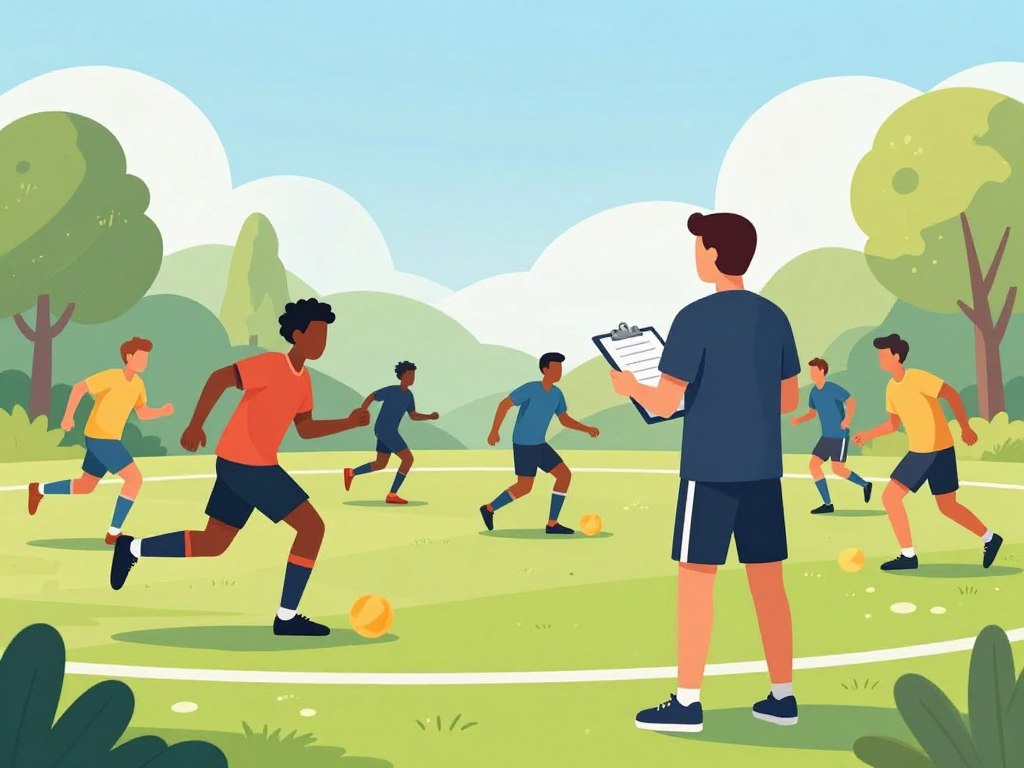
I’ve always believed the most beautiful plays are born from silent understanding between teammates. Moving from solo exercises to full-unit training is the critical leap. Here, individual skill merges with collective intelligence.
Fostering Communication and Coordinated Movements
This phase demands constant dialogue. Players must call for the ball and signal intentions. Non-verbal cues are just as vital.
The objective is tactical exhaustion. You force opponents to chase at an unsustainable pace. This creates space and immediate opportunities to win possession back.
| Element | Primary Focus | Common Challenge | Team Benefit |
|---|---|---|---|
| Verbal Signals | Clear, concise calls for the ball | Overlapping voices causing confusion | Creates predictability and faster decision-making |
| Movement Without the Ball | Creating passing lanes and angles | Players becoming static spectators | Unbalances defenses and opens central channels |
| Pattern Repetition | Building muscle memory for specific sequences | Drills feeling robotic, not game-realistic | Develops automatic, coordinated responses under pressure |
| Trust & Timing | Releasing the ball before a teammate is fully open | Hesitation, leading to lost seconds | Accelerates the speed of play to an elite level |
Mastering this requires solid technique and profound trust. Your unit controls the match’s tempo. The harder you work on these coordinated movements, the greater your reward.
Conclusion
True game intelligence is built in the quiet moments of practice, long before the crowd ever cheers. I’ve shared this progression because it’s the real work that transforms a player. Your consistent effort, from solo wall work to coordinated team patterns, builds the sharpness needed to see opportunities others miss.
The real shift happens when individual technique merges with collective understanding. This fusion lets your unit control the tempo and dictate space. It creates that precious time to pick a decisive pass or find a shooting lane.
Remember, the aim isn’t perfection. It’s steady growth. What you do now on the training ground defines your next level. Your ability to move quickly, communicate, and execute under pressure will unlock new possibilities on the field.