

Have you ever wondered why the body heals faster than the mind when you trip up on the pitch?
I remember sitting in the rehab room and hearing teammates ask, “When are you back?” That question landed like a challenge; it made me count days and doubt myself at once.
In this guide I promise one clear thing: this is about mental recovery after soccer injury, not just toughing it out. I’ll map a practical path—naming emotions, setting goals, rebuilding confidence, managing fear, staying connected, and when to seek pro help.
Think of “better” as trusting your body again and playing your style without panic. These strategies come from coaches, clinicians, and lived soccer life—watching training, checking the calendar, hearing the sideline chatter.
Note: this is informational support, not a substitute for medical or mental health care. Asking for help is part of being a serious athlete.
Key Takeaways
- Emotions matter as much as physical rehab; name them to move forward.
- Set small goals to rebuild confidence and rhythm.
- Use clear strategies to manage fear and stay connected to your team.
- Trust your body again; “better” means playing without panic.
- Seek professional help when progress stalls or anxiety grows.
Why the mental side of injury recovery matters as much as the physical rehab
Players heal tissue on a schedule; their thoughts do not follow a calendar. Pain, uncertainty, and the “how long will I be out?” question chip away at focus and daily motivation.
How pain, uncertainty, and “how long will I be out?” thinking impact motivation
Pain adds a second job: constant decisions about pushing, resting, or reporting symptoms. That mental load drains energy from rehab tasks.
Uncertainty steals momentum. Even when you check every box on your program, not knowing the exact time back makes consistency harder.
Common emotional responses athletes experience when sidelined
Players often feel anxiety, isolation, anger, grief, or numbness as teammates carry on. Those reactions are normal and common across levels.
When an injury starts to threaten identity, role, and career
Loss of routine can feel like losing a place on the team. For youth or college athletes this can spark real career worry—minutes, scholarships, or momentum feel at risk.
Practical note: name feelings, set tiny goals, and remind yourself that stress lowers sleep and patience; that harms progress faster than missed sessions.
- I once sat while teammates planned a league match; counting weeks made my drive fragile. That moment is typical and fixable.
| Emotional sign | Typical feeling | Practical tip |
|---|---|---|
| Frustration | Impatience with time | Set a weekly micro-goal |
| Anxiety | Worry about career | Talk with coach about role |
| Isolation | Feeling left out | Attend team meetings or help plan drills |
What mental recovery after soccer injury actually looks like in real life
I still remember my first sprint back—my legs felt fine, but my stomach clenched like it had a memory of the fall. You can pass medical checks and still feel a knot when a defender closes distance.
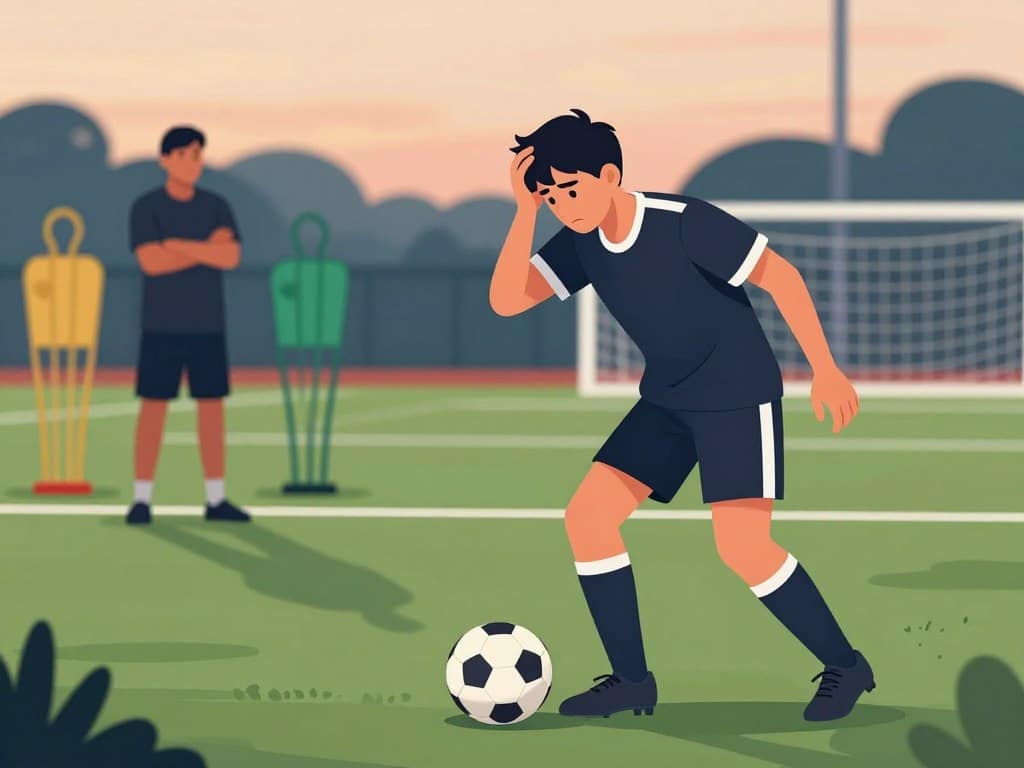
Recognizing anxiety, isolation, self-doubt, and depression before they snowball
Anxiety often shows up at specific moments: first full-speed sprint, a hard cut, or a 50/50 challenge. That sudden freeze or hesitancy is common at multiple levels of play.
Isolation follows when rehab moves you from group drills to solo sessions; that schedule shift can lower mood and sap confidence. Left unchecked, this pattern can breed depression—quiet, slow, and real.
How “full physical fitness and half emotional fitness” shows up in club culture
Coaches praise grit and call hesitation “in your head.” That label misses the point: the psychology of sport treats trauma like a performance error instead of a legitimate response.
Practical note: treating emotional work as second-class means players return physically fit but still play smaller and avoid contact.
Understanding injury as trauma and why it can linger
Kevin George calls an injury a traumatic event; the brain keeps the memory of the hit—the sound, the shock, the helplessness. That memory can tug at you for a week or longer after you’re cleared.
Red flags that your mind isn’t keeping pace
- Persistent dread before training or matches.
- Avoiding specific movements like cuts or tackles.
- Sleep trouble, irritability, appetite changes, or feeling detached.
- Confidence flat or dropping on a weekly self-check.
Weekly self-check: rate your confidence (0–10) for sprinting, cutting, and contact. Track the trend—up, flat, or down. If it’s flat or falling, talk to your coach, medical team, or check resources to build mental toughness.
| Sign | Example on pitch | Action |
|---|---|---|
| Anxiety | Freezes at first full-speed sprint | Use graded exposure drills with a coach |
| Isolation | Missing team meetings, training alone | Attend warm-ups, help run drills |
| Depression | Persistent low mood, sleep issues | Seek a clinician; inform staff |
Build a recovery mindset by acknowledging emotions instead of suppressing them
“A single sentence—clear and specific—can stop a spiral and make the next rehab step possible.” That’s the habit I teach myself first.
Practical ways to name what you’re feeling without getting stuck:
- Say it plainly: “I’m anxious about cutting because I don’t trust the knee yet.” One line, no story.
- Quick routine for tough days:
- Label the emotion; rate it 0–10.
- Do one calming action (three-box breathing or a five-minute walk).
- Do the next rehab task anyway—small action equals momentum.
- Use journaling to clarify one thought, then stop. If writing becomes replaying, switch to a short walk or a timed breathing break.
ACT-style moves to build flexibility
Try these calls aloud: “I’m having the thought that I’ll fail this drill.” Name a value—why you play—and pick one committed action for today. That small step links psychology to practice.
| Task | What to say | Why it helps |
|---|---|---|
| Defusion | “I’m having the thought that I’ll get hurt.” | Separates thought from fact; reduces panic. |
| Values | “I play for teammates and joy.” | Reconnects action to purpose; fuels effort. |
| Reach out | “Can you check in after rehab on Tuesdays?” | Keeps support simple; avoids drama. |
Suppressing feelings raises stress and prolongs distress. If mood, sleep, appetite, or relationships suffer for more than two weeks, ask a clinician for help. Friends, coaches, and simple support routines make life and rehab manageable when challenges pile up.
Use SMART goals to stay motivated during the slow weeks of rehab
Slow weeks feel endless; setting clear goals gives you a steady path forward.
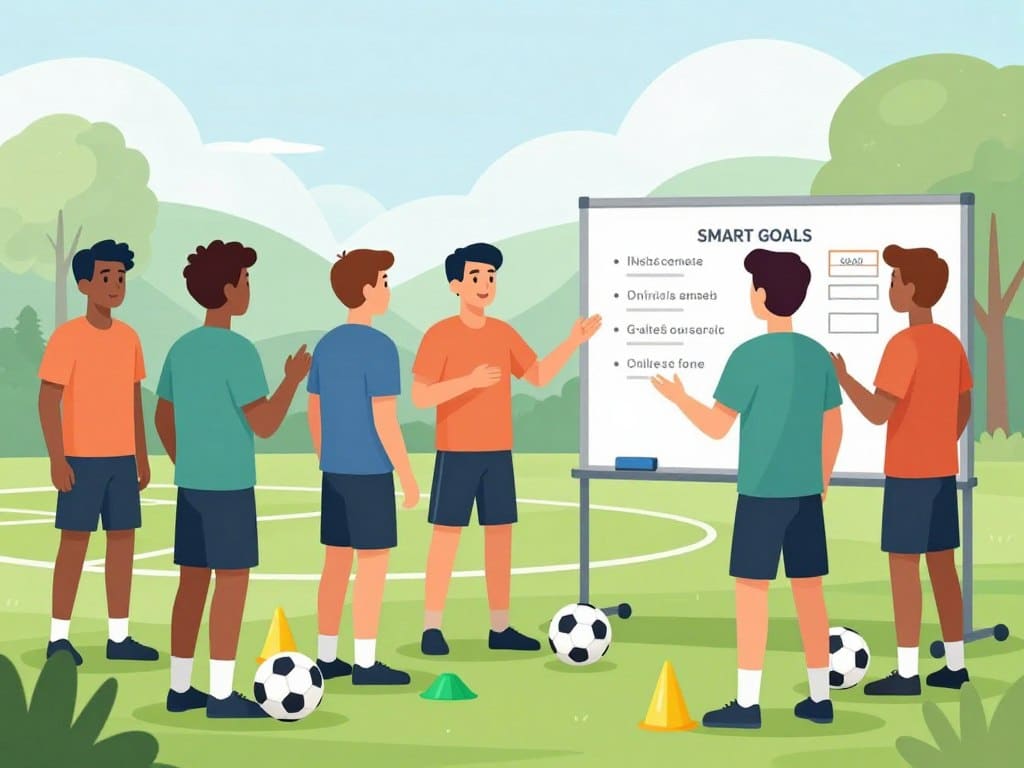
I explain why the process drags: work is repetitive, progress jumps, and the calendar becomes a trap. SMART goals (Specific, Measurable, Achievable, Relevant, Time-bound) give you a simple map to follow.
How to set a specific, measurable, and realistic goal
Use a template focused on movement, pain rules, and frequency. Keep a stoplight check: green = go, yellow = modify, red = rest and tell staff.
Example: four-week goal you can copy
Scott, a 15-year-old athlete with a sprained ankle, used this plan:
- Week 1: Build to 10 pain-free minutes of jogging (3× per week).
- Week 2: Add controlled changes of direction; track next-day swelling.
- Week 3: Pass-and-move session with non-contact drills; confidence rating ≥6/10.
- Week 4: Full non-contact training with team warm-up if pain and swelling stay low.
Track progress without obsessing
Use 2–3 metrics max: minutes pain-free, a confidence rating, and next-day response. Log them quickly and move on.
Small wins matter: first pain-free jog, first controlled cut, first group warm-up. Stack those wins and your commitment grows; evidence beats guesswork.
| Metric | Example | When to pause |
|---|---|---|
| Minutes pain-free | 10 → 20 → 30 | Increase causes swelling |
| Confidence rating | 4/10 → 7/10 | Flat for two weeks |
| Next-day response | Normal → minimal soreness | Persistent pain or limp |
Rebuild confidence and reduce fear when it’s time to train again
Coming back to full training often starts with trusting one clean cut, not the whole match. Start small and let evidence beat doubt.
Gradual exposure: a ladder to trust
- Controlled ball work: short passing, one-touch patterns.
- Predictable movement: timed accelerations at 50–70% effort.
- Reactive drills: mirror runs, coach call-and-go at 80%.
- Limited contact: shield-and-turn in pairs.
- Full chaos: small-sided game with normal pressure.
Visualization and rehearsal
Before a sprint or cut, spend 60–90 seconds: see the run, feel the landing, breathe steady, then do one focused rep.
Swap self-talk for cues and affirmations
Use short coachable phrases: “smooth first step,” “hips low,” “finish the rep.” Pair with affirmations like “I do the work” and “my body is trained”.
| Progress stage | Movement example | Coach cue |
|---|---|---|
| Controlled | Short passing 5m | “Eyes up, crisp touch” |
| Reactive | Mirror cut and sprint | “Explode on my mark” |
| Contact | Shield and turn | “Lower center, chest up” |
| Chaos | Small-sided game | “Play the next best action” |
One-week return-to-training mental plan
- Day 1–2: daily anxiety rating, 3 breathing cycles pre-session, one cue per rep.
- Day 3–4: add reactive drills; keep visualization before each sprint.
- Day 5–7: limited contact then small-sided play; reflect post-session and adjust cues.
Talk with coaches about pace and drill choices. If fear or anxiety stays high, pause and scale back—trust grows from safe, repeatable wins.
Stay connected to your team, coaches, and sport so recovery doesn’t feel lonely
Being on the roster but off the pitch creates a strange kind of loneliness I see all the time.
When your day moves from group drills to solo work, the team rhythm disappears and mood can dip fast. Naming that shift helps you act on it.
Simple ways to stay involved at training and on game day
- Help set up cones, time reps, or film drills—small jobs keep you visible to teammates and coaches.
- Track stats in small-sided games or be the “extra eyes” during walkthroughs; those roles matter.
- Game day: sit with the bench, run warm-up lists, or own hydration and substitution notes.
How to ask for support without feeling like a burden
Use short, direct scripts. Try: “Can you pick me up for training so I’m not alone?” or “Text me when lifting’s done—helps me stick to my plan.”
Protecting your athlete identity when your schedule shifts
Keep athlete habits: sleep, nutrition, film study, and the same pre-session routine. Those routines signal you’re still part of the team and help you get back with steadier confidence.
| Role | What to do | Why it helps |
|---|---|---|
| Film/Stats | Record drills or note touches | Keeps you engaged and helpful |
| Bench Support | Coordinate water and subs | Maintains game-day belonging |
| Coach Liaison | Share daily progress with coaches | Reinforces your plan to get back |
If teammates reduce you to a single label, steer the chat: say, “I’m working on X today; here’s the plan.” That shifts focus to process and keeps your identity as an athlete clear.
Conclusion
The clearest sign you’re nearly ready is when you commit to a move without pausing.
Good comeback treats the body and the mind as a single project. Name the feeling, use ACT-style flexibility, set SMART goals, and expose yourself to graded drills; each step is a real part of recovery from injury.
Train skills in short, measurable reps. On the field that looks like decisive actions, calm focus, and steady pace in training—not a cautious player who holds back.
If anxiety or low mood stalls progress, ask a clinician or coach for help; seeking support is smart and performance-ready. I promise: treat these skills like physical drills, and you often return stronger than your prior level.