
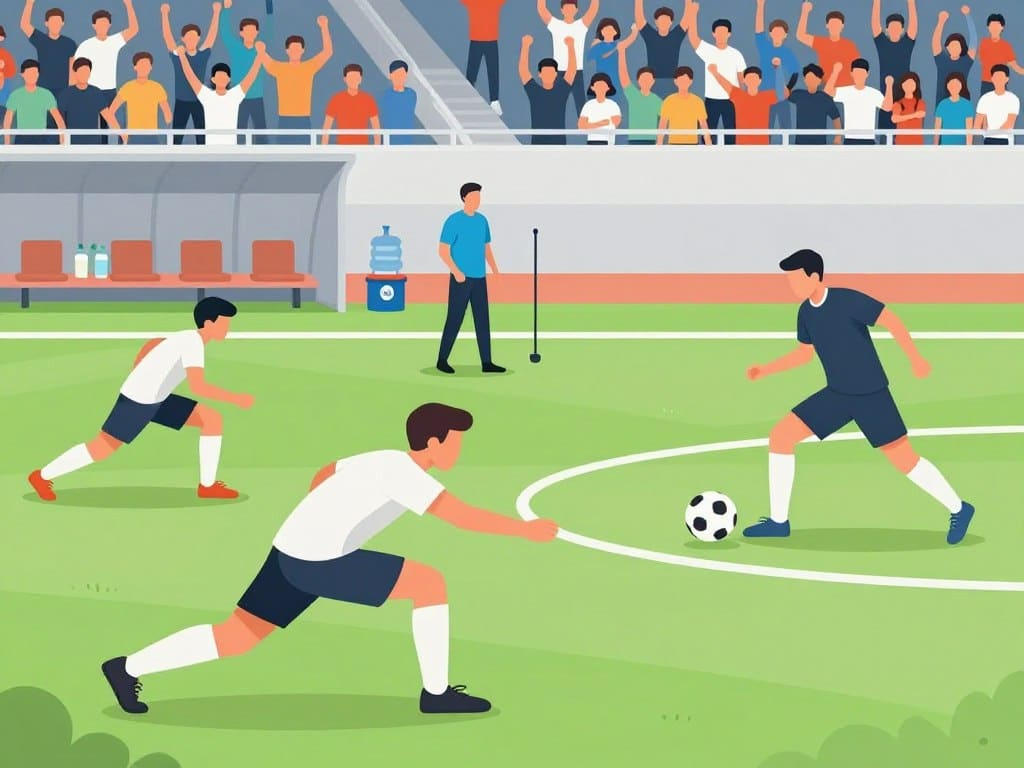
Ever wondered why some matchdays feel effortless while others trip you up? I used to blame luck; now I know it was habit. A simple, field-tested routine removes frantic choices so you can keep your head on the ball.
I promise a plan that keeps you calm, on time, fueled, and sharp. Pack gear the night before to avoid stress. Aim for steady sleep—young athletes should target nine hours. Hydration matters; fatigue and slow thinking arrive fast when you skip water.
My approach breaks into three buckets: logistics (gear and timing), body (sleep, food, hydration), and sharpness (movement and ball work). The backbone stays the same, but it can flex by kickoff time, position, or personality.
Success looks like this: no sprinting from the parking lot, no stomach cramps, no cold first five minutes, and no avoidable knocks. Later, we’ll use proven warm-up progressions and tight possession drills to lock in focus and confidence.
Key Takeaways
- Remove decisions: A set routine clears mental clutter so you play free.
- Prepare logistics night before to avoid last-minute panic.
- Prioritize sleep and hydration to protect thinking and speed.
- Time your last big meal 3–4 hours before kickoff.
- Keep the routine flexible for position and kickoff time without changing the backbone.
- Use movement progressions and on-ball drills to start sharp and confident.
Build pre game routines for soccer players that fit your position, personality, and kickoff time
I set timing like a countdown—work backwards from kickoff so nothing sneaks up on me.
I pick an arrival window first, then layer everything else. Think parking, check-in, taping, and warm-up. That prevents a scramble and keeps my confidence and control steady.
Pick a consistent arrival window
I aim to be at the field about 1:15 before kickoff. On a US weekday with a 10:00 a.m. start, that means arriving 8:45–9:00 if the lot is far or traffic is heavy. That buffer covers kit checks and a 30-minute light dynamic warm-up plus ball touches.
Dial up or calm down: match the headspace to how you compete
If I tend to start flat, I dial up—music, fast-touch drills, quick passing to wake my mind and focus. If I overdo intensity early, I calm down—slow breathing, tidy touches, and simple visualization.
Lock in a repeatable sequence anywhere
My sequence is small and reliable: 5-minute at-home gear check, a car cue (playlist or breathing set), then a field cue (dynamic warm-up + ball). I add one or two controllable goals today—like “scan before every receive” or “win the first tackle”—to anchor mental preparation.
| Position | Arrival focus | Warm-up emphasis |
|---|---|---|
| Keeper | Extra handling and footwork time | Ball stops, distribution reps |
| Center mid | Touch work and scanning time | Short passing, vision drills |
| Wide player | Progressive speed earlier | Acceleration and crossing reps |
Finally, tie your personal routine to the team plan from practice—pressing triggers or build-out patterns. That way your warm-up supports collective execution and keeps focus where it counts.
Get your gear and logistics done the night before so you keep your focus
I lock down every item and route the night before so nothing surprises me at the field. That one habit turns a frantic morning into steady preparation and keeps mental energy for the session ahead.
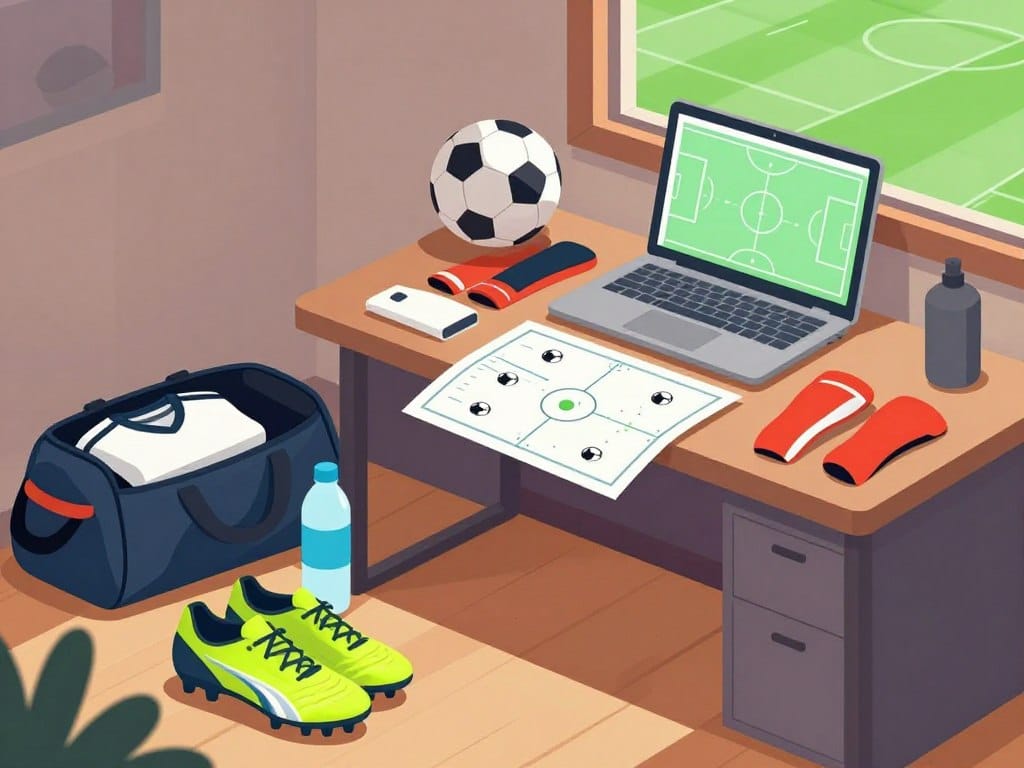
Here’s the no-surprises checklist I use the night before. I lay everything out by the door and physically touch each item with my hand — it sounds odd, but it works.
- Cleats, socks, shin guards, jersey
- Flip-flops, a second pair of socks, athletic tape
- Water bottle + a spare bottle, sunscreen, a non-melting snack
- Light base layer or rain top depending on forecast
Pack extras you’ll forget: tape, another water bottle, and a snack that won’t melt in a warm car. I put a small zip bag with tape and bandaids in the shoe compartment.
Plan the commute like a coach plans drills. Check the exact field address—many complexes have multiple entrances—and preview parking on a map app. If the complex has turf, take firmer cleats; if grass, soft studs are fine.
Confirm warm-up space and restroom locations, and note where the team will meet. When travel and kit are handled, your focus stays quiet and ready; otherwise stress in the car turns warm-up into catch-up.
Treat your body right in the 24 hours before a match
Manage your body in the 24 hours before the match and you’ll see better legs and clearer decisions when it matters.
Sleep like an athlete
Young athletes need consistent 9-hour nights. That steady sleep improves reaction speed, mood, and technical focus.
One good night won’t replace a week of short sleep. Aim for routine bed and wake times the whole week leading up to play.
Hydration strategy
Keep a water bottle nearby and sip all day; this beats chugging at warm-ups. Cut soda at least 24 hours out and skip caffeine before kickoff to lower dehydration risk.
Smart nutrition and timing
Pick complex carbs and lean protein the day and hours before: rice bowl with chicken, pasta with light sauce, oatmeal and banana, turkey sandwich, or potatoes and eggs.
Finish the last big meal about 3–4 hours before kickoff. In the final hours, choose easy snacks: pretzels, crackers, fruit, or a small juice to maintain steady energy and reduce cramp risk.
- Quiet advantage: what you do the day before shows up late in the second half.
- Sip water often; arrive already hydrated.
- Avoid soda and pre-match caffeine to lower risk of jittery energy.
| Focus | What to do | Why it helps |
|---|---|---|
| Sleep | 9 hours nightly for youth | Sharper reactions, steadier mood, cleaner skills |
| Hydration | Sip water all day; no soda, avoid caffeine | Better thinking, less fatigue, lower injury risk |
| Nutrition | Complex carbs + lean protein; last big meal 3–4 hrs before | Steady energy, fewer cramps, improved performance |
Warm up the right way with dynamic stretching and soccer-specific movement
I like to begin with easy locomotion—simple steps that raise the heart rate and open joints before any hard runs. This movement-based stretching warms tissue while circulation improves, so intensity arrives safely.
Start with dynamic locomotions
Use forward and backward jogs, side shuffles, skips, high knees, butt kickers, and walking lunges. These exercises increase range of motion and steady breathing.
Game-ready movement menu
- Forward jog (60 seconds), backward jog (30 seconds), side shuffles (30 seconds)
- Skipping variations, high knees, butt kickers—30 seconds each
- Walking lunges and quick hip openers—8–10 reps each leg
Add controlled speed and direction change
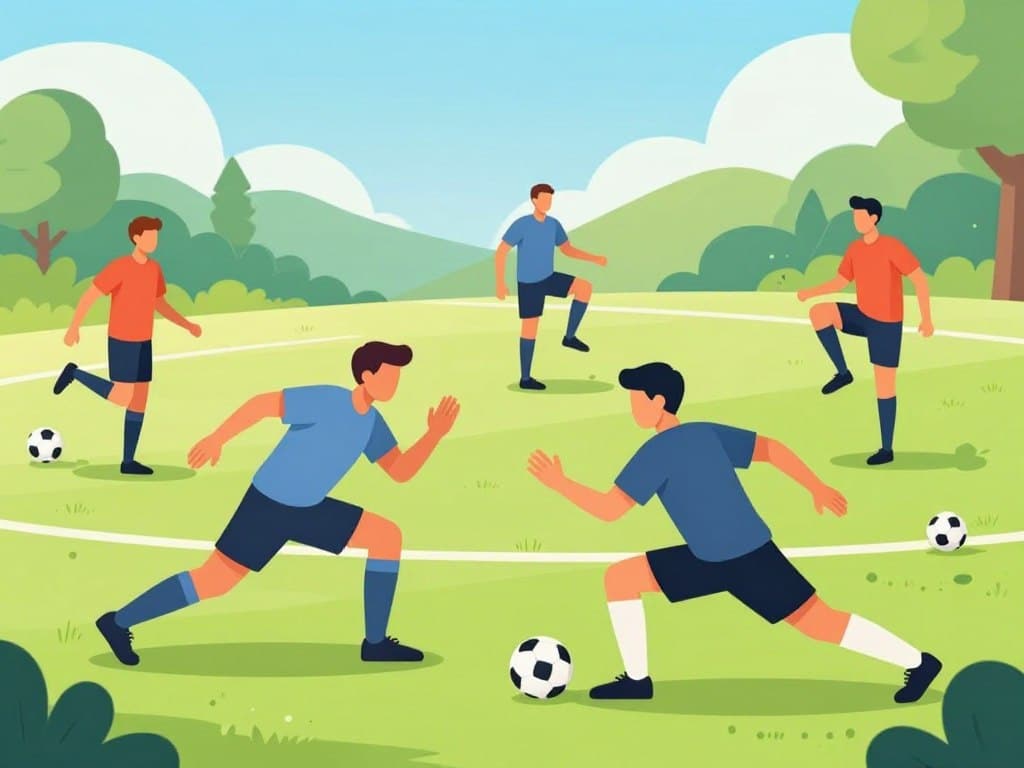
Progress to accelerations, hip out / hip in at cones, quick forward/back sprints, then plant & cut drills. These mirror match actions and reduce injury risk when done before high-speed activity.
Technique and scaling
Keep landings soft, hips and knees bent, and knees tracking over toes. Younger athletes keep intensity crisp but submaximal; advanced players build to 80–90% before team training.
| Part | Focus | Why it helps |
|---|---|---|
| 1 – General | Raise heat with locomotions | Less injury, better performance |
| 2 – Specific | Direction change and hip work | Prepares cuts and decels |
| 3 – Speed | Progressive accelerations | Safe transition to match pace |
Get sharp on the ball with competitive warm-up drills that translate to the game
I like to make the ball feel natural in my feet before whistle time; sharp touches grow confidence.
Start with rondos: set 4v1 or 5v2 in a 6–8 yard grid. Keep rounds short (45–60 seconds). Defenders swap when they win the ball to keep pressure real.
Rondos to tune first touch, scanning, and communication
Focus on “touches with intent”—receive with a soft first touch, check shoulders, then pass quickly. Self-coach with cues: “open hips,” “man on,” and “two-touch.” Make tempo competitive but controlled.
Possession games to build tempo control and decision-making
Scale to even numbers (6v6) with a clear goal: 6 passes = 1 point or play into a target player to score. This forces tempo control and choices between safe play and line-splitting passes.
Relay races with the ball for intensity—without full-speed sprints
Use slalom dribble relays and short shuttle dribbles after dynamic warm-up. Keep rounds short and rules clear so effort rises while technique stays clean.
| Drill | Setup | Coaching cue |
|---|---|---|
| 4v1 Rondo | 6–8 yd grid, 45–60s rounds | Open hips, one-two touches, talk early |
| 6v6 Possession | 20×30 yd area, target pass rules | Tempo control, scan twice before receiving |
| Slalom Relay | Cones 3–5 yd apart, down-and-back | Keep ball close, head up, steady speed |
Make every drill a tool: set one clear goal today (example: “scan twice,” “win it back in 3 seconds”) so the warm-up becomes direct improvement, not busy work. For mobility that supports tight touches, pair these drills with targeted stretches like the ones in this flexibility routine: flexibility stretches.
Conclusion
Small habits the night before and the hour before lift your baseline performance. A simple routine removes last-minute stress and keeps your head clear on match day.
Keep the backbone tight: pack the bag, arrive with time to spare, move well, take purposeful touches, then compete. Consistency is the edge; repeat the same sequence across fields and weather and it scales with your level.
Quick checklist (screenshot this):
- Pack bag & confirm field
- Hydrate; eat last big meal 3–4 hours before kickoff
- Dynamic warm-up, then on-ball work
Personalize by position and personality, but keep the order the same. Some days feel off; a strong routine raises your floor and steadies performance. Pick one small change to try next match and commit to it for a month.