
Imagine lifting the gold trophy while knowing your bank account tells a different story. The equal pay in women’s soccer movement wasn’t just a legal battle; it was a loud demand for basic fairness. I want to show you how these world-class athletes turned a simple complaint into a global shift for sports.
Back in 2016, five star players from the national team filed a federal complaint that shocked the athletic world. They refused to accept earning less while outperforming everyone else. This fight would span six long years, challenging the very foundation of how we value female athletes.
These players didn’t stop even after winning another world cup title. They showed women that excellence deserves fair compensation regardless of gender. By 2022, a landmark agreement ensured that equal pay became the new standard for the world cup roster and beyond, inspiring women everywhere.
Key Takeaways
- The legal battle officially began in 2016 with a formal federal complaint.
- Athletes challenged the federation for unequal treatment compared to the men’s team.
- The movement spanned six years of intense legal action and public pressure.
- A historic, landmark agreement was finally reached and signed in 2022.
- This victory secured identical pay structures for both national squads moving forward.
- The success created a ripple effect, encouraging fairness across all professional sports.
The Stark Reality of Pay Disparities Before 2016
Let me show you the numbers that made athletes finally say “enough”—and trust me, when you see them, you will understand the outrage. Back then, both teams were required to play 20 exhibition matches every year. However, the federation compensated them very differently as of March 2016.
If the women lost all 20 games, they earned $72,000, while the men pocketed $100,000 for the same record. Winning did not close the gap either. A perfect season earned women just $99,000, but men could take home $263,320 in money for that achievement.
The World Cup revealed even deeper cracks in the system. In 2015, the female national team won the title and received $2 million. Meanwhile, the male squad earned $9 million in prize money for simply reaching the round of 16 in 2014.
| Metric | Women’s Compensation | Men’s Compensation |
|---|---|---|
| 20 Exhibition Wins | $99,000 | $263,320 |
| 20 Exhibition Losses | $72,000 | $100,000 |
| Sponsor Appearance | $3,000 | $3,750 |
| World Cup Bonus (1st Place) | $75,000 | $390,625 |
Every detail felt skewed, from sponsor appearances to daily travel allowances. The roster bonus for the World Cup was $30,000, which was less than half of the male roster’s share. This system proved that excellence did not guarantee equal pay, and that is when the fight for more money truly began. The struggle for fair pay was finally out in the open.
When Five Players Said “Enough”: The 2016 Federal Complaint
I still remember the shockwaves that hit the soccer world when five players filed a massive federal complaint. It was March 2016, and the air felt heavy with anticipation as Alex Morgan, Hope Solo, Carli Lloyd, Megan Rapinoe, and Becky Sauerbrunn took a stand.
These weren’t just athletes; they were world champions who decided they would no longer accept the status quo. They were tired of the federation keeping a payment structure that treated them as less valuable than their peers.
You have to realize how much courage this took. They were essentially calling out their own bosses on a global stage for everyone to see. It wasn’t just about a paycheck; it was about the fundamental right to be treated with fairness.
The EEOC Filing That Changed Everything
The group filed their complaint with the Equal Employment Opportunity Commission, accusing the organization of violating Title VII and the Equal Pay Act. I find it fascinating that these icons used the law to prove that their success should be rewarded equally.
During that same year, the legal battle became even more complex. The U.S. Women’s National Team Players Association actually tried to void an extension of their collective bargaining agreement. They wanted more freedom to negotiate for better terms.
However, the women faced an early setback in July. A court ruled that their agreement extension was valid, which meant they were bound by a no-strike provision. They had to keep playing, even while their legal fight was just beginning to heat up.
Carli Lloyd’s Public Call to Action
While the lawyers argued in court, Carli Lloyd decided to take the message directly to the public. She wrote a powerful essay in the New York Times titled “Why I’m Fighting for equal pay.” It was a move that turned casual fans into passionate supporters of the cause.
She pointed out a fact that the bosses couldn’t ignore. The women national team was actually generating more revenue than the men at that time. It made the wage gap look not just unfair, but completely illogical from a business perspective.
Lloyd’s decision to fight equal pay so publicly helped people understand the stakes. You could see the shift in public opinion almost instantly. It proved that these players were ready to lead both on and off the pitch to support their team.
Ultimately, the pay they received had to catch up to their undeniable talent. This 2016 movement became the spark for every legal victory that followed in the years to come.
| Date | Key Action | Primary Goal |
|---|---|---|
| March 2016 | EEOC Federal Complaint | Address Title VII and Equal Pay Act violations |
| April 2016 | NYT Essay Publication | Raise public awareness of revenue vs. pay gaps |
| July 2016 | Court Ruling | Confirmed validity of no-strike provision |
Breaking Down the Numbers: How Unequal Was the Pay?
I’ve dug through the archives to find the exact numbers that sparked the massive 2016 federal complaint. These figures reveal a systemic devaluation of world-class athletes that is frankly staggering. You might find it hard to believe how much less money the female stars received compared to their male counterparts.
Exhibition Match Compensation Differences
I discovered that both national teams were required to participate in 20 exhibition matches annually. However, the earning potential was worlds apart for the two groups. If the women won every single game, they maxed out at $99,000.
A man performing the same feat would earn $263,320. This massive gap in pay meant male players could earn nearly four times as much for a single appearance. These disparities existed even though the female team was often more successful on the pitch.
World Cup Bonus Disparities That Shocked Fans
The world cup bonus structure truly shocked fans across the world. Our women world cup team earned $2 million in prize money for winning the 2015 tournament. At the same time, the men earned $9 million just for reaching the round of 16 in 2014.
While fifa prize money is often blamed, the federation’s internal prize payouts for winning the world cup remained wildly uneven. This meant that losing early in a men’s event was more profitable than winning the entire female competition.
| Category | USWNT Compensation | USMNT Compensation |
|---|---|---|
| Per Match Earnings | $3,600 – $4,950 | $6,250 – $17,625 |
| Total Prize Money for Win | $75,000 | $390,625 |
| Women World Cup 1st Place | $2 Million | N/A |
| Max World Cup Bonus | $75,000 | $390,625 |
Daily Allowances and Sponsorship Appearance Gaps
Even the minor administrative details revealed deep financial inequality. Sponsor appearances paid female players $3,000 compared to $3,750 for men. These smaller gaps added up over a long season of international travel.
Daily travel allowances were also significantly lower for the female squad. They received $50 to $60 per day while the men received up to $75. It shows that every cent of money was distributed with a clear gender bias at every level of the organization.
The 2017 Restructuring and New Collective Bargaining Agreement
The road to fair pay took a surprising turn in 2017 when the players shook up their own internal leadership. Just three days before their contract expired in late 2016, the team fired their lead attorney, Rich Nichols. They wanted a fresh start and a more collaborative approach.
By February, they hired management consultant Becca Roux to lead the bargaining process. This change moved the conversation toward a professional relationship with U.S. Soccer. The women focused on a revenue-sharing model to ensure more money for the program’s growth.
The new collective bargaining agreement, ratified on April 4, 2017, brought significant changes. While it wasn’t total equality, it was a massive step forward for the year. The agreement introduced a more stable salary structure and higher performance rewards.
| Compensation Category | Previous Rate | 2017 Agreement Rate |
|---|---|---|
| Base Salary | Varies | $100,000 |
| Friendly Win Bonus | $1,350 | $5,250 – $8,500 |
| Un-contracted Game Fee | Varies | $3,500 |
To secure these gains, the team accepted a reduction in guaranteed roster spots. The number of contracts dropped from 24 down to 20, eventually reaching 16 in 2021. This strategic move allowed the players to negotiate for much higher individual bonuses and better travel conditions.
March 2019: The Gender Discrimination Lawsuit
Imagine filing a major federal lawsuit on a day meant to celebrate your global contributions. In March 2019, the fight for equal pay reached a boiling point. The USWNT moved their battle into the public eye in a way that shocked the sports world. It was a massive leap forward for the players in their quest for equal pay.
International Women’s Day Filing
On March 8, 2019, exactly 28 players stood together to file a comprehensive gender discrimination lawsuit. They targeted the federation in the United States District Court in Los Angeles. This bold action effectively ended their 2016 EEOC complaint, which had remained unresolved for three years.
I find it fascinating that they chose this specific holiday to demand justice in a federal court. They weren’t just talking about pay anymore. The lawsuit detailed how they received worse treatment regarding medical care, coaching, and travel arrangements to matches.
You can see how this changed the narrative for women in sports across the country. They claimed the USSF violated the Equal Pay Act of 1963 and Title VII. Every year of their hard work and dominance deserved legal protection and equal respect.
The $66 Million Back Pay Claim
The math behind the legal action was truly staggering. I looked at the numbers, and the squad sought over $66,722,148 in back pay and damages. This massive figure covered several years of systematic underpayment when compared to the men national team.
Let’s look at the world cup figures that fueled this intense legal fire. In 2011, the ladies split $1.8 million for a second-place finish. During the men’s world cup cycle, they received $5 million for reaching only the round of 16.
Even winning didn’t bridge the massive financial gap between the teams. When they won the 2015 women world cup, the cup prize money was tiny compared to the men’s 2014 share. The team argued this was clear discrimination because they had earned the money through performance. They deserved the money that reflected their status as world champions.
| Performance Metric | Men National Team | Women National Team |
|---|---|---|
| Loss in a Friendly Match | $5,000 Bonus | $0 (No Bonus) |
| Win in a Friendly Match | Up to $17,625 | Only $1,350 |
| 2011/2014 World Cup Prize | $5M (Round of 16) | $1.8M (2nd Place) |
| FIFA Prize Money Pool | 100% (Baseline) | 5% of Men’s Total |
The 2020 Setback: Judge Dismisses Equal Pay Claims
Have you ever felt like you worked twice as hard only to be told you’re already getting enough? In May 2020, the legal battle for the USWNT hit a massive, unexpected wall. Judge R. Gary Klausner dismissed the equal pay portion of the lawsuit, leaving fans and athletes stunned across the country.
He argued that the women actually earned more money in total than the men during the contested years. But here is the catch: they only made more because they won almost every single game they played! The judge also noted that the players rejected a “pay for play” deal similar to the male team structure in favor of base salaries.
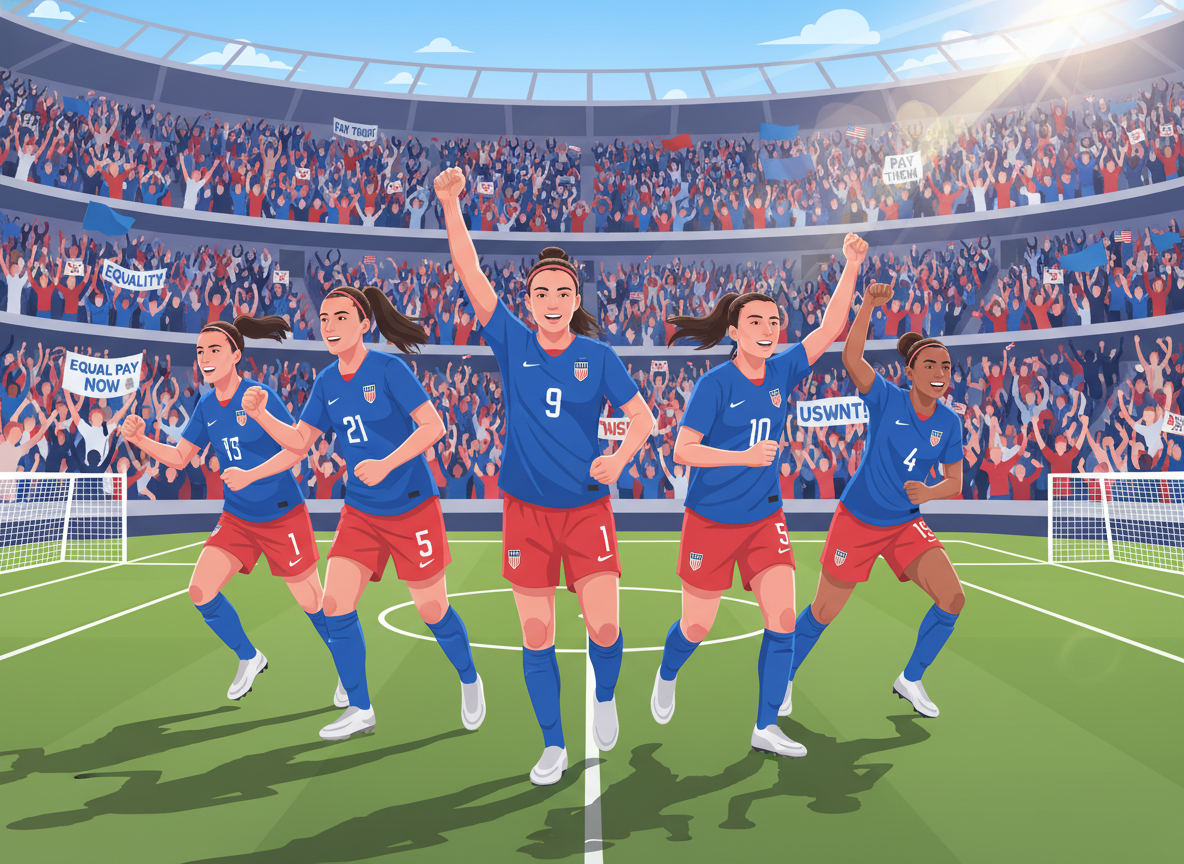
I was honestly baffled when I first saw this legal news. It felt like the court was penalizing the USWNT for being too successful on the pitch. The players argued that the court reached this conclusion without accounting for their superior performance and higher volume of work.
The players didn’t take this sitting down and quickly filed an appeal. They argued that pay isn’t truly equal if a woman must outwork and outperform her counterparts just to reach the same financial level. Even the USMNT stood by them, filing a brief to say they supported the fight for the compensation the ladies deserved.
| Legal Issue | Judge’s 2020 Ruling | Players’ Argument |
|---|---|---|
| Total Earnings | USWNT earned more per game and in total. | Higher totals came from winning more matches. |
| Contract Type | The team chose salaries over “pay-for-play.” | Choices were made under unequal conditions. |
| Equality Standard | Total dollar amounts define equality. | Equal work should result in equal rate. |
The Historic 2022 Settlement on Equal Pay in Women’s Soccer
The tide turned for athletes everywhere in early 2022 when a historic $24 million settlement finally acknowledged years of systemic pay gaps. This moment was not just a legal win for the soccer world. It was a massive victory for justice that you could feel across the globe.
The $24 Million Agreement
This settlement was much more than a simple check. The U.S. Soccer Federation agreed to pay a landmark $24 million to resolve the claims. Most of this money, about $22 million, went directly to the players as back pay.
This payment recognized the years they were underpaid compared to the men’s side. The terms of the deal also require equal pay for every single match. This includes friendlies, major tournaments, and the world cup. No athlete will ever have to accept lower pay just because of their gender again.
Soccer President Cindy Parlow Cone, who played for the national team herself, helped lead this change. Cindy Parlow Cone admitted that the federation still has a lot of work to do. She remains dedicated to rebuilding a strong and honest relationship with all her athletes.
Revolutionary Prize Money Pooling Arrangement
The biggest hurdle in negotiations was always the world cup prize payouts. FIFA pays the men’s side much more money than the women’s side. To fix this, the unions came up with a bold and clever plan to share the prize money.
The new collective bargaining agreements run through 2028. These contracts ensure that both players receive a share of the pooled earnings from both tournaments. Now, the women earn a portion of what the men make, and vice versa. It creates a truly unified front for American sports.
Let this sink in: the women earned more from the men’s 2022 group stage than from winning their last two championships. This pooling arrangement solves the world cup prize gap once and for all. It proves that when we value everyone equally, the entire sport thrives and grows together.
| Compensation Category | Old Payment Model | 2022 Settlement Standard |
|---|---|---|
| Back Pay Settlement | $0 | $22 Million Allotted |
| Match Bonuses | Unequal for Men/Women | 100% Identical Structures |
| Prize Money Payouts | Separate & Disparate | Pooled & Shared Equally |
The Equal Pay for Team USA Act: Making Equality Federal Law
You might think the struggle ended with a check, but the United States government had a final, powerful word. The fight for fairness moved from the soccer pitch to the halls of Congress, leading to a massive bipartisan breakthrough. Senators Maria Cantwell and Shelley Moore Capito introduced the Equal Pay for Team USA Act in July 2021.
This law ensures that every athlete representing our country receives equal pay and benefits, regardless of gender. President Biden signed the act on January 5, 2023, marking a permanent shift in how we value our national teams. Whether it is a local match or a global tournament, the standard is now set in stone for everyone.
This federal guarantee will be in full effect for the 2024 Paris Olympics and the 2026 World Cup. It forces organizations to treat a women‘s team with the same financial respect as the men. When you dive into soccer terminology, you will find that “equality” is now the most important word in the American game.
Senator Cantwell noted that athletes no longer have to worry that a different gender will be paid more for the same victory. This legislation protects future generations across all global athletic competitions, including every World Cup and Paralympic event. When you wear the Team USA logo, you are finally, legally equal under the law.
| Key Feature | Impact of the Act | Future Events |
|---|---|---|
| Bipartisan Support | Passed Senate Unanimously | 2024 Paris Olympics |
| Equal Benefits | Medical and Travel Equity | 2026 World Cup |
| Federal Law | Mandatory for all Sports | Paralympic Games |
Signing the Historic Collective Bargaining Agreements in September 2022
The final whistle on the equal pay battle blew in September 2022 during a historic ceremony in Washington. Representatives for the men’s and women’s national teams gathered at Audi Field to sign their new collective bargaining agreements. This landmark event officially ended years of tension and established a path toward true equality.
The federation struck these separate deals to ensure identical pay structures through 2028. These contracts cover everything from game appearances to the equitable distribution of World Cup prize money. It represents a massive shift in how the sport values every team regardless of gender.
U.S. Soccer President Cindy Parlow Cone praised the solidarity required to reach this finish line. As a former player herself, soccer president cindy understood the weight of the moment. President Cindy Parlow highlighted that the men jumping on board was crucial for pushing the deal over the line.
During the event, Cindy Parlow Cone stood alongside players like Becky Sauerbrunn and Crystal Dunn. Sauerbrunn thanked the fans for their constant “Equal Pay” chants that echoed through the stadiums for years. Their persistence proved that women in sports could rewrite the rules of the game.
The teams now share revenue and bonuses equally, setting a global standard for other nations. This agreement ensures that the next generation of the women‘s team starts on a level playing field. It is a victory for the players and the fans who never stopped believing in fairness.
| Agreement Feature | Women’s National Team | Men’s National Team |
|---|---|---|
| Appearance Fees | Identical Rates | Identical Rates |
| World Cup Prize Money | Pooled and Shared | Pooled and Shared |
| Commercial Revenue | 50/50 Split | 50/50 Split |
| Contract Duration | Through 2028 | Through 2028 |
Ripple Effects Across Women’s Sports Worldwide
Did you know that the USWNT’s legal battle acted like a spark for a massive fire across the sports world? The 2022 settlement wasn’t just a personal win for a few famous athletes. Megan Rapinoe knew it was a victory for all women athletes who continue to support the push for fairness.
I’ve seen how one group’s courage can give others the strength to stand up. The impact spread faster than anyone expected, reaching far beyond the borders of American sports. It proved that when one squad wins, everyone gets closer to the goal.
Supporting the Canadian Women’s National Team
Our neighbors to the north faced a huge challenge right before their biggest tournament. Just six months before the 2023 event, Canada Soccer announced deep funding cuts. Can you imagine the stress of preparing for the women world stage while your federation pulls back its backing?
The U.S. women stepped up to support the Canadian national team immediately. They offered help in any form needed, proving that the fight for respect has no borders. These women’s teams showed great unity during a very difficult period.
WNBA and U.S. Women’s Hockey Teams Join the Fight
This movement quickly jumped from the soccer pitch to the hardwood and the ice. I was amazed when the WNBA opted out of their contract in 2018 to demand better conditions. Becca Roux, who led the USWNT players union, actually shared legal strategies with those basketball players.
Even the U.S. hockey team sought help back in 2017 during their own dispute. Stars like Alex Morgan publicly backed the hockey squad during their bold boycott. These different teams realized they were stronger when they fought for equal pay together.
Political Leaders and Public Reactions
Political leaders in Washington D.C. couldn’t ignore the noise either. Senator Joe Manchin even tried to block federal funding for the men’s 2026 World Cup until the women got their fair pay. During his campaign, Joe Biden told the federation to “pay now” or face the consequences later.
- Senator Joe Manchin: Proposed a bill to block 2026 World Cup funding.
- Joe Biden: Demanded the federation settle the dispute during his 2020 campaign.
- Kamala Harris: Encouraged the public to keep fighting for the cause after the 2019 victory.
It is amazing how many times a simple game can change national laws. Our national team truly changed the world by standing their ground. Their legacy is now written in both sports history and federal legislation.
| Organization | Year | Key Challenge | Solidarity Action |
|---|---|---|---|
| Canada Soccer | 2023 | Program funding cuts | Strategic assistance provided |
| WNBA | 2018 | Collective bargaining | Shared legal advice |
| USA Hockey | 2017 | Championship boycott | Backing from star players |
FIFA’s Role and Persistent Global Prize Money Inequality
Ever wonder why the women world cup still feels like it is playing catch-up to the men when it comes to the checkbook? While individual nations make strides, the world governing body continues to oversee massive gaps in fifa prize money. These disparities reveal a tough road ahead for international athletes.
For years, the financial gap has been staggering and hard to ignore. When Germany won the men world cup in 2014, their federation received $35 million. Just one year later, the American women earned only five percent of that amount for their own victory.
FIFA President Gianni Infantino remains a controversial figure in this long debate. President Gianni Infantino once dismissed the idea of equal pay as a mere slogan that comes up now and then. This mindset reflects the reality for many players who struggle to make a living.
A FIFPRO survey showed nearly a third of international players received no money at all for eighteen months. Many athletes even had to take unpaid leave from their regular jobs just to play in a major tournament. Women’s earnings were many times lower than their male counterparts for decades.
In 2023, the world cup prize pool reached $110 million, with $49 million going directly to players. This marked the first time the women world of soccer saw guaranteed individual payments for a prize. Despite this, women still earn just 25 cents for every dollar men make in their tournament. The world is watching closely to see if prize money will ever truly reach parity.
| Competition Year | Total Prize Pool | Player Earning Ratio |
|---|---|---|
| 2019 Women’s World Cup | $30 Million | 8 cents per dollar |
| 2022 Men’s World Cup | $440 Million | Full Dollar |
| 2023 Women’s World Cup | $110 Million | 25 cents per dollar |
Conclusion
I find it incredible how a simple legal complaint in 2016 blossomed into a global movement that forced the world to rethink athlete compensation. After years of intense legal battles and a heartbreaking court dismissal in 2020, the players finally secured a historic $24 million settlement. This victory ensured that the women on the national team receive the same pay as the men.
The fight equal pay didn’t just change soccer in the United States. It led to the Equal Pay for Team USA Act, protecting all future athletes under federal law. I’ve noticed the ripple effects in basketball and hockey, as athletes everywhere draw strength from this incredible success.
However, the journey isn’t over when we look at the global stage. While the USWNT paved the way, the women world cup still sees prize money gaps from FIFA. Even so, these athletes proved that systemic change happens when you refuse to back down.
The road to the world cup should always be about talent rather than financial survival. Their legacy ensures that future stars can focus on winning the world cup instead of legal disputes. Achieving equal pay is now a hard-won reality for women across the country.