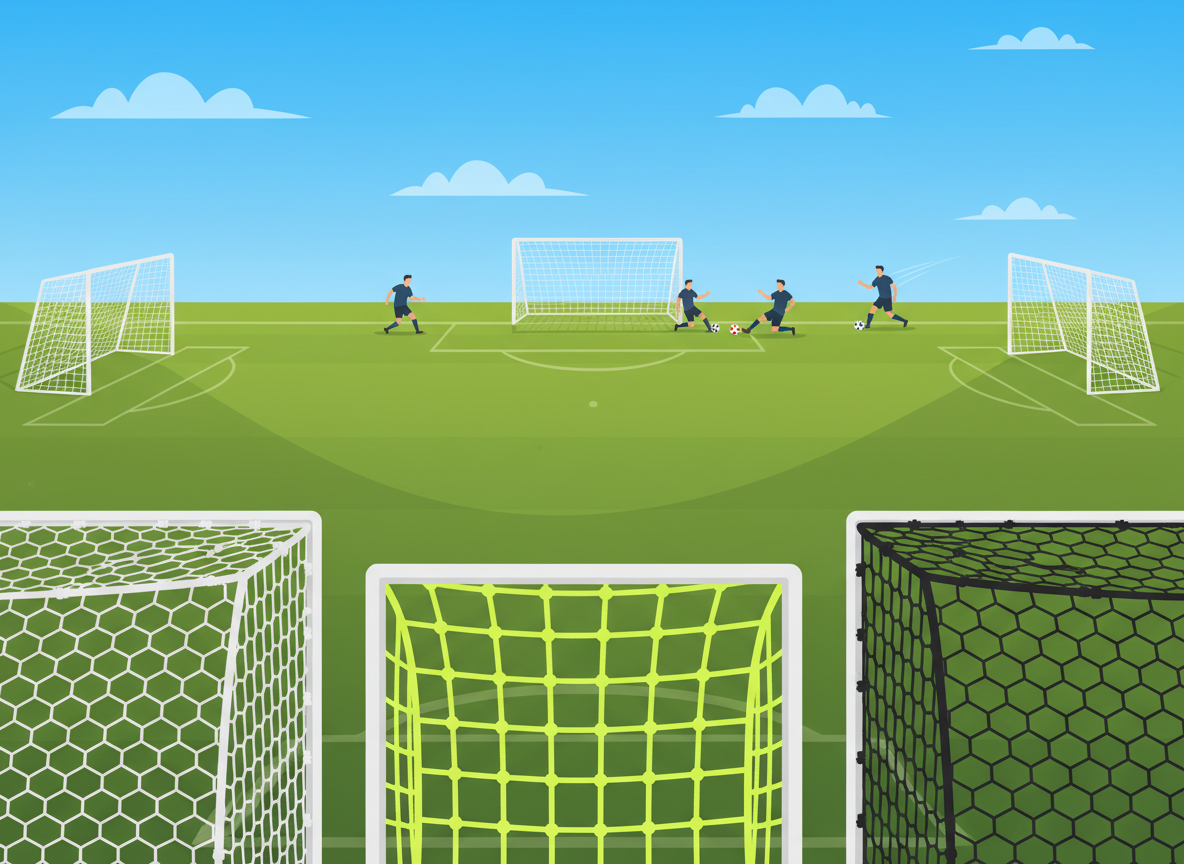

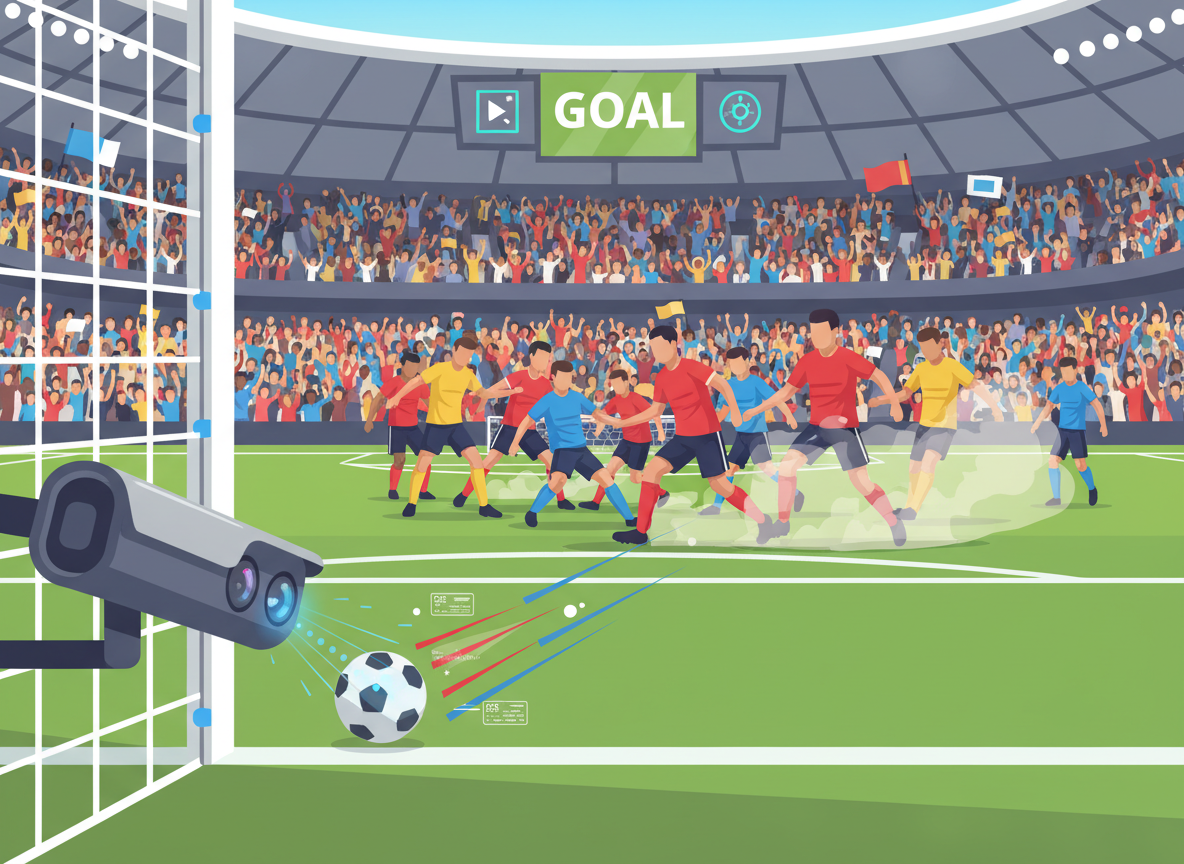
The goal line technology history began with a single, heartbreaking moment that changed the football world forever. Picture a ball flying past the keeper and clearly hitting the turf inside the net, only for the official to ignore it. This specific frustration isn’t just a bad memory… it’s the actual reason the sport finally looked toward the future.
For decades, referee crews relied only on their human eyes while other sports moved into a digital era. That stubbornness eventually crumbled after high-stakes errors on the big stage made global headlines. The beautiful game finally evolved in July 2012 when officials approved electronic aids to help make the right call.
Watching a clear point vanish into thin air used to be part of the drama, but it nearly broke the spirit of the fans. The sheer pressure of controversial “ghost goals” forced football authorities to finally embrace modern technology. It was a long road to travel, but the integrity of the score became too important to ignore.
Now, the game ensures every earned goal counts, proving that even the most rigid traditions must eventually adapt. This shift toward precision proves that when the evidence is clear, the right decision eventually wins. We no longer have to wonder “what if” when the stakes are at their highest.
Key Takeaways
- IFAB officially sanctioned the use of electronic scoring aids in July 2012.
- High-profile refereeing errors in major tournaments served as the primary catalyst for change.
- The 2014 FIFA World Cup marked the first time the system was used on the biggest global stage.
- Goal-verification systems are currently standard in top European domestic leagues.
- Implementation remains limited to elite competitions due to the high costs of installation.
- The transition ended decades of resistance from traditionalists within the governing bodies.
What Is Goal Line Technology in Soccer
Have you ever wondered how a tiny chip or a high-speed camera can settle a stadium-wide debate in a heartbeat? Let me break down this game-changing goal-line technology in simple terms you can actually understand. It exists for one single purpose: telling the referee whether the entire ball crossed the line or not—that’s it, nothing more.
The fascinating part is that the system doesn’t make the final choice for the human crew. It simply gives them data they physically couldn’t see with their own eyes. In a game of inches, this technology is the ultimate truth-teller.
The Definition and Purpose
In short, this system determines if a goal was scored by checking if the ball completely crossed the goal line. This must happen between the goalposts and underneath the crossbar with electronic assistance. It isn’t here to replace the humans on the pitch; it is there to support their judgment during chaotic moments.
The objective is clear and focused. The system must provide a clear indication of the ball’s position without any ambiguity. There are four basic requirements for any system to be approved for professional use:
- It must address only whether ball placement resulted in a score.
- The system must be 100% accurate.
- The signal must be sent immediately (within one second).
- Information is communicated solely to the match officials.
How Officials Receive Goal Decisions
When a goal-line incident occurs, the system has exactly one second to analyze the situation. It then sends an encrypted signal directly to the match officials. This ensures the game flows naturally without long interruptions.
The lead official receives both a vibration on their wrist and a visual “GOAL” message on their watch. This happens the instant the ball crosses the line. There is no waiting, no reviewing, and no stopping play while someone checks a monitor in a basement.
| Feature | Requirement | Benefit |
|---|---|---|
| Response Time | Under 1 second | Maintains game tempo |
| Alert Type | Vibration & Visual | Discreet for officials |
| Data Scope | Goal/No Goal | Zero distractions |
Why Accurate Goal Detection Changed Everything
You need to understand that unlike video reviews that stop the game, this technology works in real-time. It operates in the background without anyone even noticing it’s there until a decision is needed. It’s the silent guardian of the scoreline.
Why does this matter so much to me and you? Because in soccer, a single goal can mean the difference between winning a championship or going home empty-handed. Accurate detection ensures that the history books aren’t written by mistakes, but by actual performance.
The Controversial Moments That Sparked Revolution
I still remember the outrage when these three matches proved that human eyes were no longer enough for the beautiful game. For years, soccer resisted high-tech help, but a few massive blunders on the world stage changed everything. These weren’t just small errors; they were heart-breaking mistakes that left fans and players feeling robbed of justice.
The pressure on officials became unbearable as the world watched replays that told a different story than the whistle. It was a pattern of failure that finally forced FIFA to admit that decisions needed more than just a quick glance. Let’s look at the specific heartbreaks that fueled this technological revolution.
Frank Lampard’s Ghost Goal Against Germany in 2010
During the 2010 fifa world cup, England faced Germany in a high-stakes knockout game. With England trailing 2-1, frank lampard unleashed a stunning shot from outside the box. The ball hit the crossbar and bounced at least two feet behind the crossed goal line before spinning back out.
The whole world saw it on TV, but the crossed line went unnoticed by the referee and his assistant. Because the goal was disallowed, England lost momentum and eventually fell 4-1. Even the German players looked stunned—it was so obvious that the ball crossed that even they expected the whistle.
Thierry Henry’s Handball in the 2009 World Cup Qualifier
Before the 2010 fifa world cup even began, a massive controversy erupted during a world cup qualifying playoff. Thierry Henry blatantly handled the ball twice before assisting a William Gallas score. This moment allowed France to eliminate Ireland and secure a fifa world cup spot.
The match became a symbol of how human error could ruin a nation’s dreams. This incident served as a major catalyst for change. It even led FIFA President Sepp Blatter to issue a public apology for the mistakes made by the refereeing team.
Marko Dević’s Uncalled Goal at Euro 2012
Just when you thought things couldn’t get worse, Euro 2012 provided another disaster. Ukraine’s Marko Dević hit a shot that clearly crossed goal territory before John Terry cleared it. What made this worse? A goal-line official was standing exactly where the ball crossed line, yet he failed to signal it.
This was the final straw for many. Even with extra human eyes positioned near the posts, the crossed line was missed. This mistake reopened the debate and proved that the ball moved too fast for the naked eye to track reliably.
How These Incidents Fueled Demands for Technology
These three moments created an embarrassment that FIFA could no longer ignore. Each ball crossed line incident was captured by millions of viewers, making the sport look outdated. The fifa world cup and European championships are too important for such basic errors.
The outcry from the media and fans turned into a roar for goal security. Officials finally realized that to protect the integrity of the world cup, they needed a system that never blinked. This paved the way for the high-tech sensors we rely on today.
| Match / Incident | Year | The Blunder | Resulting Action |
|---|---|---|---|
| England vs. Germany | 2010 | Frank Lampard shot denied | Direct push for GLT testing |
| France vs. Ireland | 2009 | Henry handball leading to goal | Apology from FIFA President |
| Ukraine vs. England | 2012 | Dević shot cleared too late | Final approval for technology |
Goal Line Technology History: The Development Timeline
Have you ever wondered why it took so long for referees to get digital help on the goal line? I find it fascinating that the sport we love resisted change for so many years. Tracing the timeline of this evolution reveals a long, frustrating marathon through decades of tradition and stubbornness.
The 2000s: Early Discussions and FIFA’s Resistance
Throughout the early 2000s, various controversial incidents sparked a massive debate about the potential for goal-line assistance. Fans and players alike started demanding more accuracy from officials who were struggling to keep up with the fast pace of modern play.
However, the governing bodies initially refused to budge. They argued that “human error” was part of the laws of the game and shouldn’t be touched.
2006: Premier League’s First Hawk-Eye Trials
The premier league actually led the charge for innovation much earlier than many realize. In 2006, they partnered with Hawk-Eye to run non-competitive trials after reaching an agreement with the International Football Association experts.
These early tests worked beautifully, showing that the technology could provide instant and accurate results. It felt like the sport was finally on the verge of a digital revolution.
2008: IFAB Rules Out Technology Completely
In a shocking turn of events, the International Football Association Board ruled out the use of any technical assistance in 2008. This decision was a massive disappointment for the premier league following their successful testing periods.
FIFA president Sepp Blatter tested an Adidas microchip system but dismissed it quickly. He famously described the technology as “only 95% accurate” and rejected the system outright. This resistance lasted for two more years, as if 95% wasn’t better than human eyesight!
2010: The World Cup That Changed Everything
Everything shifted during the 2010 FIFA World Cup in South Africa. When Frank Lampard’s shot clearly crossed the line against Germany and was disallowed, the whole FIFA world watched in pure disbelief.
After the world cup blunder, Sepp Blatter finally admitted that the status quo was no longer working. He announced that the association board would finally reopen discussions about implementing modern solutions.
2011: FIFA Finally Authorizes Official Testing
By July 2011, the association board finally authorized a sanctioned testing process. The football association board invited various companies to prove their systems under rigorous conditions.
This was the first time the football association board took a structured, scientific approach to change. It was a high-stakes time for the fifa world as they tried to fix a broken system through official trials.
| Year | Major Event | Key Outcome |
|---|---|---|
| 2006 | Premier League Trials | Successful testing of Hawk-Eye systems |
| 2008 | IFAB Tech Ban | Authorities voted to reject all technical aids |
| 2010 | World Cup Incident | Lampard’s “ghost goal” forced FIFA to react |
| 2011 | Official Sanction | Formal testing phases began with Empa |
How the Technology Actually Works
Let me show you how this technology actually works… and trust me, it’s way cooler than you might think. We usually see the end result on TV, but the science happening in that split second is pure magic. These sophisticated systems rely on two main methods to ensure every call is perfect when the ball nears the goal line.
Hawk-Eye: Camera-Based Ball Tracking
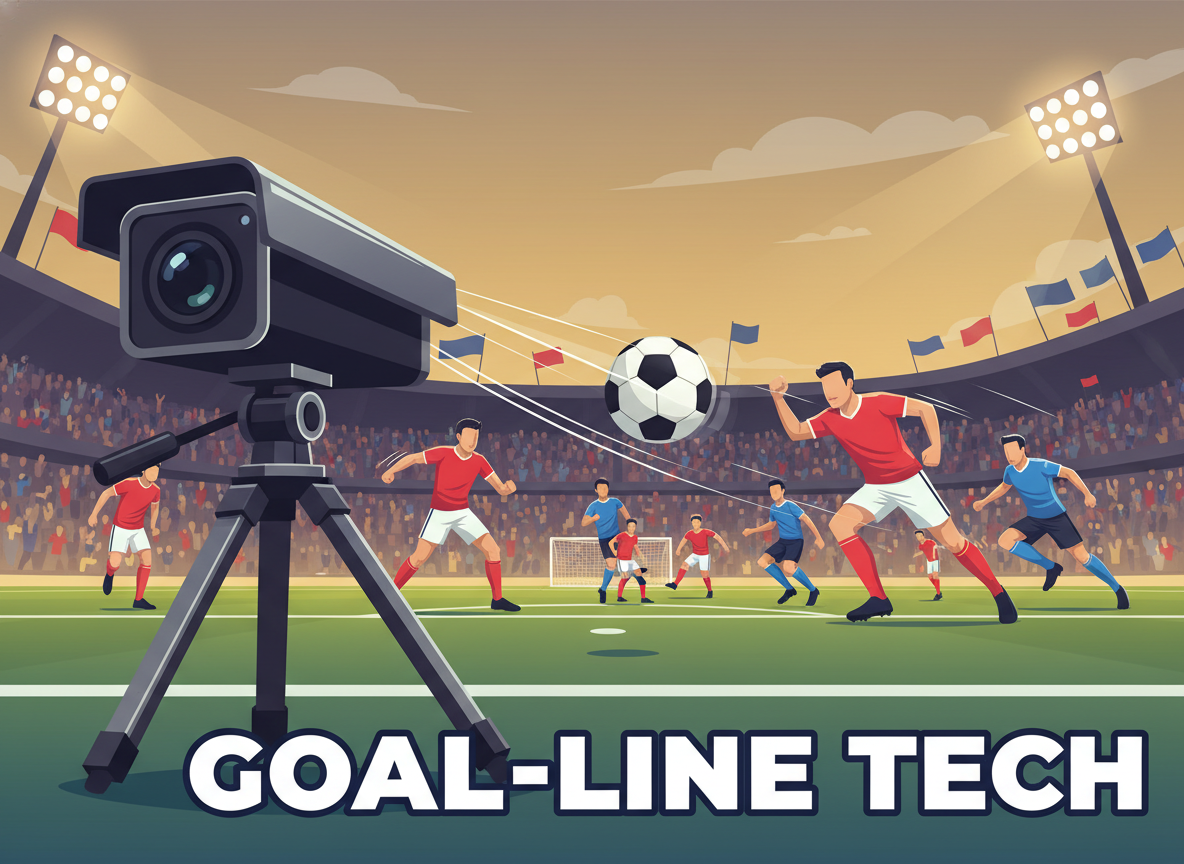
Hawk-Eye uses six high-speed cameras positioned around the field. Each one films at 500 frames per second, which is 20 times faster than a standard broadcast. This system identifies clusters of pixels to track the ball’s exact 3D position through triangulation.
Here is the brilliant part: the software only needs to see 25% of the ball to track it. Even if players are crowded in the box, the technology still works flawlessly. This ensures high accuracy during the most chaotic scrambles in the penalty area.
GoalRef and Cairos: Magnetic Field Systems
Now, the magnetic field systems like GoalRef and Cairos work completely differently. They embed thin cables in the turf to create an active field around the area. Think of it like an invisible fence for your dog, but for detecting a goal.
A specialized sensor inside the ball detects the moment it passes through this field. The data instantly relays to a computer to check if it crossed the line. Just like mastering penalty retake rules, understanding this system helps you appreciate the game’s evolution.
GoalControl: The 14-Camera Solution
GoalControl went a different route by using 14 high-speed cameras focused on the goals. This setup provides a more comprehensive view than other setups. It ensures that the goal line is monitored from every possible angle at all times by the cameras.
One-Second Decision Transmission to Referees
But here is what matters most: regardless of the system used, the decision must be fast. The rules state that the signal must reach the referee within exactly one second. This nearly instant time frame prevents any interruption to the flow of the match.
The referees receive a vibration and a visual “GOAL” message on their specialized watches. This happens the instant the entire ball crosses the line. It is a seamless process that removes doubt without the need for long video reviews by a secondary system.
| Feature | Hawk-Eye | GoalRef / Cairos | GoalControl |
|---|---|---|---|
| Detection Type | Visual tracking | Magnetic field | Visual tracking |
| Hardware | 6-7 cameras | Cables & ball sensor | 14 high-speed cameras |
| Official Technology | FIFA Approved | FIFA Approved | FIFA Approved |
Testing, Approval, and Certification Process
FIFA didn’t just wake up one day and say yes; they put every proposed system through a high-stakes scientific gauntlet. I find it fascinating how much pressure these inventors faced during the official trials. This intense era of development was all about precision and proving that machines could handle the chaos of a live game.
September to December 2011: First Phase Testing
The first stage of testing wasn’t just a simple check-up. The Swiss research institute, Empa, conducted rigorous evaluations on eight different candidates. They looked at everything from Cairos Technologies’ implanted ball chips to the high-speed cameras of Hawk-Eye.
Each technology had to prove it could survive extreme scenarios. Imagine a ball being 75% blocked by a goalkeeper’s hands in a muddy goal mouth. If the sensors failed even once under those conditions, they were out.
Developers also had to deal with magnetic interference and wild weather shifts. It was a brutal elimination round where only the most robust ideas survived. You could feel the tension as the sporting world waited to see which inventors would make the cut.
March 2012: Two Systems Advance
By March 3, 2012, the field narrowed significantly. The International Football Association Board (IFAB) announced that only two providers reached the second phase of development. Hawk-Eye and GoalRef were the only ones left standing after six other competitors failed to meet the strict criteria.
The second phase shifted from the lab to the real world. Testing took place in professional training sessions and laboratory environments to simulate magnetic field distortions. They even tested how quickly signals reached the referee’s watch.
GoalRef even underwent live match testing during the Danish Superliga in early 2012. Engineers watched nervously from the sidelines, knowing a single error could end their dreams. These tests ensured that no matter the climatic conditions, the result remained 100% accurate.
July 5, 2012: IFAB’s Historic Unanimous Approval
Then came the day that changed everything for international football. On July 5, 2012, the IFAB gave its unanimous approval to finally integrate this technology into the sport. This decision was a massive shift that required officially changing the laws game to allow for electronic aid.
The football association members realized that the human eye simply couldn’t keep up with the modern speed of the game. By updating the laws game, they ensured that “ghost goals” would stay in the past. It was a victory for fairness and a new chapter for every professional league.
You can read more about how goal-line technology is revolutionizing soccer and why this moment was so pivotal. This approval cleared the way for the official use of these tools in the world’s biggest tournaments.
FIFA Quality Programme Requirements
Approval was only the beginning of the journey. To maintain their license, every system must adhere to the strict FIFA Quality Programme. These rules define exactly how fast and accurate the data must be for every single game.
Each stadium installation requires its own individual football association certification on a 12-month basis. Before every kickoff, the referee must personally check that the sensors are functional. It is never a “set it and forget it” situation for the match officials.
This annual certification ensures that the equipment never degrades over time. If a provider cannot show total effectiveness, FIFA will revoke their permission for use immediately. It is a constant cycle of testing to protect the integrity of the beautiful game.
| Tech Provider | Detection Method | Phase 2 Result | Final Approval |
|---|---|---|---|
| Hawk-Eye | High-Speed Cameras | Advanced | Approved |
| GoalRef | Magnetic Field | Advanced | Approved |
| Cairos | Ball Chip/Magnetic | Eliminated | Rejected |
| Goalminder | Frame Cameras | Eliminated | Rejected |
The Global Rollout That Transformed Soccer
After years of heated debate, the official rollout of goal-line technology turned the soccer world upside down in the best way possible. I still remember the excitement when the first signals actually reached the match officials on the pitch.
It felt like we were finally stepping into the future of sports. No more guessing games or heartbreak over “ghost goals” that should have counted.
First Official Use at the FIFA Club World Cup
The real era of change started on December 6, 2012, in Japan. This match marked the first time the fifa world stage officially embraced high-tech assistance.
Two different systems were put to the test: Hawk-Eye was set up at Toyota Stadium, while GoalRef took its place at International Stadium Yokohama. FIFA wanted to compare them in a real-world setting to see which technology reigned supreme.
Premier League as the Tech Pioneer
The premier league made history by becoming the first major domestic league to use the system for a full season. This happened during the 2013-14 football calendar, showing the world how it could work every single week.
The first big moment arrived on December 17, 2013, during a League Cup quarter-final. Just a few weeks later, on January 18, 2014, Edin Džeko scored a goal for Manchester City that the system decisively awarded.
France vs. Honduras: A World Cup Milestone
The fifa world cup finally got its taste of the action in 2014. On June 15, a match between France and Honduras became legendary for all the right reasons.
A strike by Karim Benzema hit the post and the keeper before crossing the line. It was the first world cup goal ever confirmed by the GoalControl system, ending all arguments instantly.
Continental Expansion and Elite Leagues
After that successful world cup, European leagues started adopting the technology one by one. The Bundesliga approved it for the 2015-16 season, and Ligue 1 soon followed their lead.
By 2016, football fans saw the system in the Champions League and the European Championship. It even made its way to the Copa America, proving that accuracy was now a global requirement.
The Current Landscape of the Technology
Fast forward a few years, and the implementation is nearly universal at the highest levels. As of September 2024, there are 144 licensed stadiums across the fifa world with these installations.
Most of these venues prefer the Hawk-Eye system because of its incredible reliability. It has truly changed the game, giving match officials the confidence they need to make the right call every time.
| Date | Key Milestone | Competition |
|---|---|---|
| Dec 6, 2012 | First official tech use | FIFA Club World Cup |
| Jan 18, 2014 | First premier league goal | English football |
| Jun 15, 2014 | First world cup decision | France vs. Honduras |
| 2015-16 | Bundesliga/Ligue 1 rollout | European season |
The Criticism, Failures, and Ongoing Debates
Let’s be honest: goal-line technology isn’t perfect, and the criticisms aren’t all wrong… some of them hit pretty hard. While many fans love the accuracy, others worry it might change the very soul of the game. Even a high-tech system can face a backlash when it fails to see the ball cross the line.
The Cost Barrier: Why Smaller Leagues Can’t Afford It
The biggest barrier is simple: cost. We are talking about $260,000 per stadium for installation, plus nearly $4,000 for every single match. That is a massive price tag for many clubs to handle in professional football.
The Scottish Professional Football League stated in 2017 that this was only affordable for the richest clubs. Smaller leagues simply cannot justify the use of such an expensive system when they have other priorities. It creates a gap where only wealthy teams benefit from high-tech technology.
Losing the Human Element of the Game
Then there is the philosophical argument that critics like Sepp Blatter once made. He believed that the sport shouldn’t change its laws just to react to new technology. To him, the human element and the decisions made by match officials made the sport popular.
Debating mistakes is a huge part of being a fan. Critics worry that by removing the human factor, we lose the passion that makes every goal special. As a passionate soccer fan, I can see why some purists still prefer the old ways of the game.
System Failures That Made Headlines
Even with advanced development, goal-line technology has failed in high-profile moments. In a June 2020 Premier League clash, the ball clearly crossed the line while the Sheffield United players celebrated. However, the referees never got a signal on their watches.
Hawk-Eye apologized later, explaining that too many players blocked the cameras at that specific time. Another system error occurred in France, where technical glitches led to a temporary suspension of the tech. These moments prove that even machines can make mistakes when a goal is on the line.
MLS, Bundesliga, and Other Leagues That Initially Rejected It
In early 2014, many German Bundesliga teams voted against the technology because the costs were “exorbitant.” MLS also initially rejected the system for the 2014 season for similar financial reasons. They felt that the money was better spent on player development or stadium upgrades.
When the tech fails, referees and other officials must still rely on their own eyes to make the final call. This ongoing debate shows that while we want perfection, football remains a human sport at its core. The game continues to balance modern tools with traditional roots.
| Incident / League | Year | Primary Concern | Outcome |
|---|---|---|---|
| MLS | 2014 | High installation and per-match costs | Initially Rejected |
| Bundesliga | 2014 | Financial costs up to €500k per club | Voted against use |
| Sheffield United | 2020 | Camera occlusion (blocked view) | Clear goal not awarded |
| Ligue 1 | 2018 | Technical errors and glitches | System suspended |
Conclusion
The evolution of sports often hinges on single moments. For soccer, famous “ghost goals” forced a technological revolution that changed the game forever. The journey from rejection to universal acceptance took less than a decade. In 2018, fans even voted goal-line technology as the best football innovation of the last 30 years.
Honestly, I think it’s hard to argue with that when you see how many wrong decisions it prevents every season. This technology has removed the “did it cross?” arguments that once defined major tournaments. Today, a referee doesn’t have to guess if the ball crossed the line.
The system delivers a clear decision in real time without stopping the game. While high costs still affect some sports leagues, this technology remains a staple in the world of elite competition. It supports referees by providing instant clarity under the laws game requirements.
The future of goal-line technology looks bright as it grows across world football. As this technology becomes more affordable, even smaller sports organizations will benefit. This goal of achieving total accuracy makes our favorite sports fairer. Because of goal-line technology, we finally know when the ball truly crossed the line to score a football goal.