
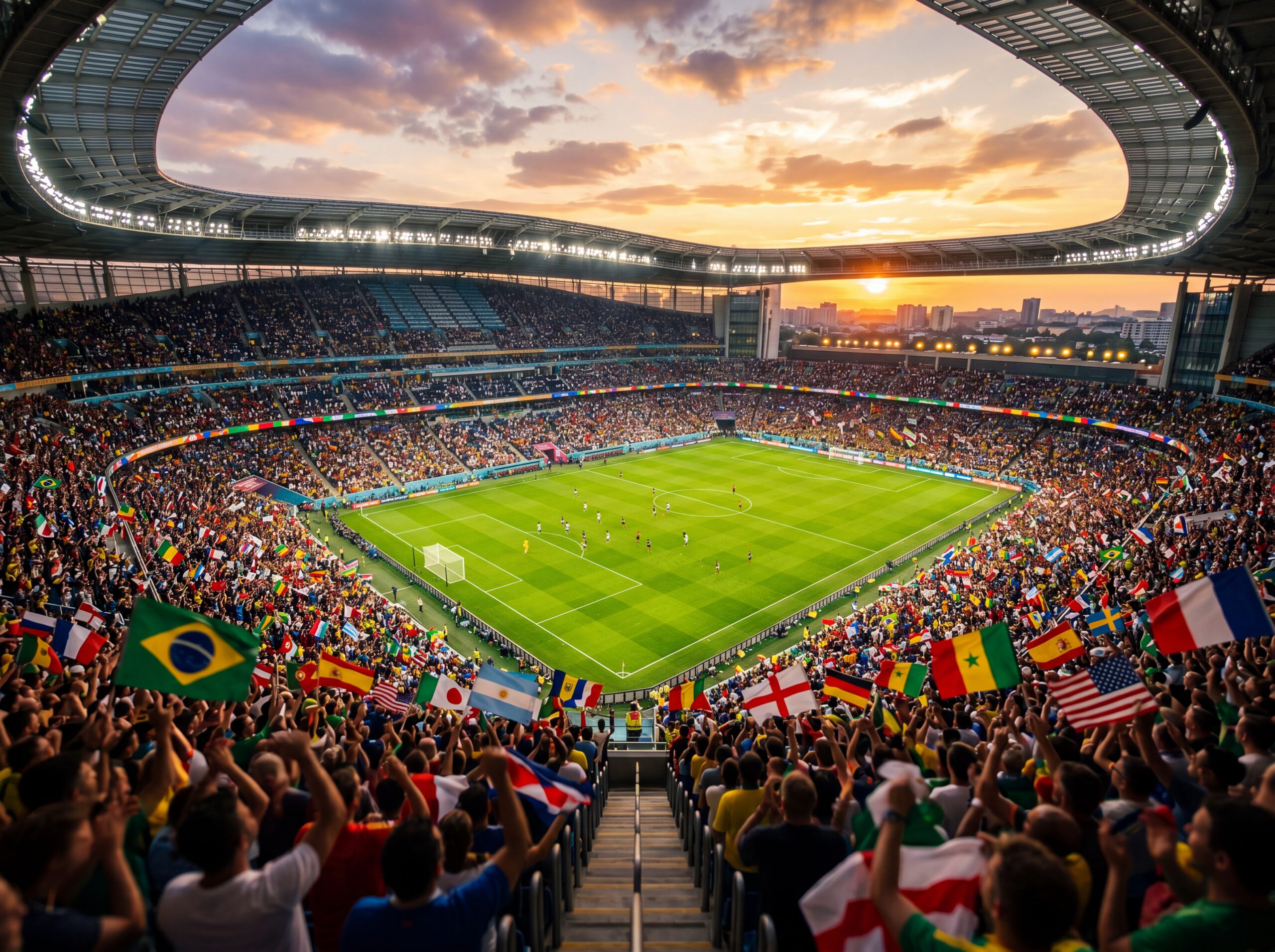
The FIFA World Cup is being played right now. The 2026 edition kicked off on June 11 and runs to July 19, hosted across the United States, Canada, and Mexico, with 48 teams and 104 matches in 16 cities. It is the biggest tournament in the competition’s history.
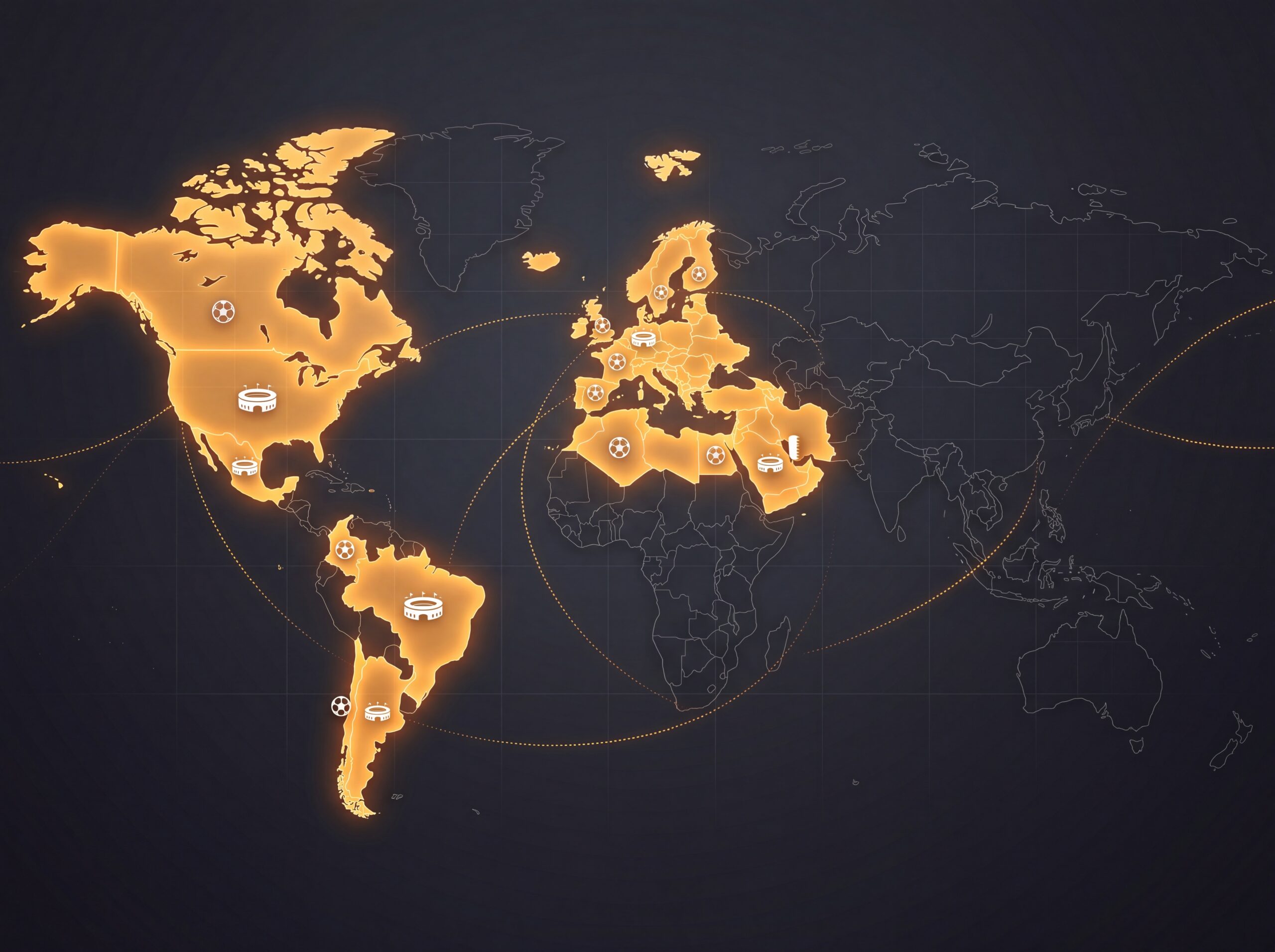
If you are looking past this summer, the hosts are already locked in through 2034. Spain, Portugal, and Morocco take 2030, with three opening matches in South America, and Saudi Arabia hosts in 2034. Here is the full list of confirmed and upcoming World Cup host countries, how FIFA picks them, and what is still open beyond 2034.
Quick list of upcoming World Cup hosts
| Year | Host countries | Teams | Status |
|---|---|---|---|
| 2026 | United States, Canada, Mexico | 48 | In progress (June 11 to July 19) |
| 2030 | Spain, Portugal, Morocco, with opening matches in Uruguay, Argentina, and Paraguay | 48 (a 64-team expansion is under review) | Confirmed |
| 2034 | Saudi Arabia | TBC | Confirmed |
| 2038 | Not yet awarded | TBC | Open for bids |
Confirmed World Cup hosts from 2026 to 2034
The next decade reshapes how the World Cup is hosted, from the first three-nation edition to the first six-nation one. Here is where each tournament is played and what makes it different.
2026: the first three-nation World Cup
The 2026 World Cup is shared by the United States, Canada, and Mexico. It is the first time three countries have co-hosted, and the first edition with 48 teams playing 104 matches across 16 host cities.
Mexico City’s Estadio Azteca staged the opening match between Mexico and South Africa. It is the only stadium to host World Cup matches in 1970, 1986, and 2026. For this tournament FIFA renamed every venue after its host city to limit ambush marketing, so the Azteca appears in official listings as the Mexico City Stadium, and MetLife Stadium in New Jersey, which hosts the final on July 19, is listed as the New York New Jersey Stadium.
The United States carries most of the load with matches in 11 cities, while Mexico and Canada host the rest. Argentina arrived as defending champions after winning Qatar 2022.
2030: a six-nation centennial
The 2030 World Cup marks 100 years since the first tournament, so FIFA built a centennial edition spread across two continents and six countries. Spain, Portugal, and Morocco host the bulk of the matches. The opening games are played in Uruguay, Argentina, and Paraguay, a tribute to Uruguay 1930, where it all began.
Two things stand out. Morocco becomes the second African country to host World Cup matches, after South Africa in 2010. And no edition before this has split its opening across three South American nations while the main event runs in Europe and Africa.
2034: Saudi Arabia
Saudi Arabia hosts in 2034 as the sole host, confirmed by FIFA in December 2024. It is the second World Cup held in the Middle East, after Qatar 2022. The bid is built around a large stadium and infrastructure program, with a focus on compact travel and new venues. Match dates have not been confirmed yet, and summer heat means the schedule may again move away from the traditional June and July window, as it did for Qatar.
How FIFA chooses host countries
FIFA picks hosts through a bidding process that usually starts years before the tournament. Bidding nations submit detailed proposals covering stadiums, transport, accommodation, and security, and FIFA’s technical team scores each bid before a final vote by member associations.
Modern hosting requirements are demanding:
- Stadiums. Multiple venues seating at least 40,000 for group matches, more for later rounds.
- Infrastructure. Airports, hotels, and transit able to handle millions of visitors.
- Security and legacy. A full safety plan, plus a credible plan for using the stadiums after the tournament.
The 48-team format raised the bar again. More teams mean more matches, more venues, and in 2026 the need for three countries to share the work. After past controversy over how hosts were chosen, FIFA moved to make the voting more open, with members’ choices recorded rather than hidden.
Will the World Cup expand to 64 teams?
Possibly, but only as a proposal for 2030, not a confirmed change, and not for 2038.
In early 2025 a delegate from Uruguay raised the idea of a one-off 64-team tournament for the 2030 centennial, and CONMEBOL, South America’s confederation, has pushed it formally since. FIFA president Gianni Infantino has said the proposal is being studied. As of the 2026 World Cup it remains under discussion only. No decision has been made, and several confederations have pushed back over scheduling and competition quality.
So to be clear: 2026 has 48 teams, 2030 is set for 48 with a 64-team expansion still on the table, and there is no 64-team plan attached to 2038.
A short history of World Cup hosts
The tournament started small and grew into the most-watched sporting event on the planet. A few hosts changed the game.
Uruguay 1930: the first World Cup
Only 13 teams played the first World Cup, and just four traveled from Europe because the sea journey was long and expensive. Uruguay won on home soil. The event proved the idea worked, even with the travel problems that nearly sank it.
Japan and South Korea 2002: the first co-hosts
2002 was the first World Cup shared by two countries. It was also the first held in Asia. Co-hosting was a logistical experiment that worked, and it opened the door to the multi-nation editions of 2026 and 2030.
South Africa 2010: the first in Africa
South Africa became the first African nation to host, bringing the tournament to a continent that had waited decades for it. The two world wars had already left their mark on the calendar, with the 1942 and 1946 editions cancelled entirely.
Which continents have hosted the most?
Europe has hosted by far the most World Cups, followed by South America. The rest of the map is filling in slowly.
- Europe. The most frequent host, with Germany, Italy, and France staging multiple editions on the back of strong infrastructure and deep football culture.
- South America. Home of the first tournament, with Uruguay, Brazil, and Argentina all hosting, and the continent returns for the 2030 opening matches.
- Asia. Japan and South Korea in 2002, Qatar in 2022, and Saudi Arabia in 2034.
- Africa. South Africa in 2010, with Morocco joining as a 2030 co-host.
- North America. Mexico, the United States, and now the three-nation 2026 edition.
Oceania is the only confederation never to host. Australia, which has since moved into the Asian confederation, is the most likely future candidate from that part of the world.
Unique facts about World Cup host countries
Mexico: first to host three times
Mexico is the first country to host the World Cup three times, in 1970, 1986, and 2026, and the Estadio Azteca is the first stadium to stage matches across all three. Mexico City sits at around 2,240 meters, and the thin air has shaped some famous matches. The 1970 final, won by Brazil, and Maradona’s 1986 quarter-final are both tied to this ground.
Qatar 2022: the first winter World Cup
Qatar 2022 was the first tournament moved to November and December. Summer temperatures in the Gulf are too high for safe play, so FIFA shifted the calendar for the first time in the event’s history. Qatar spent a widely reported sum north of $200 billion on stadiums, transport, and supporting infrastructure, and built cooling technology into the venues. The eight stadiums sat unusually close together, making it the most compact World Cup ever.
A couple of records still stand from earlier tournaments. The 1994 World Cup in the United States holds the average attendance record, though the 104-match 2026 edition is on course to set new totals given its size.
What hosting does for a country
Hosting the World Cup brings a short, intense boost in tourism, spending, and global attention, but the costs and the long-term legacy are harder to manage.
Tournaments draw millions of visitors and large sponsor activity, and they tend to lift interest in the sport at home. The United States saw youth participation rise sharply after 1994, which is part of why the country pushed to host again.
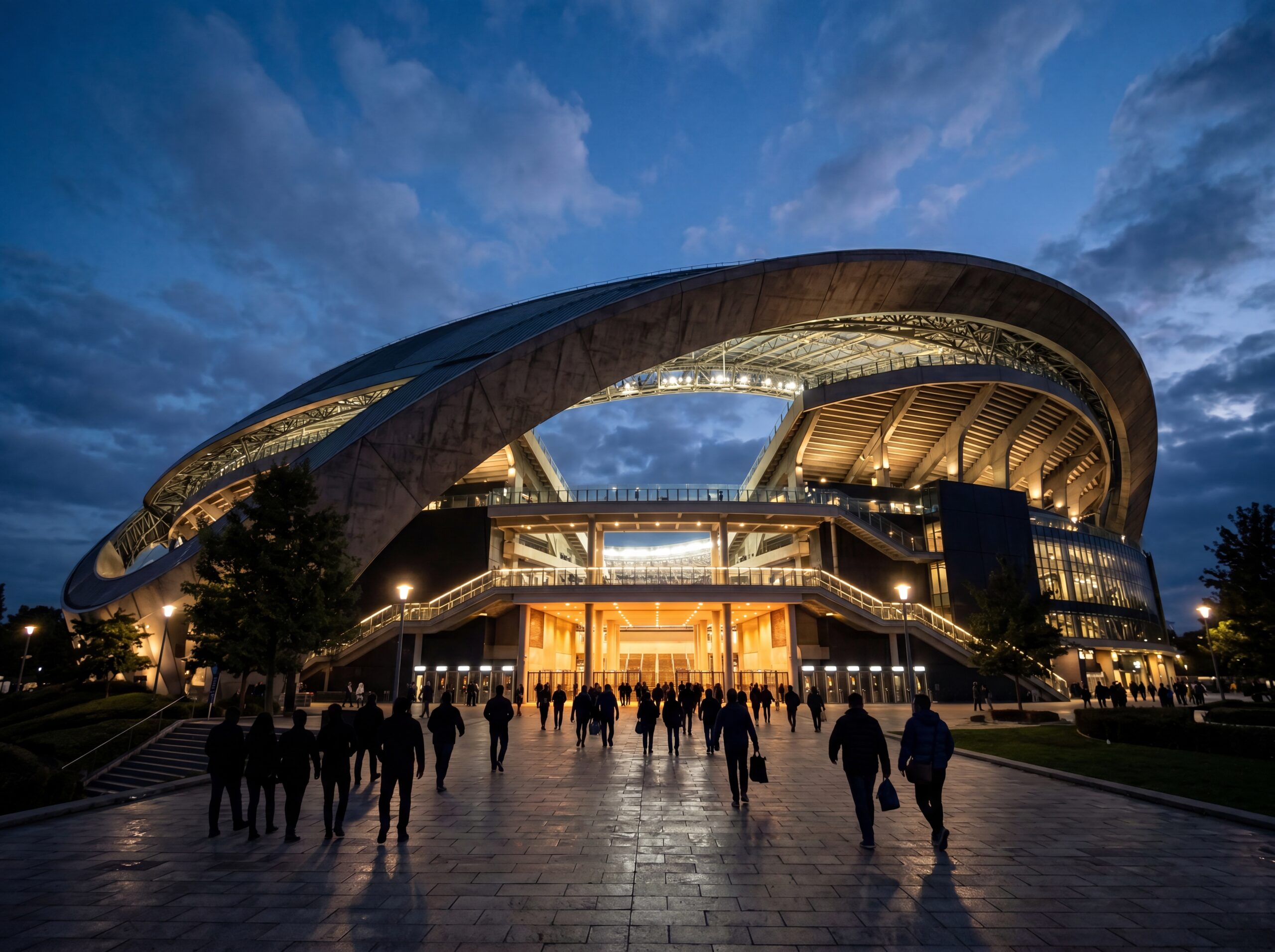
The harder part is what happens after the final whistle. Stadiums are expensive to maintain, and several past hosts have been left with venues they struggle to use. Qatar’s answer was modular construction, with parts of stadiums designed to be taken apart and reused. The 2026 hosts lean on existing stadiums already used for other sports, which lowers the legacy risk.
What is next after 2034?
The 2038 World Cup has not been awarded yet, and formal bidding has not concluded. With Europe, Africa, and South America tied to 2030 and Asia hosting in 2034, confederations that have hosted less recently, including those in North America, Africa, and potentially Oceania, are expected to be in contention. Nothing is confirmed, so treat any specific 2038 host name you see as speculation for now.
The bigger open question is format. The 48-team field debuted in 2026, and the 64-team idea floated for 2030 would, if it ever happens, reshape qualification and scheduling for years.
FAQ
Which countries are hosting the next World Cups?
The 2026 World Cup is being played in the United States, Canada, and Mexico. The 2030 edition goes to Spain, Portugal, and Morocco, with opening matches in Uruguay, Argentina, and Paraguay. Saudi Arabia hosts in 2034. No host has been chosen for 2038 yet.
How does FIFA choose host countries?
Countries submit detailed bids covering stadiums, transport, security, and legacy plans. FIFA’s technical team scores each bid, and member associations vote on the winner, usually years before the tournament.
Has any country hosted the World Cup three times?
Yes. Mexico is the first, hosting in 1970, 1986, and 2026. The Estadio Azteca in Mexico City is the only stadium to feature in all three.
Why was Qatar 2022 unusual?
It was the first World Cup held in November and December, moved out of summer because of extreme heat, and the first tournament hosted in the Middle East.
What makes the 2030 World Cup special?
It marks 100 years of the World Cup. Six countries across two continents host it, and the opening matches are played in Uruguay, Argentina, and Paraguay as a tribute to the first tournament in 1930.
Is the World Cup expanding to 64 teams?
Not for now. A 64-team format has been proposed as a one-off for the 2030 centennial and is under review by FIFA. It has not been approved, and there is no 64-team plan for 2038. The 2026 and 2030 editions are set at 48 teams.
Which continent has hosted the most World Cups?
Europe, by a clear margin, followed by South America. Asia, Africa, and North America have hosted fewer, and Oceania has never hosted.