
Ever wondered what separates a good match from a truly great one? Sometimes, it’s the referee’s decision not to blow the whistle. I still remember the first time I saw a game shift because an official let the action continue after a hard tackle.
The crowd held its breath. The attacking side kept possession and scored a moment later. That moment taught me more about the sport’s heart than any textbook ever could.
This concept is rooted in Law 5 of the game’s laws. It gives the person in charge the authority to keep the match flowing. Their job isn’t just to call every infraction. It’s to judge if stopping would actually punish the side that was fouled.
When you watch, you’re seeing a complex, real-time calculation. It’s a dance between enforcing the laws and preserving the game’s spirit. Every time play rolls on, it’s a reminder that soccer is about rhythm and momentum.
Understanding this requires looking beyond the whistle. You start to appreciate the mental agility needed in that split second. It’s about seeing the bigger picture and keeping the drive toward goal alive.
Key Takeaways
- The advantage clause is a powerful tool referees use to manage the flow of a match.
- Its core idea is to avoid stopping play if the team that was fouled maintains a beneficial position.
- This decision requires quick judgment and a deep understanding of the game’s momentum.
- Allowing play to continue can often be more fair than immediately calling a foul.
- Fans and players gain a richer experience by appreciating this tactical layer of the sport.
- The rule highlights the psychological battle between players and officials during a game.
- Mastering when to apply it is a hallmark of a top-tier official.
Fundamentals of the advantage rule in soccer
I learned early on that the best officials aren’t defined by the whistles they blow, but by the ones they hold back. This idea is the heartbeat of a crucial concept in the sport. It’s not about ignoring infractions; it’s about understanding the moment.
Defining the Rule and Its Purpose
Formally, this power comes from Law 5 of the game’s laws. It instructs the person in charge to refrain from calling an obvious foul if stopping the action would actually harm the non-offending side.
Think of it as a protective clause. Its core purpose is to ensure the team fouled isn’t punished by a whistle that kills their momentum. This is why Law 12 also ties in, guiding how to handle any subsequent misconduct.
The Role of the Referee and Game Flow
So, what’s the official actually doing? They’re performing a split-second, real-time calculation. Is the ball in a good spot? Does the attacked side have a clear path forward?
The decision hinges on one question: will the team benefit more from playing on right now, or from a free kick later? The whistle stays silent only if the immediate opportunity looks better. It’s a judgment call that serves the spirit of the match, not just the letter of the law.
This application keeps the rhythm alive. It turns the official from a mere enforcer into a guardian of the game’s flow.
When and How to Apply the Advantage Rule in Live Play
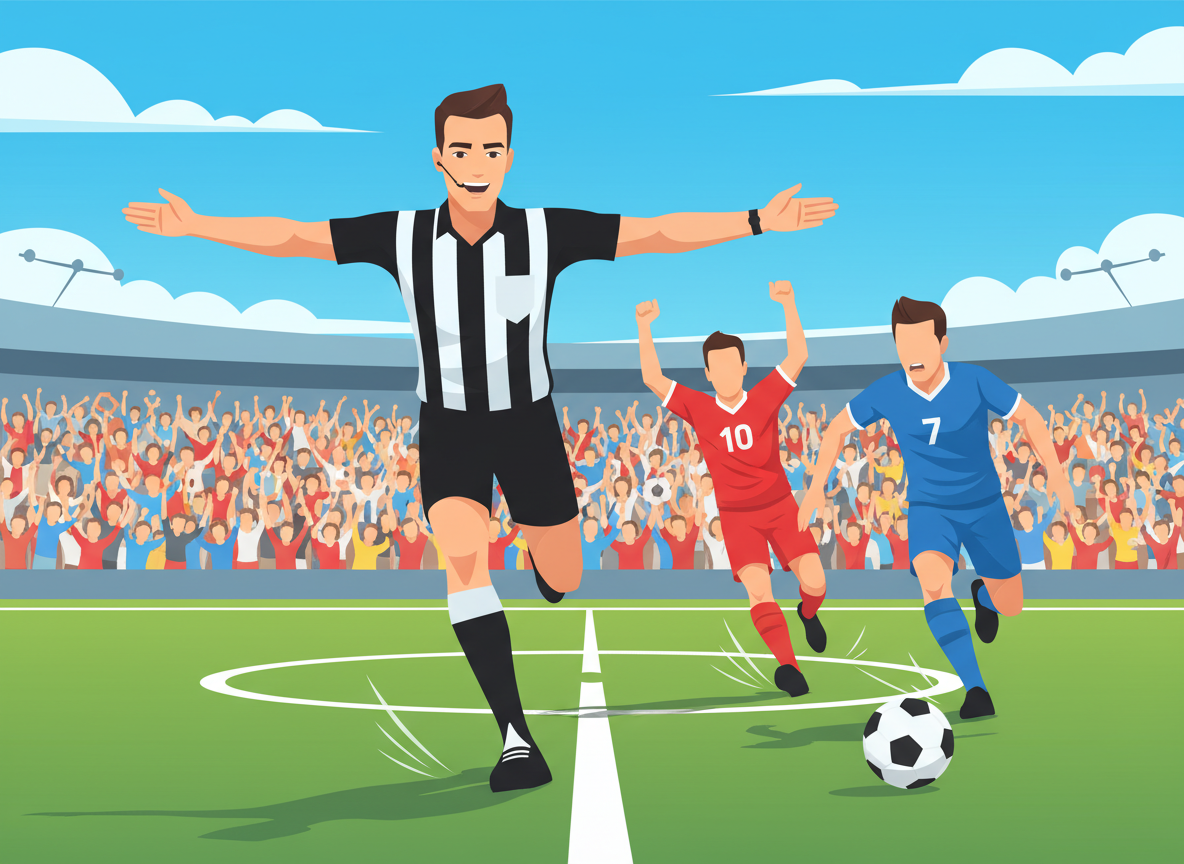
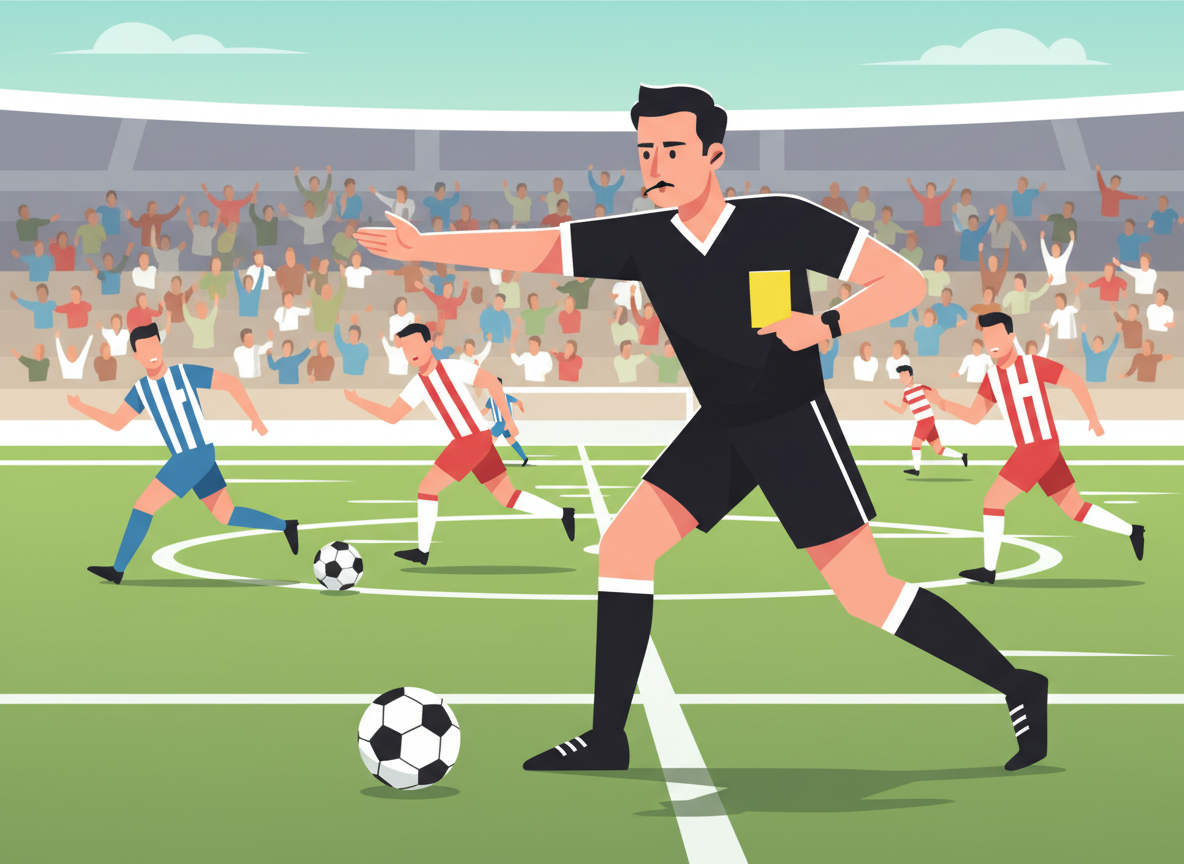
Picture this: a player goes down from a late challenge, but the official’s arm sweeps out wide instead of reaching for the whistle. That’s the moment. The application happens in real time, with the entire match hanging in the balance.
Quick Referee Decisions and Visual Signals
You’ll see a single or double under-arm sweep. That’s the signal. It tells everyone the official is applying the advantage. The referee has only a few seconds to decide.
They must judge if the attacking team keeps a real opportunity. Is the ball in a good spot? Can they drive forward? If yes, they let play continue. The whistle stays silent.
Assessing Potential Benefits for the Team Fouled
This is the hard part. The referees must weigh the foul against the immediate potential. I’ve seen the best officials do this at breakneck speed.
They ask: does the team fouled benefit more now? If the chance fades, they can stop play for the original foul. This calculus is most common near the goal. It’s where a promising soccer moment is most likely to bloom.
Real-World Scenarios and Tactical Insights
Imagine a striker breaking free, only to be taken out by the goalkeeper as the ball rolls toward the net. This is where theory meets the pitch. Let’s look at how this clause works in practice and what it means for your game.
On-Field Examples: Striker, Goalkeeper, and Timed Decisions
In that striker-goalkeeper collision, the official’s choice is clear. If the ball goes in, the goal stands. The referee allows the play to finish its course.
The foul doesn’t go unpunished. A red card or caution comes at the next stoppage. This timed decision preserves the immediate goal opportunity while still addressing misconduct.
Comparisons with NFL Penalty Options
This idea isn’t unique to this sport. Football fans will recognize a parallel. It’s like an NFL team declining a penalty to keep a big gain.
The table below breaks down the key similarities and differences.
| Aspect | Soccer Advantage | NFL Penalty Decline |
|---|---|---|
| Core Concept | Referee allows play to continue after a foul if the fouled team benefits. | Team chooses to reject a penalty to keep the result of the previous play. |
| Official’s Signal | Extended arms, sweeping motion. | No formal signal; communicated verbally to officials. |
| Team’s Choice? | No. The referee makes the judgment call. | Yes. The team captain or coach makes the decision. |
| Typical Outcome | Maintains attacking momentum and a scoring chance. | Retains yardage gained or a positive down. |
Coaching Tips for Emphasizing Advantage Tactics
I always tell my players one thing: never assume the whistle. Train to continue your movement until you’re certain play has stopped.
Coaches, drill this mindset. The person in charge is looking for a clear path to the net. If contact happens, but the ball is live, your job is to chase it. Understanding this can turn a potential foul into your next big chance.
Conclusion
At its core, this sport rewards resilience, and the rules are designed to protect that spirit. That’s the heart of the advantage clause. I’ve seen it transform matches. It ensures a team isn’t penalized for an opponent’s foul by killing their momentum.
The referee makes that split-second call. It’s a hallmark of top-tier officiating, guided by the IFAB’s laws. Letting play continue when a goal is imminent shows a profound grasp of the game’s flow.
For you watching, it adds a layer of depth. You start to see the mental battle between persistence and obstruction. Recognizing this moment helps appreciate the official’s difficult choice.
Ultimately, this tactic keeps the action moving. It rewards the attacking side for pushing through contact. That’s how the sport’s true beauty unfolds—in uninterrupted rhythm.