
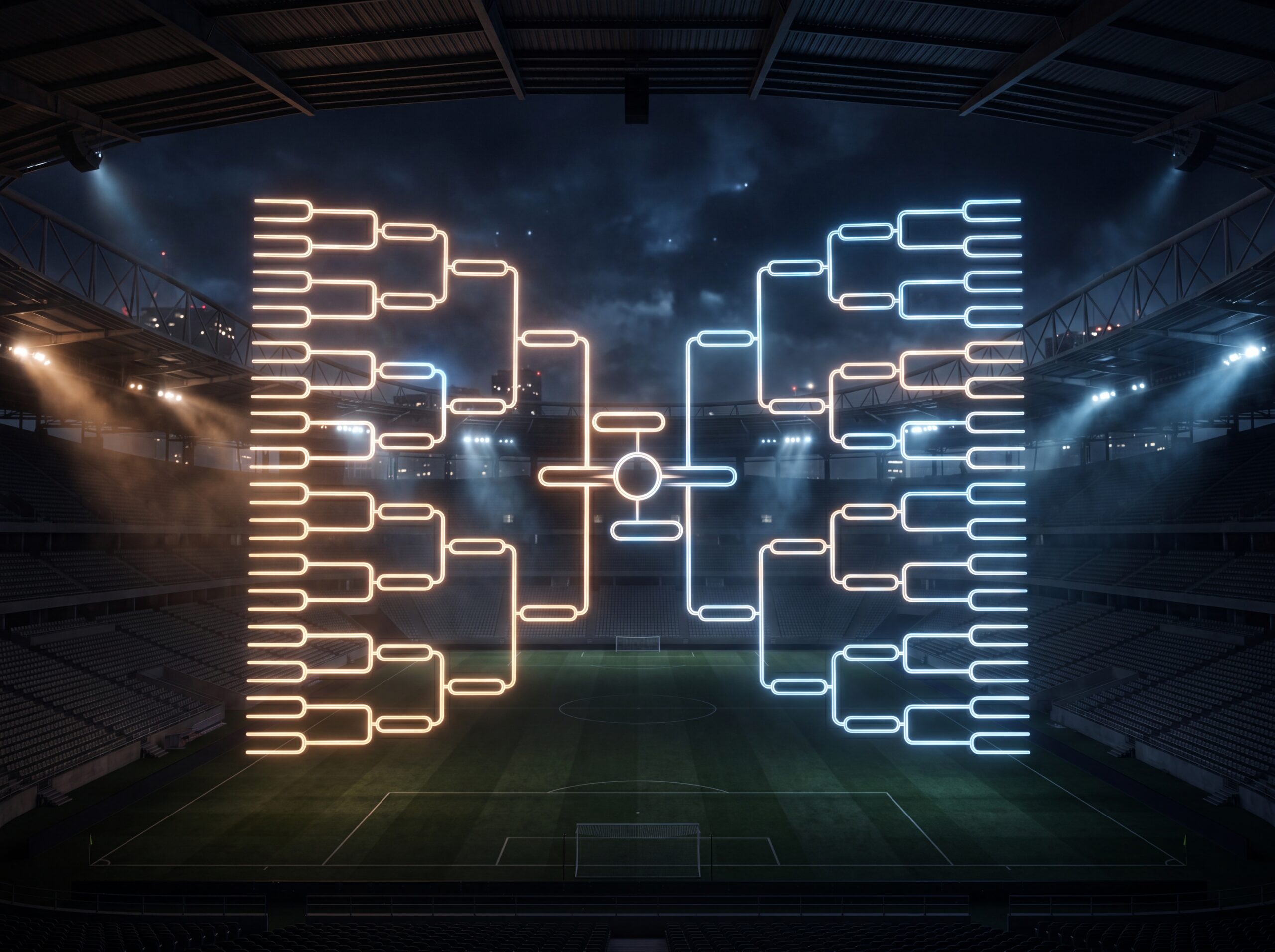
The 2026 World Cup uses a new 48-team format, and it is being played right now, from June 11 to July 19 across the United States, Canada, and Mexico. The 48 teams are split into 12 groups of four. The top two from each group advance, plus the eight best third-placed teams, giving 32 teams in a brand new Round of 32 knockout bracket. From there it is single elimination through the Round of 16, quarter-finals, semi-finals, a third-place match, and the final on July 19. The tournament runs to 104 matches, up from 64.
That is the short version. Below is the full guide to how the final stage works today, how it got here, and how teams move from the opening whistle to lifting the trophy.
How the 2026 World Cup format works at a glance
| Stage | Teams in | Format | What happens |
|---|---|---|---|
| Group stage | 48 | 12 groups of 4, round robin | Each team plays 3 games |
| Advancement | 48 to 32 | Top 2 per group + 8 best 3rd places | 32 teams reach the knockouts |
| Round of 32 | 32 | Single elimination | New round, debuts in 2026 |
| Round of 16 | 16 | Single elimination | Eight ties |
| Quarter-finals | 8 | Single elimination | Four ties |
| Semi-finals | 4 | Single elimination | Two ties |
| Third-place match | 2 | Single game | The two losing semi-finalists |
| Final | 2 | Single game | Champion crowned, July 19 |
The current World Cup final stage format
The 2026 tournament is the first with 48 teams, so the structure changed for the first time since 1998.
It opens with the group stage. The 48 teams are drawn into 12 groups of four, labelled A through L. Each team plays the other three in its group once. A win is worth 3 points, a draw 1, and a loss 0.
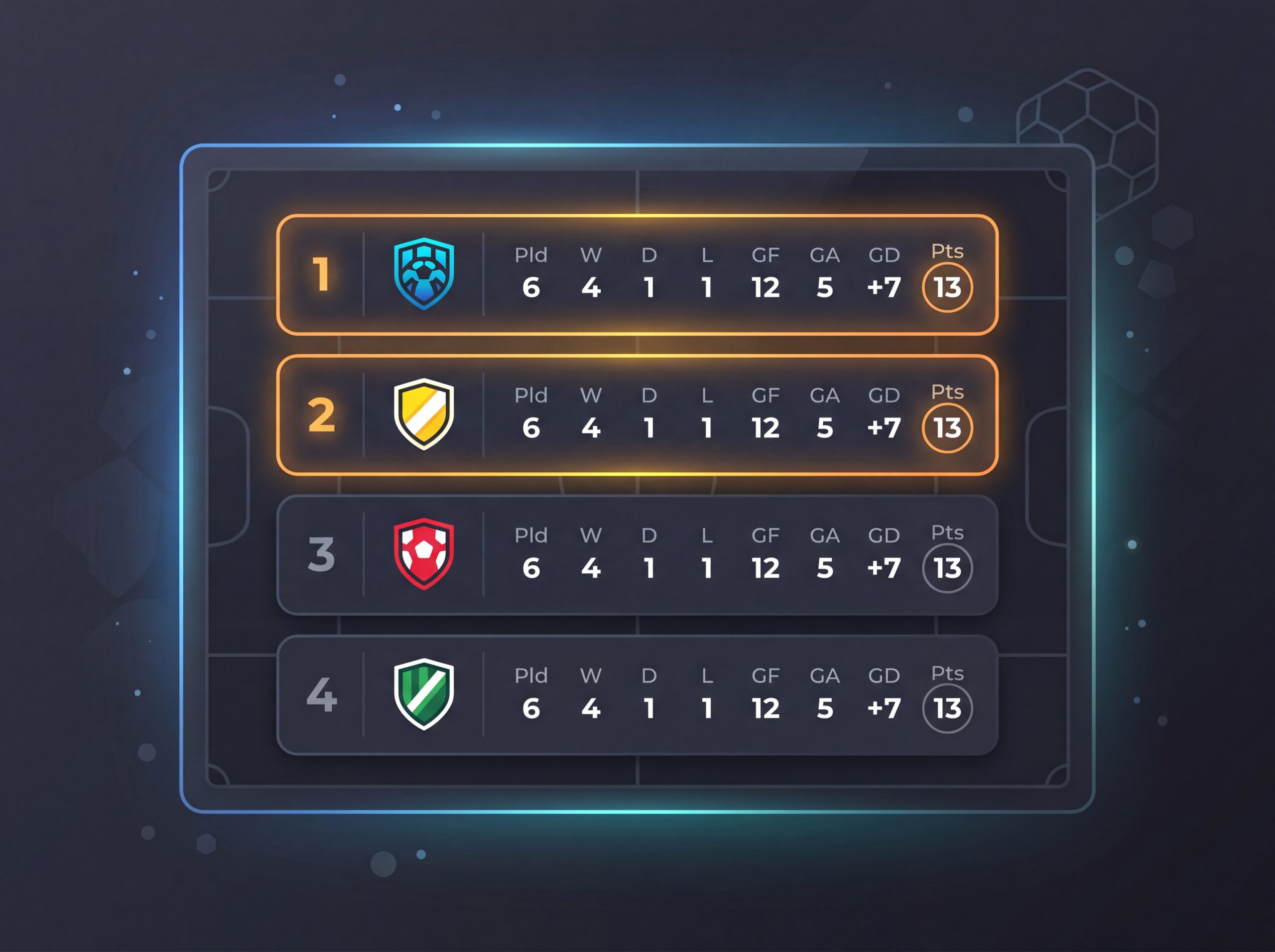
Getting out of the group is where the new math comes in. The top two teams in every group go through automatically, which is 24 teams. On top of that, the eight best third-placed teams across all 12 groups also advance, ranked against each other by points, then goal difference, then goals scored. That brings the total to 32 teams entering the knockouts.
From the Round of 32 onward it is pure single elimination. Lose once and you are out. The bracket runs Round of 32, Round of 16, quarter-finals, semi-finals, then the final, with a third-place match for the two beaten semi-finalists. In total the tournament plays 104 matches, compared with 64 in the old 32-team format.
Modern rules shape the knockouts too. If a knockout match is level after 90 minutes, two 15-minute halves of extra time are played. If it is still level, a penalty shootout decides it. Video review (VAR) checks tight offside and key incidents, and teams can use an extra substitution for a suspected concussion.
How teams advance from the group stage
The group stage rewards consistency over three matches. In a four-team group, four points is often enough to go through, and seven points usually guarantees first place, though the eight-best-thirds rule means some teams now advance on three or four points depending on how other groups finish.
A famous example of how fine the margins are: in 2010 the United States went through on the last kick against Algeria, a stoppage-time Landon Donovan goal that flipped the group on goals scored. That is the kind of swing the format is built to allow.
Tiebreaker rules explained
When teams finish level on points, FIFA applies tiebreakers in order:
- Goal difference across all group games.
- Goals scored across all group games.
- Head-to-head points, then goal difference, then goals scored between the tied teams.
- Disciplinary record, a fair-play count based on yellow and red cards.
- Drawing of lots as a last resort.
Fair play has decided a group before. In 2018, Japan edged Senegal into the knockouts on yellow cards alone, the first time that criterion settled a place at a World Cup. Coaches now actually track card counts late in tight groups.
The knockout stage: the road to the final
Once the bracket is set, every match is win or go home. The path is fixed in advance, so teams know the route to the final the moment the draw is made.
Round of 32: the new first knockout round
The Round of 32 is brand new for 2026, a direct result of expanding to 48 teams. It is the first cut, taking the field from 32 down to 16. Group winners are generally paired against runners-up or qualifying third-placed teams from other groups, keeping the strongest sides apart early where possible.
Round of 16, quarter-finals, and semi-finals
From the Round of 16 the field halves each round: 16 to 8, 8 to 4, 4 to 2. The pressure climbs with every step. These rounds produce the matches people remember for decades, like Germany’s 4-1 win over England in the 2010 Round of 16, a game still argued over because of a clear England goal that was wrongly disallowed before goal-line technology existed.
Third-place playoff
The third-place match, played since 1934, gives the two losing semi-finalists one more game. It is often dismissed, but it can still shape a player’s tournament. Luka Modric won the Golden Ball as the best player of the 2018 World Cup, the edition where Croatia finished as runners-up.
The World Cup final
The final is the single most-watched sporting event on earth. Two teams, one match, no second leg.
The traditions trace back decades. Winners receive gold medals, runners-up silver, and the trophy is handed over on a draped podium amid confetti and anthems. The 1950 decider in Rio, where Uruguay beat Brazil in front of a crowd around 200,000 at the Maracana, is still the benchmark for World Cup heartbreak and is known as the Maracanazo.
Recent finals keep adding to the history. At Qatar 2022, Kylian Mbappe scored a hat-trick in the final, the first since Geoff Hurst in 1966, yet Argentina won on penalties to give Lionel Messi the title that had escaped him. Germany has reached the most World Cup finals with eight, a mark of long-term consistency more than any single golden generation.
How the World Cup format evolved
The tournament did not start with neat groups and clean brackets. It took almost 70 years to settle into a standard shape, and then changed again for 2026.
1930: the first tournament
The first World Cup in Uruguay had no qualifiers. Thirteen teams were invited and split into four groups of uneven size, three groups of three and one of four. There were no knockout rounds beyond the semis. Group winners went straight to the semi-finals, and there was no third-place match yet.
1934 to 1938: knockout only
For the next two editions FIFA used a straight knockout from the first match. Sixteen teams, single elimination, with replays for draws. One bad day ended your tournament.
1950 to 1970: post-war experiments
The 1950 edition was unusual, ending in a final group rather than a one-off final, which is how the Maracanazo came about. Over the following decades FIFA tested tiebreakers, and by 1962 goal difference replaced playoff matches to separate level teams.
1974 to 1994: expansion and complexity
The tournament grew and added a second group phase in 1974, with more group rounds layered in through 1982. It produced some confusing structures, and fans increasingly wanted something simpler.
1998 to 2022: the 32-team standard
In 1998 FIFA settled on 32 teams in eight groups of four, top two advancing to a 16-team knockout. This stayed in place for 24 years and seven tournaments, from France 1998 to Qatar 2022. It is the format most fans grew up with, and the one the 2026 expansion replaced.
Key differences between the old and new formats
The jump from 32 to 48 teams is the biggest structural change in a generation.
- Teams: 32 became 48.
- Groups: eight groups of four became 12 groups of four.
- Who advances: top two per group became top two plus the eight best third-placed teams.
- Knockout start: the Round of 16 was the first knockout round, now it is the Round of 32.
- Matches: 64 became 104.
- Length: the tournament runs 39 days in 2026.
Commercially the event has grown just as fast. Total prize money rose from $4 million in 1982 to $440 million at Qatar 2022, where Argentina collected $42 million for winning.
Controversies and criticisms of format changes
Not every change has been popular. Bigger has not always meant better in the eyes of fans.
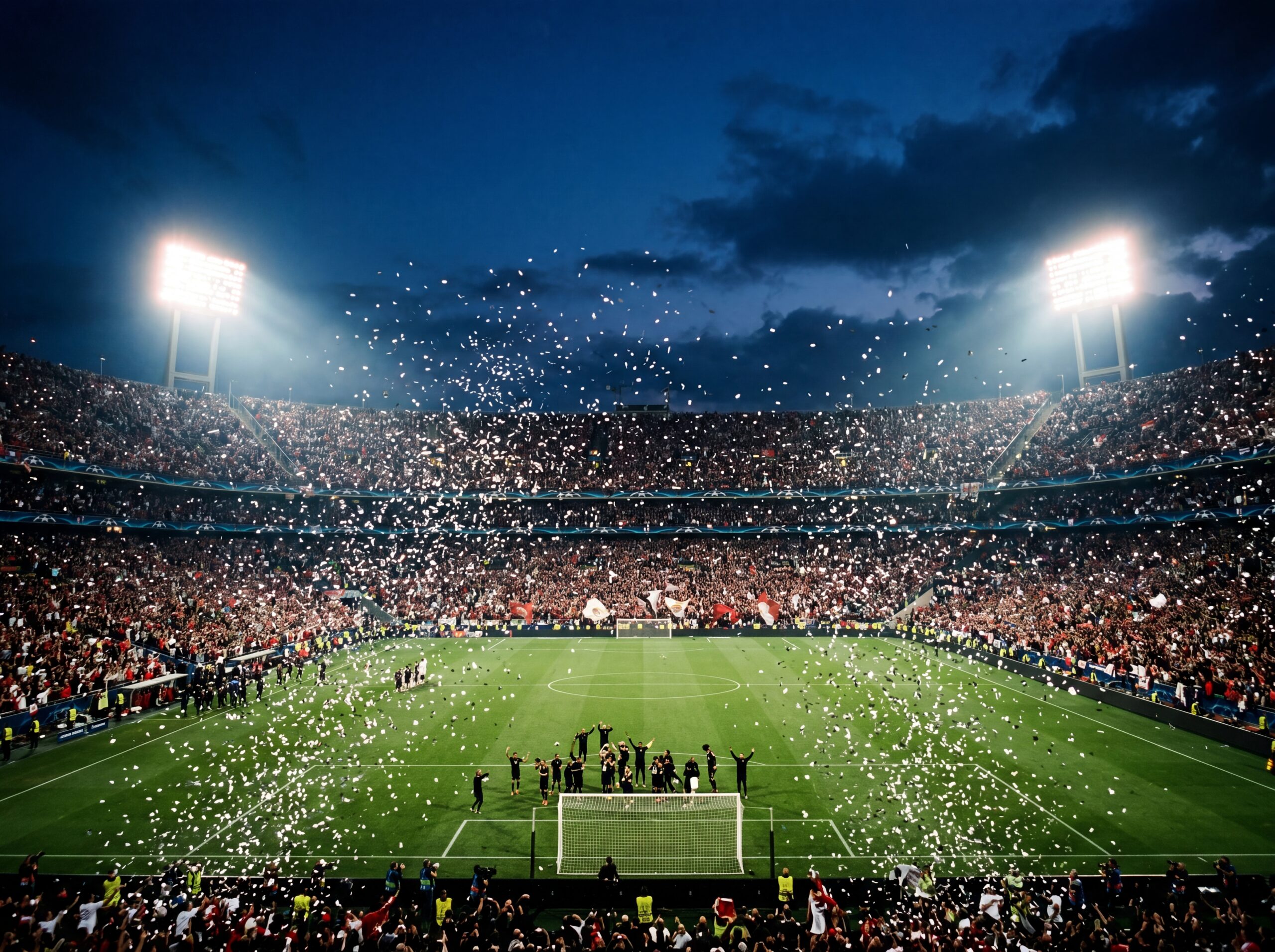
The 48-team expansion divides opinion. Supporters like that more nations, especially from Africa and Asia, get a place on the biggest stage. Critics worry about diluted quality and player workload, with 104 matches stretching an already crowded calendar.
Collusion has haunted the format before. At the 1982 World Cup, West Germany and Austria played out a 1-0 result that suited both and eliminated Algeria, the so-called Disgrace of Gijon. FIFA’s answer was to play the final round of group games at the same time, so no team knows in advance exactly what result it needs.
Concentration of success is another long-running criticism. European and South American nations have produced almost every World Cup finalist, and expanding qualifying slots only slowly changes that balance. Broadcast demands also push kickoff times toward prime commercial slots, which does not always match what is best for player recovery.
How host nations influence the format
Hosting changes the tournament in ways beyond the trophy.
Since 1934, hosts have qualified automatically, which gives the home crowd a team to follow but takes a slot away from another country. In 2026 all three hosts, the United States, Canada, and Mexico, qualified directly.
Climate can reshape the calendar. Qatar 2022 moved to November and December because of summer heat, the first World Cup not played in the traditional June and July window. Stadium standards push hosts to build big, with knockout venues needing large capacities. And geography matters on the pitch too: the altitude of Mexico City, around 2,240 meters, has historically tested visiting teams in 1970 and 1986, and again in 2026.
Memorable moments shaped by the format
The structure of the tournament is what turns unknown teams into legends and favourites into cautionary tales.
Underdog stories
North Korea reached the quarter-finals in 1966 as one of the great longshots. Costa Rica topped a 2014 group containing Italy, England, and Uruguay. Senegal beat reigning champions France on their way to the 2002 quarter-finals. And at Qatar 2022, Morocco became the first African nation to reach a World Cup semi-final.
Heartbreaking near-misses
The flip side is just as memorable. In 1950 a team of United States amateurs beat England 1-0, one of the biggest upsets in the sport, yet still went out in the group stage. In 2018 South Korea knocked out defending champions Germany, sending them home at the group stage, even though Korea did not advance either. The format magnifies both the glory and the grief.
Why the World Cup final stage captivates billions
Nothing else in sport gathers an audience like the World Cup. FIFA reported that more than a billion people watched the 2018 final between France and Croatia, and that around five billion engaged with Qatar 2022 across all platforms.
The pull is more than the football. Host cities fill with visitors, local businesses see a surge, and the event leaves stadiums and infrastructure behind. Each match opens with national anthems and the kind of raw emotion that travels across languages. Social platforms light up with every substitution and disallowed goal, and office pools in one country mirror street parties in another. For a few weeks, the same matches are the conversation almost everywhere.
Your World Cup format cheat sheet
- Teams: 48 in 2026, up from 32.
- Groups: 12 groups of four.
- Advancing: top two per group plus the eight best third-placed teams, giving 32.
- Knockouts: Round of 32, Round of 16, quarter-finals, semi-finals, third-place match, final.
- Matches: 104 in total.
- Tiebreakers: points, then goal difference, then goals scored, then head-to-head, then disciplinary record, then drawing of lots.
- Knockout draws: 30 minutes extra time, then penalties.
FAQ
How does the 2026 World Cup group stage work?
The 48 teams are split into 12 groups of four. Each team plays three group games. The top two in every group advance, along with the eight best third-placed teams, for 32 teams in the knockout stage.
What happens if teams are tied in the group stage?
FIFA uses goal difference first, then goals scored, then head-to-head results between the tied teams, then a disciplinary fair-play count, and finally a drawing of lots.
How is the 2026 format different from before?
The old format had 32 teams in eight groups, with the top two going to a 16-team knockout and 64 matches in total. The 2026 format has 48 teams in 12 groups, the top two plus eight best thirds going to a new 32-team Round of 32, and 104 matches in total.
What is the Round of 32?
It is the new first knockout round introduced for the 48-team format in 2026. It takes the 32 qualifying teams down to 16 in single-elimination matches before the Round of 16.
Why is there a third-place playoff?
Played since 1934, it gives the two losing semi-finalists one more match. It often produces open, high-scoring games and can still shape a player’s tournament reputation.
How do host nations influence the format?
Hosts qualify automatically, and practical factors like climate and travel can affect scheduling. Qatar 2022 moved to winter because of heat, and the 2026 tournament is the first shared by three host countries.
What makes the knockout rounds so thrilling?
They are single elimination, so one result ends a campaign. That pressure is what produces the upsets, comebacks, and penalty shootouts the World Cup is remembered for.