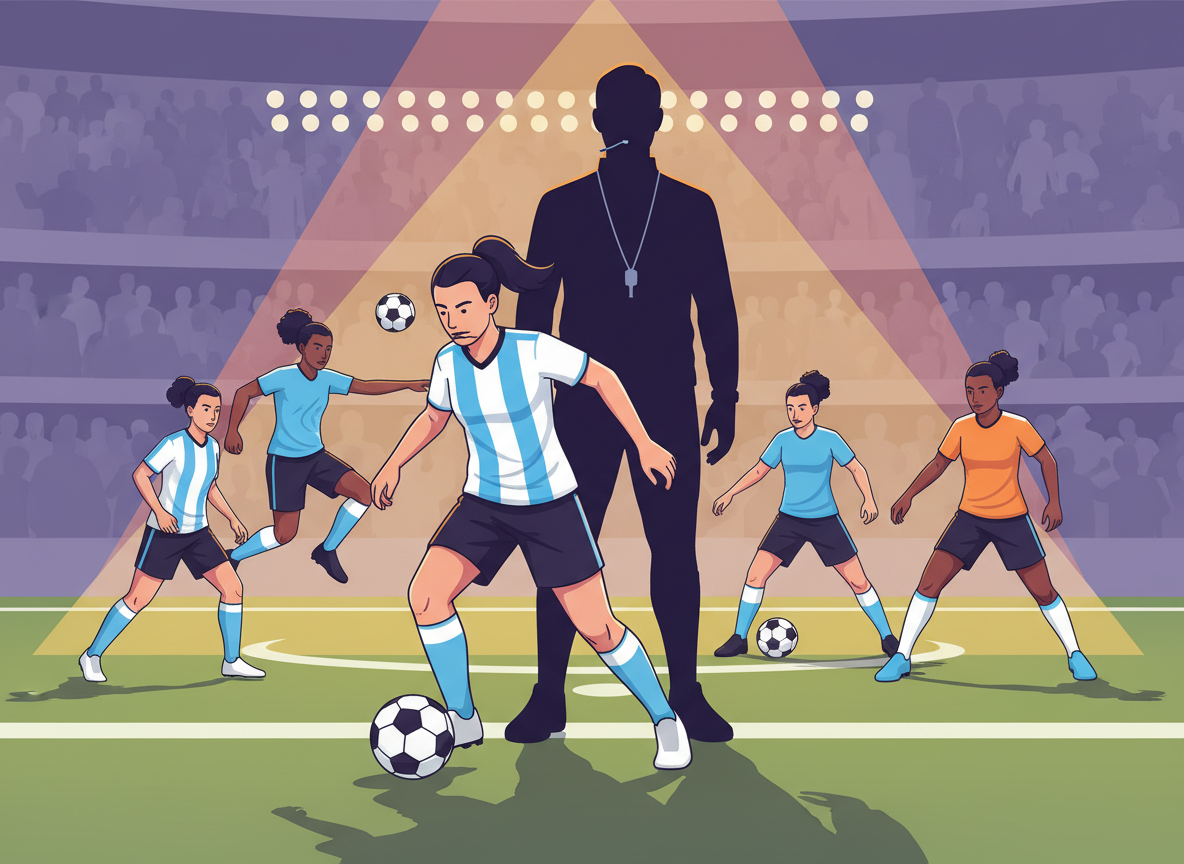

I still remember the first time I skied a pass straight into touch; my chest tightened and everything felt louder. That moment taught me one thing: toughness is a set of skills you can learn, not a fixed trait.
In this guide I share practical, coach-friendly advice and simple routines you can start this week. I’ll show what success looks like: staying steady when the match turns, bouncing back after mistakes, and keeping your identity as an athlete.
We’ll cover mindset, training habits, team culture, and physical readiness; resilience matters across youth, high school, college, and adult levels. Each section ends with cues, routines, and practice designs you can run on the field.
Follow the core path I use with players: spot pressure points, set coach-led systems, train under stress, practice mental skills, protect availability, and recover after setbacks. I promise clear examples, plain language, and steps you can try at your next session.
Key Takeaways
- Resilience is trainable and practical, not just mental toughness.
- Real success means steady performance and quick recovery from errors.
- Combine mindset work with physical preparation and team systems.
- Short routines and cues make skills repeatable under stress.
- This guide suits US players across youth, school, and adult levels.
What resilience looks like in soccer game situations
A single mistake can feel huge, but the next fifty seconds matter most. I define resilience here as the action you take after the moment goes wrong: press again after losing the ball, demand it back after an error, or reset your body language and focus.
Resilience versus grit and mental toughness
Grit means sticking with long-term goals; mental toughness is a broader trait for pressure. Resilience is the short reset during a game; it’s the immediate choice that protects performance and keeps a player engaged.
Bouncebackability after a loss or mistake
Players call it bouncebackability: the 30–60 seconds after a misplaced pass, conceded goal, or missed penalty when the next decision matters most. A striker who chases the next run or a keeper who commands the box shows this clearly.
Common pressure points across a season
- Losing streaks or form dips
- Selection, role changes, or being played out of position
- Injury, transfers, family or school stress
How to build resilience in soccer with a coach-led team culture
One clear habit changed our team: every session started with a one-line check-in that broke isolation fast. I use that same opener now because it gives players a voice before the whistle and connects people quickly.
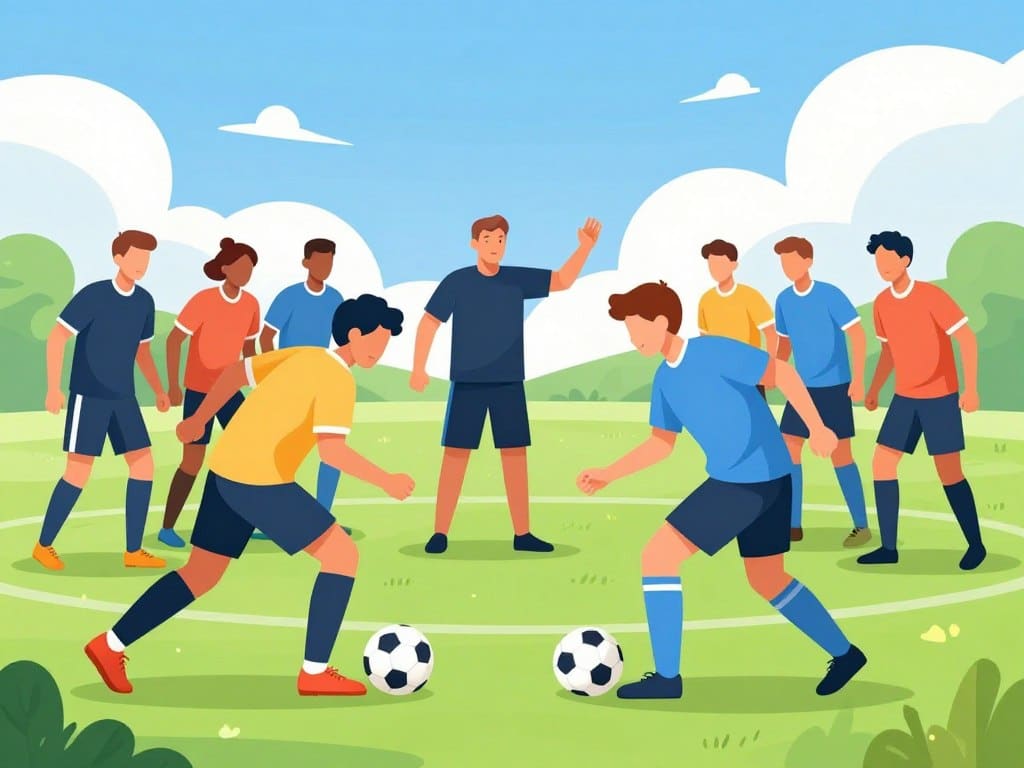
Build connections so players don’t feel isolated
Try a 90-second opening: one sentence about yesterday’s highlight or one technical question. Split groups by sock color and ask each group to name a quick fix for a common drill. Rotate leaders weekly; each player runs one warm-up element.
Manage discomfort without removing the hard parts
Keep the tough running and competitive drills. Add a short emotional tool: “60 seconds to complain,” then call for “one positive” and restart the set. That lets players release heat and return focused.
Set clear practice goals tied to each player’s why
At the start of practice state a single goal and link it to a player aim—earn a roster spot, feel safer on the ball, gain speed. Use that goal as the yardstick for drills and feedback.
Identify options after setbacks and take action
After a mistake use a simple loop: list three options, pick one, act now. Say, “Option A: reset position, B: press, C: play safe—choose.” This prevents paralysis and trains decision reps.
Quick coach cues
- “One line—go.” (check-in)
- “60 seconds, then one positive.” (pressure release)
- “Three options, pick one, act.” (post-setback routine)
| Coach Move | Time Cost | Immediate Benefit |
|---|---|---|
| One-line check-in | 90 sec | Reduces isolation; builds trust |
| Sock-color split Q&A | 2–3 min | Fast problem-solving; minimal wasted practice |
| 60-second complain + one positive | 1.5 min | Controlled emotional release; faster reset |
| Player-led warm-up element | Varies | Develops decision-making and ownership |
Training habits that build resilience week after week
Some weeks I give practice a twist: pressure, fatigue, or surprise. That simple pattern trains players so game chaos feels familiar, not scary.
Design sessions with purpose
One session adds pressure: short countdowns, scoring bonuses, limited touches. Another focuses on fatigue: extra sprints then small-sided play. The third adds uncertainty: random transitions or uneven numbers for short bursts.
Use FAIL-LEARN-WIN on the spot
When a mistake happens, name it, pull one lesson, then send players back with a cue. That turns error into skill rather than blame.
Quick reflection loops after games
Keep post-game review to five minutes. Ask: “What went well? What did we learn? One thing we’ll try next?” Repeat weekly and track one metric—press regains, successful switches, or fewer panic clearances.
Practical drill examples
- 3v3 with a 60-second countdown and extra points for calm switches.
- 4v4 after 2 x 80m runs with only two touches allowed for two minutes.
- 5v4 sudden transition: coach throws a neutral in and changes roles mid-play.
| Session Focus | Constraint | Goal | Metric |
|---|---|---|---|
| Pressure | 30s countdown; bonus points | Calm decision-making under time | Successful passes under countdown |
| Fatigue | Conditioned entry; limited touches | Maintain technique when tired | Touches retained in final minute |
| Uncertainty | Uneven numbers; mid-drill change | Adaptation to sudden play changes | Turnover recoveries per rep |
Mental skills soccer players can practice on and off the field
Before kickoff I keep a tiny ritual that steadies me: one breath, one scan, one line I tell myself.
Self-talk cues
Short, concrete phrases work best after an error. Try: “Next pass simple,” “Win the next duel,” or “Shoulders open.” These are action prompts, not pep talk. Say them under your breath and act.
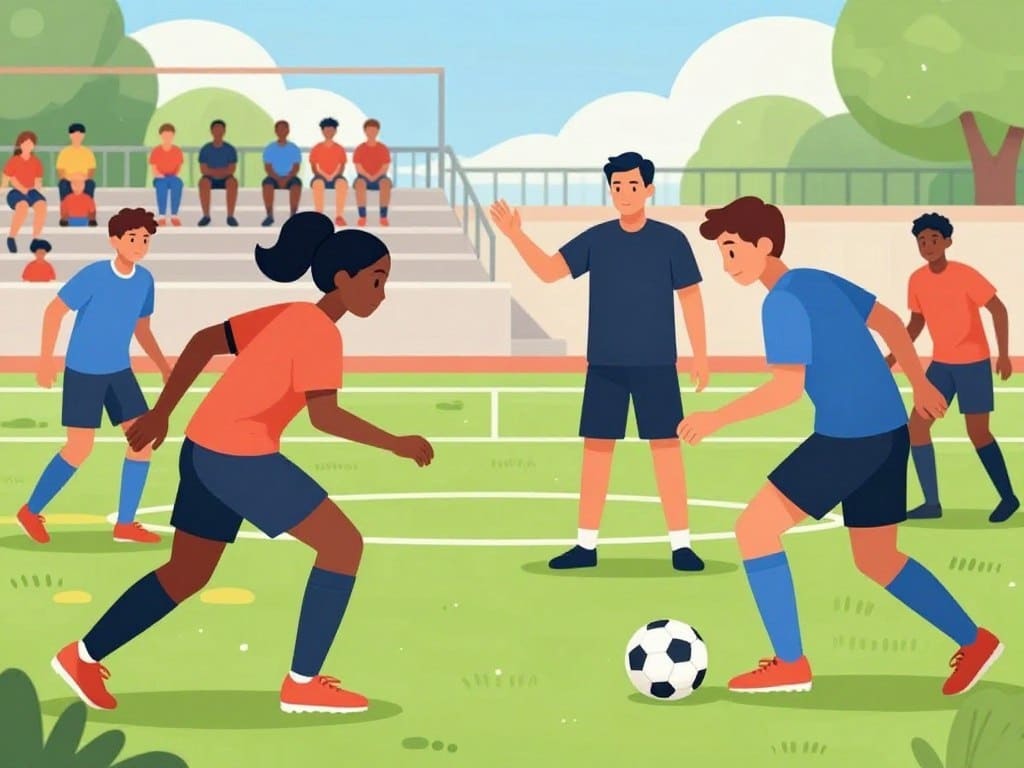
Two-step reset routine
Step one: physical anchor — exhale, check feet, adjust position. Step two: verbal anchor — one cue that points at the next action. Doing both turns confidence into behavior.
Quick visualization
Night before and on the drive: 60–90 seconds. See one defensive win, one attacking run, and one recovery after a mistake. For setbacks, replay the error, then immediately see the smart next choice.
Personal coping and support
Match routines to personality: calm breathing for some; energizing cues for others; a written list for overthinkers. Pick one teammate, coach, or family member as your honest check—text after rough games.
| Tool | Use | Benefit |
|---|---|---|
| Self-talk | On-field cue | Clear next action |
| Two-step reset | Immediate | Faster recovery |
| Short visualization | Pre-game/post-error | Sharper decisions |
Building physical resilience to stay available and perform under load
The clearest lesson from years on the pitch: a body that holds up under load lets confidence grow fast.
Protecting availability with a short, proven warm-up
I ask teams to run the FIFA 11+ at least twice weekly. A BMJ study found youth squads doing this had 37% fewer training injury events, 29% fewer match injuries, and almost 50% fewer severe injuries per 1,000 hours. Ten minutes, twice a week—worth protecting.
What coaches can spot during warm-ups
- Asymmetrical sprint mechanics or favoring one side.
- Sloppy landings or awkward cuts during simple drills.
- Poor coordination or gait compensations under mild fatigue.
Strength and movement that matter
Load soccer actions with practical lifts: split squats, lunges, push-ups, pull-ups, and single-leg deadlifts for eccentric hamstring strength. These transfer to sprinting, cutting, and contact and act as performance insurance.
| Focus | Coach Cue | Benefit |
|---|---|---|
| Decel/Accel mechanics | “Lower hips, pump brakes, eyes up” | Protects knees and ankles |
| Single-leg control | “Soft landing, knees over toes” | Safer cuts and turns |
| Breath reset | “3 diaphragmatic breaths” | Calms nerves; sharper decisions |
Night and recovery: one good night of sleep and lower stress sharpen decision speed. Try a simple diaphragmatic breathing reset at halftime or after a mistake—three slow, full breaths that drop your chest and fill the belly. Then move.
Resilience after injury, benching, or a rough stretch of games
There’s a different kind of pressure when a player watches from the sideline and wants back on the pitch.
First week plan after an injury or confidence hit
Stabilize emotions: one honest check-in with yourself and one short message to your coach. Stay at training even if you aren’t playing.
Set one controllable target: daily rehab reps, 15 extra technical touches, or a short film note. Small wins keep momentum.
Staying connected when you can’t play
Be visible at sessions. Track a tactical theme and offer voice or notes during breaks. Support teammates; that keeps your role as part of the team.
Return-to-play mindset
Rebuild trust stepwise: predictable movements, soccer patterns, then contact and chaos. Match confidence to what your body can actually handle.
Reframe setbacks as data
Ask: what changed, what’s controllable, what’s next. Pick one action for today and one metric for the week—a rehab session done, extra touches, or film minutes.
| Step | Time | Goal |
|---|---|---|
| Emotional check | 10 min | Stabilize focus |
| Stay at training | per session | Maintain connection |
| One controllable | daily | Track progress |
Conclusion
What really changed our seasons was a short, repeatable response after setbacks. I now see resilience as a skill set you practice: culture, training design, mental tools, and physical readiness. That mix kept our soccer players steady when matches turned quick and loud.
If you only do three things, pick these: train under pressure on purpose, run a reset routine after mistakes, and protect availability with smart warm-ups and strength habits. A supportive team and shared language speed progress and reduce panic.
Focus on performance through simple, daily ways: one cue for errors, one weekly training target, and one scheduled strength session. That small plan gives momentum and honest progress.
Practical next step: today, choose your error cue, write one weekly goal, and book one gym slot. Start there.