
What if I told you that the most dramatic moments in international soccer aren’t just reserved for the World Cup?
I still remember the initial confusion when this new format first arrived. Friendlies felt meaningless; we craved real stakes. Then, in 2018, everything changed.
This tournament was founded with a clear goal: to give all 55 European national teams more meaningful matches. It replaced those forgettable friendlies with a structure designed for pure, psychological intensity.
You can feel the difference. Every game matters now, creating a pressure-cooker environment that tests a team’s mental fortitude. Portugal has mastered this, winning the title twice since the start.
As you dive into this guide, I’ll walk you through how this competition has reshaped the international calendar. It’s become a cornerstone of the modern game, and understanding it unlocks a deeper appreciation for soccer’s mind.
Key Takeaways
- The tournament launched in 2018 to replace international friendlies with more competitive matches.
- It involves all 55 UEFA member associations, creating a truly European contest.
- Portugal currently holds the record, having won the championship twice.
- The format introduces high-stakes drama and psychological pressure previously missing from the schedule.
- It has successfully transformed how fans and players view the international soccer calendar.
- The competition is now a vital and exciting part of the modern football landscape.
History and Evolution of the UEFA Nations League
It all began with a simple, powerful question: what if every international match actually mattered? I recall the initial whispers for change starting back in 1999.
UEFA officials saw a problem. National teams, especially smaller ones, were stuck in a cycle of meaningless exhibition games. They needed more attractive fixtures.
Adoption and Early Discussions
The vision took concrete shape in 2014. At the UEFA Congress in Astana, 54 member associations voted unanimously for a new system.
This wasn’t just a rule change. It was a commitment to better soccer. Gianni Infantino, then UEFA General Secretary, highlighted the core benefit.
He said it would be a financial and sporting lifeline for less glamorous nations. They could finally arrange competitive games that meant something.
Transition from International Friendlies
The driving force was clear: minimize those forgettable friendlies. Players and fans craved real stakes, not just another exhibition.
This new structure replaced them with purpose. Every fixture now carried weight, creating pressure and drama from the first whistle.
The 2018 launch finally realized a decades-old debate. We moved from vague ideas to a structured, league-based contest that reshaped the calendar.
UEFA Nations League Explained: Format, Structure, and Impact
Picture this: a tournament where every single match carries the weight of promotion or relegation. That’s the psychological genius behind this competition’s format. I find it transforms every fixture into a high-stakes battle.
League Divisions and Group Stage Details
The 55 national sides are divided into four distinct leagues based on recent performance. This ensures teams face opponents at their competitive level. Starting in 2020-21, the structure was refined for better balance.
You’ll see 16 teams in Leagues A, B, and C, with just seven in League D. Each league group contains either three or four teams. The group stage requires home and away matches against every opponent.
| League | Number of Teams | Number of Groups | Group Size |
|---|---|---|---|
| A | 16 | 4 | 4 teams each |
| B | 16 | 4 | 4 teams each |
| C | 16 | 4 | 4 teams each |
| D | 7 | 2 | 3 or 4 teams |
Promotion, Relegation, and Knockout Mechanics
The promotion relegation system forces teams to fight for their status. I love how it eliminates meaningless games. Group winners move up to the next tier for the following campaign.
Conversely, the last-placed team in each league group is automatically relegated. This rule creates immense pressure during final matches. You’ll witness teams battling to avoid the drop until the very last minute.
Finals and Knockout Phases
Have you ever felt that electric buzz when a tournament reaches its knockout stage? I live for that moment. The group battles are over, and now every mistake is fatal.
This is where the UEFA Nations League truly shines. The format builds perfectly toward a climactic finish.
Nations League Finals Overview
I have always been captivated by the Nations League finals. It’s a standalone event where the four group winners from League A compete for the ultimate trophy.
You get a semi-final, a third-place play-off, and the final. It feels like a true championship, separate from everything else.
The atmosphere is incredible. Teams navigate immense pressure in just two matches to claim the title.
Quarter-finals and Beyond
Starting in the 2024-25 season, the intensity increased. A new two-legged quarter-final round was introduced.
Now, group winners and runners-up advance. This means more teams fight for a spot in the league finals.
The four quarter-final winners move on to the finals. This high-stakes structure ensures only the best reach the final spectacle.
| Stage | Teams Involved | Format | Primary Outcome |
|---|---|---|---|
| Group Stage | 16 in League A | Home & Away Matches | Promotion/Relegation |
| Quarter-finals | 8 (Winners & Runners-up) | Two-Legged Tie | Advance to Finals |
| Nations League Finals | 4 Quarter-final Winners | Single-Elimination | Win the Trophy |
| Champion | 1 | Final Match | Crowned Champion |
This clear path creates a narrative. Every match has a direct consequence, which I think fans truly deserve.
Integration with Major Tournaments
The true genius of this format isn’t just the league battles; it’s how it weaves itself into the very fabric of international qualification. I find this gives every single match a deeper, more urgent meaning.
Your performance here doesn’t just affect your league status. It directly shapes your path to the continent’s and the world’s biggest stages.
Link with UEFA European Championship Qualification
Here’s the clever part. The UEFA Nations League provides a vital secondary path to the European Championship.
I often explain to friends that it’s a safety net. Teams that stumble in the main qualifying groups get another shot based on their league performance.
This connection transforms every group game. The pressure isn’t just about promotion; it’s about keeping a dream alive.
FIFA World Cup Qualification Connection
The integration extends to the global stage. For the 2026 World Cup qualification cycle, the league rankings are crucial.
They help determine which teams enter the special play-off paths. This gives smaller nations a realistic dream of reaching the biggest stage.
I believe this dual link is what makes the competition so compelling. It’s not an isolated event; it’s a key that can unlock a team’s future.
Statistical Highlights and Records
When I look at the stats sheet after a tournament, I see more than just numbers—I see legacies being built. The record books from this league reveal who embraced the pressure and delivered when it mattered most.
Top Goalscorers and Player Achievements
The scoring charts are dominated by true elites. Erling Haaland’s incredible 19 goals set a benchmark that seems almost untouchable. Then you have Cristiano Ronaldo, with 15 strikes across four editions, showing legendary consistency.
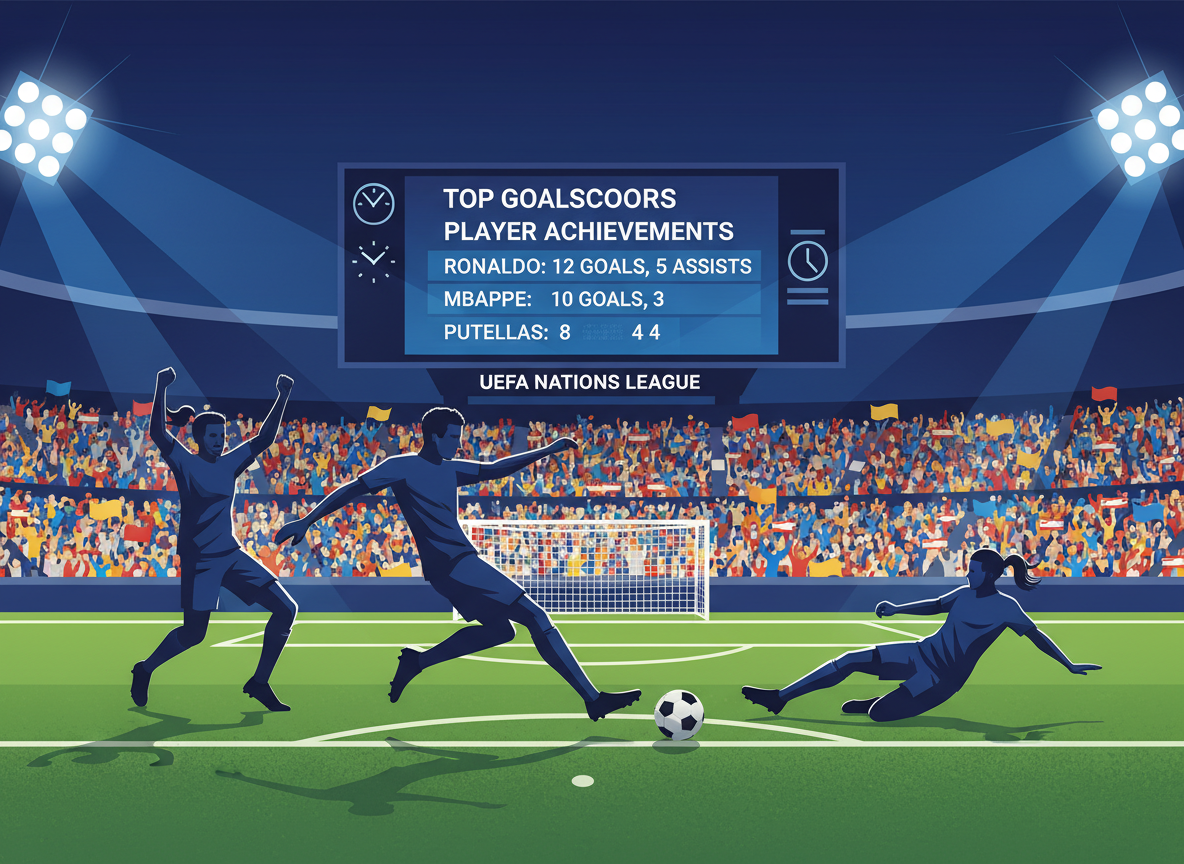
These figures prove every side takes this contest seriously. Players aren’t just participating; they’re fighting to etch their names into history.
It’s remarkable how many national sides have contributed to the record books since the first season. I find these individual feats often mirror team success.
| Player | National Team | Goals | Notable Achievement |
|---|---|---|---|
| Erling Haaland | Norway | 19 | All-time top scorer in the competition |
| Cristiano Ronaldo | Portugal | 15 | Scored in four different UEFA Nations League editions |
| Multiple Players | Various | 5+ | Over 50 players have scored 5 or more goals |
When a player excels, it lifts the entire squad. That’s the beauty of this high-stakes environment.
Team Performances and Memorable Matches
Some matches are so tense they feel frozen in time, defining an entire tournament’s legacy. I still remember the electric silence before the final whistle in 2019. That moment captured the raw pressure this contest creates.
Standout National Teams
Portugal and Spain have risen to the top. They mastered the high-stakes environment from the very first edition. Portugal’s inaugural win set a standard for composure.
Spain’s 2023 victory showed a different kind of strength. Their penalty shoot-out win required incredible mental fortitude. These squads prove which teams can handle the unique pressure.
Historic Clashes and Turning Points
The 2019 final was a historic clash. The host team’s 1-0 win over the Netherlands created the first champion. It instantly validated the new competition’s drama.
Then came the 2023 final. Spain’s battle with Croatia went to penalties, a dramatic turning point. These matches are where legends are forged and national pride is on the line.
Watching these teams, I see a new legacy being built. Every side fights to prove it belongs among Europe’s elite.
Competitive and Financial Impact on European Football
I’ve watched smaller nations struggle for relevance, but a new financial model is changing that narrative entirely. The centralized television contract with UEFA provides a crucial lifeline. The UEFA Nations League structure supports this model.
It ensures every national side gets a fair share of the broadcasting revenue. This system directly benefits lower-ranked squads. They now have predictable income to invest in youth development and facilities.
I think that’s a game-changer for long-term growth. It turns a sporting format into a sustainable model for all.
Increased Revenue and Exposure
The tournament also increased the number of competitive matches from 142 to 168. This boost enhances commercial value and viewer appeal. You get more high-stakes games, which attract bigger audiences and sponsors.
Financial stability allows smaller national sides to dream bigger. They can plan for the future with confidence. The exposure on a continental stage helps them build a global fan base.
I find it fascinating how a contest designed for sporting reasons became a powerful engine for financial growth. It creates a virtuous cycle: better matches lead to more revenue, which improves squads.
| Aspect | Before | After | Impact |
|---|---|---|---|
| Competitive Matches | 142 | 168 | +26 matches |
| Revenue Distribution | Unequal | Centralized TV deal | Fairer share for all |
| Commercial Appeal | Lower | Higher | More sponsorships |
| Team Investment | Limited | Enhanced | Better infrastructure |
This financial engine powers growth across Europe. The entire ecosystem benefits from this stability.
Reactions and Fan Engagement
Remember the collective sigh from fans when another international friendly was announced? I certainly do. That era of meaningless fixtures is gone, replaced by a format where every result carries weight.
Support from Associations and Fans
The change had crucial backing. A 2012 deal between UEFA and the European Club Association cut the yearly friendly schedule from twelve to nine. This was a win for clubs, players, and supporters who wanted real stakes.
You can see the value member associations find in this tournament. It rewards performance directly, giving every squad a clear mission. Fans now have a compelling reason to watch each match, knowing it impacts their team’s future.
Seeing the passion in the stands convinces me. This competition has successfully filled the void left by the old system. The engagement proves the new structure was exactly what everyone needed.
Future Prospects and Format Adjustments
Looking ahead, the landscape of European international soccer is poised for even more thrilling evolution. I believe the format we know will keep adapting. The goal is simple: maintain that edge-of-your-seat intensity for every single match.
Predictions for Upcoming Tournaments
The 2024-25 structure was locked in by the UEFA Executive Committee back in January 2023. This shows a commitment to stability while leaving room for tweaks. I anticipate the UEFA Nations League will keep fine-tuning its group stages and scheduling.
You can expect the competition to become even more unpredictable. The governing body is always looking for ways to improve balance. This ensures every squad, from the giants to the underdogs, feels they have a real shot.
Long-Term Competitive Outlook
The long-term health of the tournament hinges on fairness. Future editions will likely refine the promotion and relegation play-offs. This mechanic is genius—it keeps all teams fully motivated until the final whistle blows.
I see this contest growing in prestige year after year. As it does, the long-term outlook for national sides changes. It provides a consistent, high-stakes platform for growth. That’s how you build a legacy that lasts.
Conclusion
This isn’t just another tournament; it’s a psychological proving ground for every national side. I hope this guide has shown you why the UEFA Nations League is now a vital cornerstone of the sport.
You now understand its complex structure. More importantly, you feel the high stakes every match creates. The contest has successfully replaced forgettable friendlies with meaningful games that truly capture our hearts.
As it grows, this format will only become more crucial for the development of all teams. Thank you for exploring this fascinating dimension of soccer with me. The journey through its competitive depth is one I’ll always remember.